 Back
How Genes Work: From DNA to Protein and the Impact of Mutations
Study Guide - Smart Notes
 Tailored notes based on your materials, expanded with key definitions, examples, and context.
How Genes Work
The Central Dogma of Molecular Biology
The Central Dogma describes the directional flow of genetic information in cells: DNA is transcribed into RNA, which is then translated into protein. This concept, coined by Francis Crick in 1956, forms the foundation of molecular genetics.
DNA serves as the information storage molecule.
RNA acts as the information carrier, transferring genetic instructions from DNA to the site of protein synthesis.
Protein is the functional product, carrying out cellular activities.
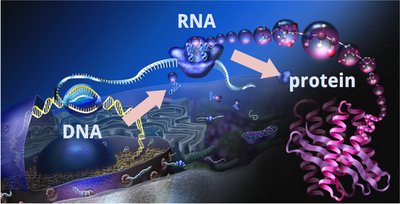
Example: The sequence of DNA bases determines the sequence of amino acids in a protein, which in turn determines the protein's structure and function.
Historical Foundations: Linking Genes to Enzymes
Early studies established that genes dictate phenotypes through enzymes that catalyze specific chemical reactions. Archibald Garrod was among the first to connect Mendelian inheritance to human metabolic diseases, pioneering the concept of "inborn errors of metabolism." His work on alkaptonuria demonstrated that a genetic defect could lead to the absence of a specific enzyme, resulting in disease.
Alkaptonuria is caused by a defect in the gene encoding homogentisate 1,2-dioxygenase (HGD), leading to accumulation of homogentisic acid.
Metabolic pathway: Cells synthesize and degrade molecules in a series of steps, each catalyzed by a specific enzyme.
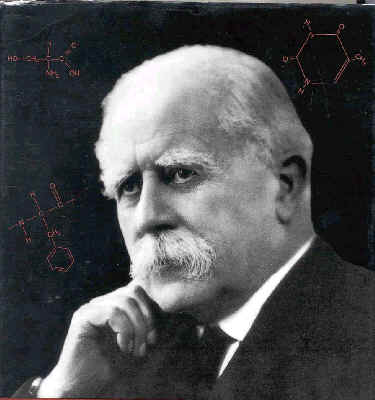
Example: Alkaptonuria (black urine disease) is an autosomal recessive disorder due to a mutation in the HGD gene.
The One Gene-One Enzyme Hypothesis
George Beadle and Edward Tatum demonstrated that each gene specifies the production of a specific enzyme by studying mutants of the bread mold Neurospora crassa. Their experiments led to the formulation of the one gene–one enzyme hypothesis, which has evolved to one gene–one polypeptide as our understanding of gene function has grown.
Null mutants were generated by exposing Neurospora to X-rays.
Mutants unable to synthesize arginine were categorized based on which precursors restored growth.
Each mutant lacked a different enzyme in the arginine biosynthetic pathway.
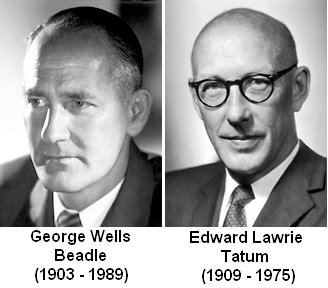
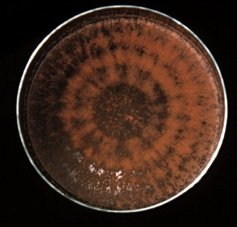
Example: Mutants deficient in arginine could be rescued by supplying ornithine, citrulline, or argininosuccinate, depending on which enzyme was missing.
Biosynthetic Pathways and Genetic Mutants
Genes encode enzymes that catalyze sequential steps in biosynthetic pathways. Mutations in specific genes disrupt the production of corresponding enzymes, affecting the synthesis of essential compounds.
Arginine pathway: Involves several enzymes encoded by different genes (ARG-E, ARG-F, ARG-G, ARG-H).
Mutation in any gene prevents synthesis of downstream products.
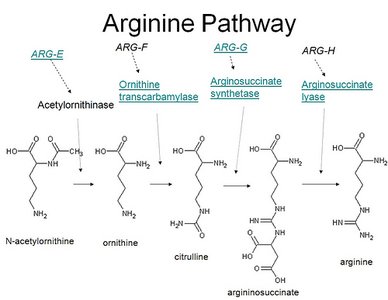
Example: If the gene for ornithine transcarbamylase is mutated, ornithine cannot be converted to citrulline, halting arginine production.
Evolution of the One Gene-One Protein Hypothesis
The original hypothesis has evolved as scientists discovered that not all proteins are enzymes, many proteins are composed of multiple polypeptides, and some genes encode functional RNAs rather than proteins.
One gene-one enzyme → One gene-one protein → One gene-one polypeptide
Some genes encode more than one polypeptide due to alternative splicing.
Some genes encode functional RNAs (e.g., rRNA, tRNA, microRNAs).
Example: Hemoglobin is composed of multiple polypeptides encoded by different genes.
Transcription and Translation: Information Flow
Transcription is the synthesis of RNA using DNA as a template, while translation is the synthesis of a polypeptide using the information in the RNA message. The sequence of DNA bases acts as a code for the sequence of amino acids in proteins.
Transcription: DNA → RNA (messenger RNA, mRNA)
Translation: RNA → Protein (occurs on ribosomes)
RNA polymerase synthesizes RNA by matching complementary ribonucleotides.
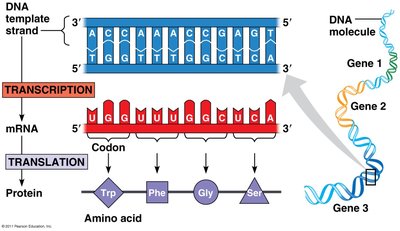
Example: The order of nucleotides in a gene determines the order of amino acids in the protein.
The Genetic Code Hypothesis
Francis Crick proposed that the sequence of bases in DNA acts as a code specifying the 20 amino acids. Messenger RNA (mRNA) serves as the intermediary, carrying information from DNA in the nucleus to ribosomes in the cytoplasm.
Codons: Triplets of nucleotides in mRNA specify amino acids.
Each codon is read in the correct reading frame to produce the intended polypeptide.
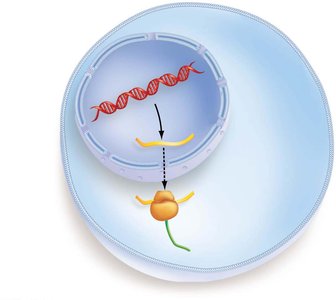
Example: AUG is the start codon, specifying methionine.
Deciphering the Genetic Code
Marshall Nirenberg and colleagues synthesized RNA molecules of known sequence and determined which polypeptides were produced in cell extracts. This led to the complete deciphering of the genetic code.
Of the 64 codons, 61 specify amino acids and 3 are stop signals.
The code is redundant, unambiguous, non-overlapping, nearly universal, and conservative.
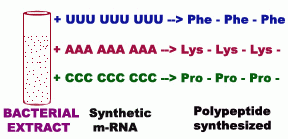
Example: UUU codes for phenylalanine, AAA codes for lysine, CCC codes for proline.
Mutations: Types and Consequences
A mutation is any permanent change in an organism's DNA, representing a modification in its genotype. Mutations can generate new alleles and have varying effects depending on their nature and location.
Point mutations: Affect one or a few bases in a single gene.
Chromosome mutations: Affect chromosome number or structure, often impacting many genes.
Point Mutation Types:
Silent mutations: Code for the same amino acid due to redundancy.
Missense mutations: Code for a different amino acid; effects vary.
Nonsense mutations: Generate a stop codon, causing premature termination.
Frameshift mutations: Insertions or deletions that alter the reading frame, usually resulting in nonfunctional proteins.
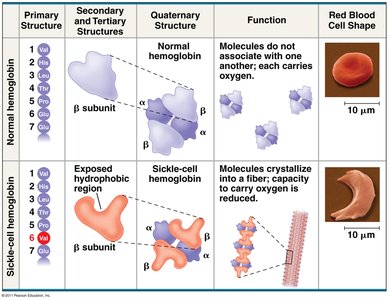
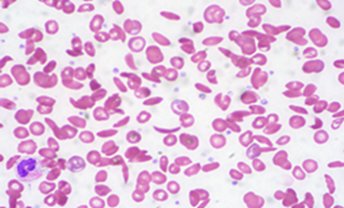
Example: Sickle-cell anemia is caused by a missense mutation changing glutamate to valine in hemoglobin.
Chromosome Mutations
Chromosome mutations can change chromosome number (polyploidy, aneuploidy) or structure (inversion, translocation, deletion, duplication). These mutations often have drastic consequences and can be observed by microscopy.
Inversion: Segment flips and rejoins.
Translocation: Segment attaches to another chromosome.
Deletion: Segment is lost.
Duplication: Segment is present in multiple copies.
Example: Cri du Chat syndrome is caused by a partial deletion of chromosome 5, leading to severe developmental issues.
Summary Table: Types of Mutations and Their Effects
Mutation Type | Description | Effect | Example |
|---|---|---|---|
Silent | Base change codes for same amino acid | No effect on protein function | CGU to CGC (both arginine) |
Missense | Base change codes for different amino acid | Varies: minor to severe | Sickle-cell anemia (Glu to Val) |
Nonsense | Base change creates stop codon | Premature termination, nonfunctional protein | UAC to UAA (Tyr to stop) |
Frameshift | Insertion/deletion not a multiple of 3 | Alters reading frame, usually nonfunctional protein | THE CAT CAN EAT THE RAT → THE CCA NEA TTH ERA T |
Chromosome | Large-scale changes (number/structure) | Often drastic, observable by karyotyping | Cri du Chat syndrome, Philadelphia translocation |
Learning Outcomes
Explain the evolution of the one gene-one protein hypothesis.
Interpret data regarding metabolic mutants and pathway defects.
Describe how the genetic code was deciphered and how to read it.
Explain the processes of transcription and translation.
Describe types of gene and chromosome mutations and their effects.
