Back
How Genes Work: Information Flow, Genetic Code, and Mutations
Study Guide - Smart Notes
 Tailored notes based on your materials, expanded with key definitions, examples, and context.
How Genes Work: Information Flow and Gene Expression
Central Dogma of Molecular Biology
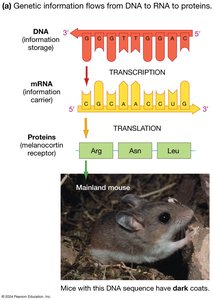
The central dogma describes the flow of genetic information within a biological system. It explains how DNA is transcribed into RNA and then translated into protein, which determines an organism's phenotype.
DNA: Stores genetic information.
Transcription: DNA is used as a template to synthesize messenger RNA (mRNA).
Translation: mRNA is decoded by ribosomes to produce a specific protein.
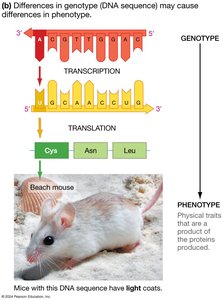
Phenotype: The physical traits resulting from protein action.
Example: Differences in DNA sequence (genotype) can lead to differences in coat color in mice (phenotype).
Transcription and Translation
Transcription is the process by which a segment of DNA is copied into RNA by the enzyme RNA polymerase. Translation is the process by which ribosomes synthesize proteins using the mRNA sequence.
Template strand: The DNA strand used to synthesize RNA.
Coding strand: The DNA strand whose sequence matches the RNA (except for T replaced by U).
Antiparallel and complementary: DNA strands run in opposite directions and are complementary in sequence.
Exceptions to the Central Dogma
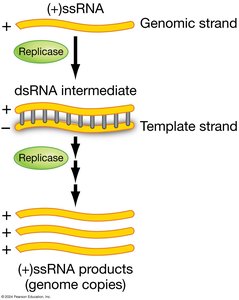
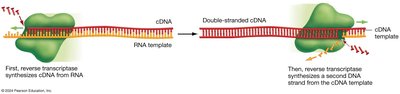
Some viruses do not follow the standard DNA → RNA → Protein pathway. For example, RNA viruses replicate their genomes using RNA-dependent RNA polymerase, and retroviruses use reverse transcriptase to synthesize DNA from RNA.
RNA replication: RNA viruses can copy their RNA genomes directly.
Reverse transcriptase: Enzyme used by retroviruses (e.g., HIV) to convert RNA into DNA.
The Genetic Code
Structure and Function
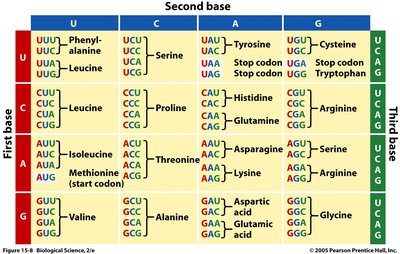
The genetic code is a set of rules by which information encoded in mRNA is translated into proteins. Each three-nucleotide sequence (codon) specifies a particular amino acid.
Codon: Three-base sequence in mRNA that codes for an amino acid.
Start codon: AUG (methionine) signals the beginning of translation.
Stop codons: UAA, UAG, UGA signal the end of translation.
Practice with Transcription and Genetic Code
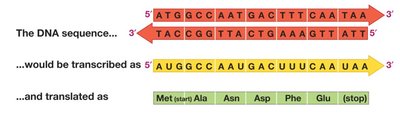
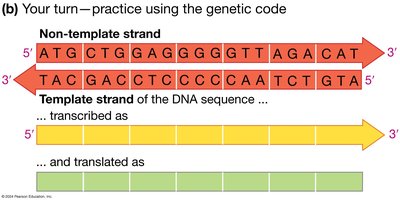
Transcription and translation can be practiced by converting DNA sequences to mRNA and then to protein sequences using the genetic code.
Example: DNA sequence 5'-ATGGCCATGACTTTCAATAA-3' transcribes to mRNA 5'-AUGGCCAUGACUUUCAAUAA-3' and translates to Met-Ala-Asn-Asp-Phe-Glu-(stop).
Mutations and Their Consequences
Point Mutations
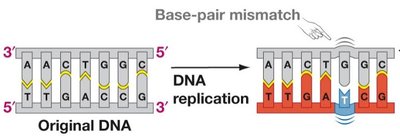
Point mutations are changes in a single nucleotide in DNA. They can alter the amino acid sequence of proteins, potentially affecting their function.
Missense mutation: Changes one amino acid to another.
Nonsense mutation: Changes a codon to a stop codon, truncating the protein.
Silent mutation: Does not change the amino acid sequence.
Examples of Mutations
Mutations can have various effects, such as causing diseases (e.g., sickle cell anemia) or providing beneficial traits (e.g., resistance to Alzheimer's disease).
Sickle cell anemia: Caused by a mutation in the hemoglobin gene, resulting in sickled red blood cells.
Beneficial mutations: Some mutations can protect against diseases or confer advantages.
Chromosome Mutations
Chromosome mutations involve changes in large segments of DNA, such as rearrangements or changes in chromosome number (aneuploidy). These can lead to genetic disorders or cancer.
Rearrangements: Structural changes in chromosomes.
Aneuploidy: Abnormal number of chromosomes.
Viruses and Genetic Information
Viruses vs. Organisms
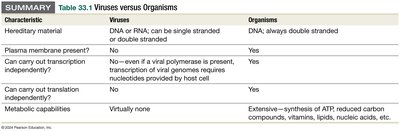
Viruses differ from organisms in their genetic material, metabolic capabilities, and ability to carry out transcription and translation independently.
Characteristic | Viruses | Organisms |
|---|---|---|
Hereditary material | DNA or RNA, can be single or double stranded | DNA, always double stranded |
Plasma membrane present? | No | Yes |
Can carry out transcription independently? | No | Yes |
Can carry out translation independently? | No | Yes |
Metabolic capabilities | Virtually none | Extensive |
Types of Viruses
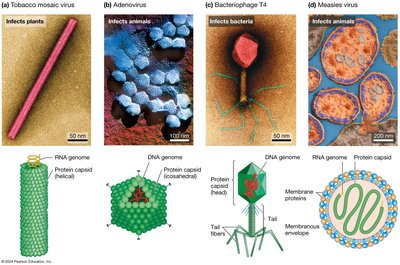
Viruses can infect plants, animals, and bacteria. They have diverse structures and genetic material.
Tobacco mosaic virus: Infects plants, has RNA genome.
Adenovirus: Infects animals, has DNA genome.
Bacteriophage T4: Infects bacteria, has DNA genome.
Measles virus: Infects animals, has RNA genome.
RNA Virus Replication
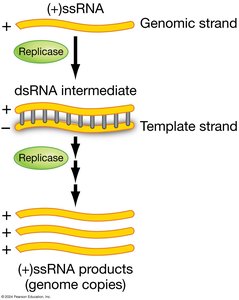
RNA viruses replicate their genomes using RNA-dependent RNA polymerase (replicase). Positive-sense RNA viruses synthesize a complementary strand as an intermediate.
Replicase: Enzyme that copies RNA genomes.
cDNA: Complementary DNA synthesized from RNA by reverse transcriptase.
Summary: Genetic Information Flow and Mutations
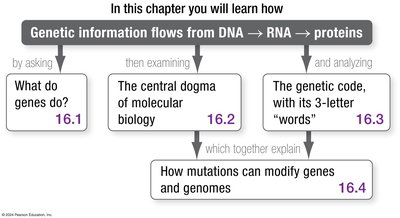
This chapter covers how genetic information flows from DNA to RNA to proteins, the structure and function of the genetic code, and how mutations can modify genes and genomes. Understanding these processes is fundamental to cell and molecular biology.