 Back
BackHuman Body Systems: Integration and Homeostasis
Study Guide - Smart Notes
 Tailored notes based on your materials, expanded with key definitions, examples, and context.
Organ Systems Work Together to Perform Life’s Functions
Overview of Human Body Systems
The human body is composed of multiple organ systems that interact to maintain homeostasis and perform essential life functions. These systems include the circulatory, respiratory, urinary, digestive, nervous, and muscular systems.
Homeostasis: The maintenance of a stable internal environment despite external changes.
Integration: Organ systems communicate and cooperate to ensure proper functioning and survival.
The Circulatory and Respiratory Systems
Gas Exchange and Transport
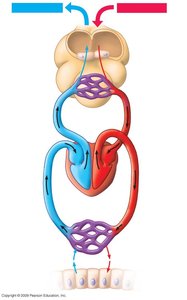
The circulatory and respiratory systems work together to deliver oxygen to body cells and remove carbon dioxide. Gas exchange occurs in the lungs, specifically in the alveoli, where oxygen diffuses into the blood and carbon dioxide diffuses out.
Alveoli: Tiny air sacs in the lungs where gas exchange occurs.
Diffusion: Movement of gases along concentration gradients.
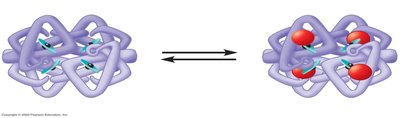
Hemoglobin: A protein in red blood cells that binds and transports oxygen.
Example: Oxygen enters the alveoli during inhalation, diffuses into capillaries, binds to hemoglobin, and is transported to tissues. Carbon dioxide produced by cells diffuses into the blood and is carried to the lungs for exhalation. 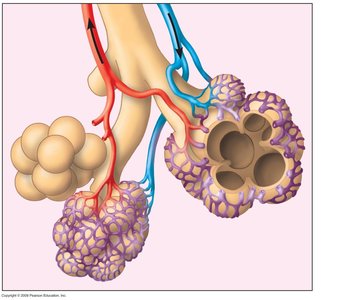
Failure to Maintain Homeostasis: Asthma and Heart Attack
Disruption in the respiratory or circulatory system can lead to decreased oxygen delivery and impaired cellular respiration.
Asthma: Inflammation and constriction of bronchioles reduce airflow and oxygen supply.
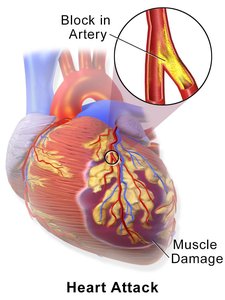
Heart Attack (Myocardial Infarction): Blockage of blood vessels to the heart causes muscle damage and loss of function.
Example: During an asthma attack, narrowed airways limit oxygen intake, affecting all cells. In a heart attack, blocked arteries prevent oxygen from reaching heart tissue, leading to cell death. 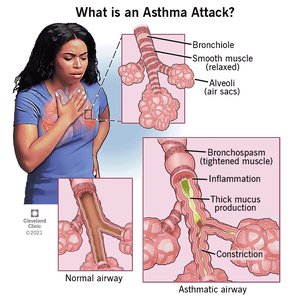
Blood Vessels: Structure and Function
Comparison of Arteries, Veins, and Capillaries
Blood vessels are specialized for different functions in the circulatory system.
Arteries: Thick-walled, carry oxygen-rich blood away from the heart.
Veins: Thinner walls, contain valves, return oxygen-poor blood to the heart.
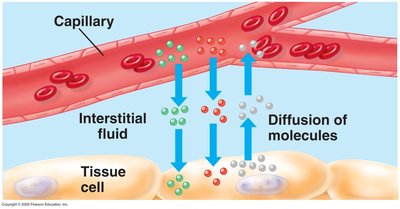
Capillaries: Thinnest walls (one cell layer), site of material exchange via diffusion.
Example: Capillaries allow for the exchange of gases, nutrients, and waste between blood and tissues. 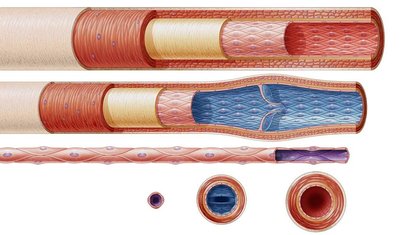
Atherosclerosis
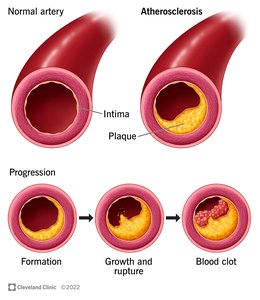
Atherosclerosis is the buildup of plaque in arteries, restricting blood flow and increasing the risk of heart attack and stroke.
Plaque: Fatty deposits that narrow arteries.
Progression: Plaque formation, growth, rupture, and blood clot development.
The Urinary and Digestive Systems
Functions and Integration
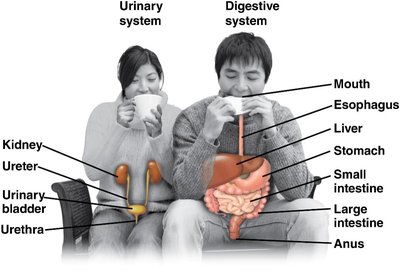
The urinary system removes waste, regulates blood pH, and maintains water balance. The digestive system breaks down food, absorbs nutrients, and eliminates undigested material. Both systems interact with the circulatory system to maintain homeostasis.
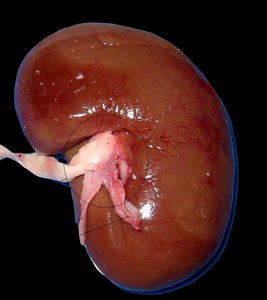
Kidneys: Filter blood, remove waste, and regulate water and salt balance.
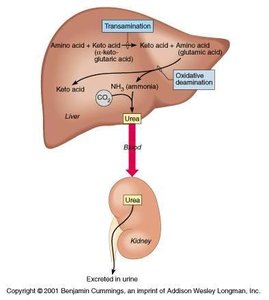
Liver: Converts ammonia to urea for safer excretion.
Digestive Tract: Absorbs nutrients and water, eliminates waste.
Urea Formation and Excretion
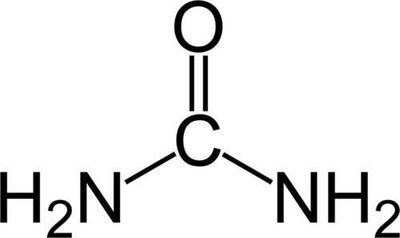
The liver converts toxic ammonia (from protein metabolism) into urea, which is less toxic and requires less water for excretion. Urea is then filtered by the kidneys and excreted in urine.
Equation:
Urea: Chemical formula
Nephron Function and Hormonal Regulation
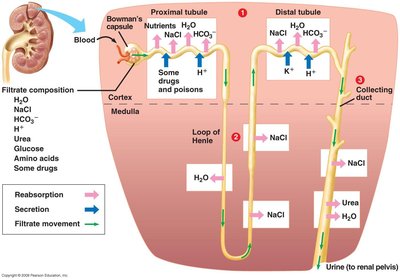
The nephron is the functional unit of the kidney, responsible for filtering blood and forming urine. Hormones such as erythropoietin regulate red blood cell production in response to oxygen levels.
Filtration: Removal of waste and excess substances from blood.
Reabsorption: Return of essential molecules to blood.
Secretion: Addition of substances to filtrate for excretion.
Erythropoietin: Hormone released by kidneys to stimulate red blood cell production.
Digestive System and Nutrient Absorption
Small Intestine and Villi
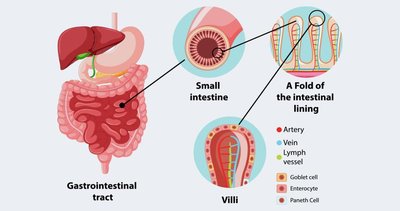
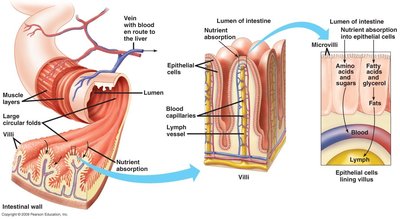
The small intestine is lined with villi, fingerlike projections that increase surface area for nutrient absorption. Accessory glands (liver, gallbladder, pancreas) secrete enzymes to aid digestion.
Villi: Increase surface area for absorption.
Microvilli: Further increase absorptive capacity.
Accessory Glands: Secrete hydrolytic enzymes for chemical digestion.
Failure to Maintain Homeostasis: Diarrhea and Constipation
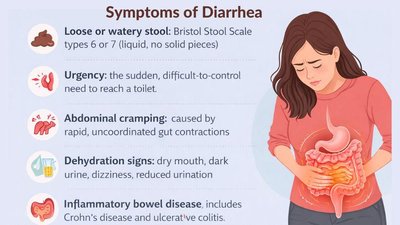
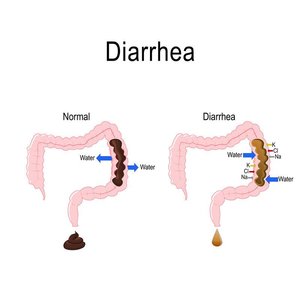
Disruption in water absorption in the large intestine can lead to diarrhea (too little water absorbed) or constipation (too much water absorbed).
Diarrhea: Rapid transit and poor water absorption, leading to watery stool.
Constipation: Excessive water absorption, resulting in dry stool.
Integration of Organ Systems
Circulatory, Respiratory, Digestive, and Urinary Systems
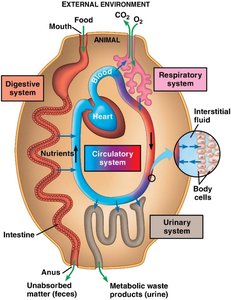
These systems interact to deliver nutrients, remove waste, and regulate internal conditions.
Circulatory System: Transports oxygen, nutrients, and waste.
Respiratory System: Exchanges gases with the environment.
Digestive System: Provides nutrients and water.
Urinary System: Removes metabolic waste and maintains water balance.
Nervous and Muscular Systems
Coordination and Movement
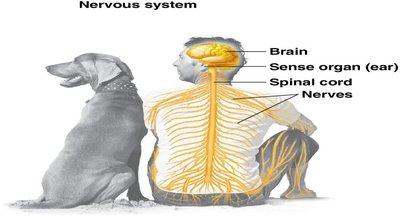
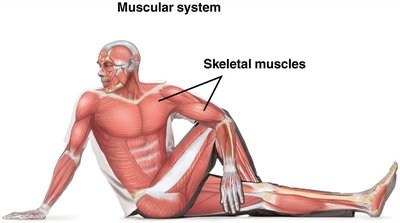
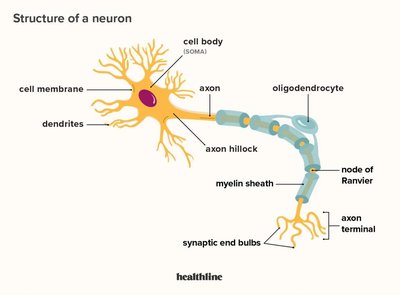
The nervous system detects stimuli, processes information, and directs responses. The muscular system enables movement, maintains posture, and generates heat.
Nervous System: Includes brain, spinal cord, and nerves.
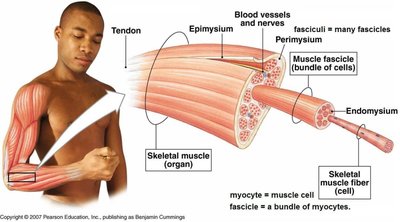
Muscular System: Composed of skeletal muscles responsible for voluntary movement.
Integration: Muscular and Nervous Systems
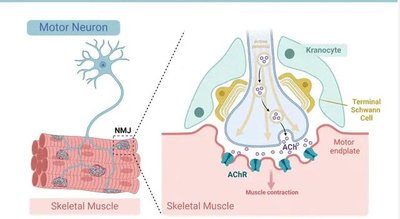
Motor neurons transmit signals from the nervous system to muscles, causing contraction and movement.
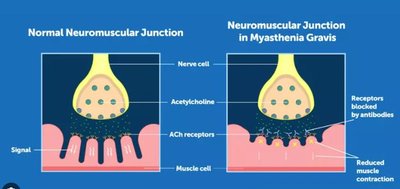
Neuromuscular Junction: Site where motor neuron communicates with muscle fiber.
Acetylcholine: Neurotransmitter that triggers muscle contraction.
Failure to Maintain Homeostasis: Myasthenia Gravis
Myasthenia Gravis is an autoimmune disorder where antibodies block acetylcholine receptors at the neuromuscular junction, leading to muscle weakness.
Symptoms: Reduced muscle contraction and fatigue.
Summary Table: Comparison of Blood Vessels
Type | Wall Thickness | Direction | Valves | O2 Level | Blood Flow Speed |
|---|---|---|---|---|---|
Artery | Thickest | Away from heart | No | Oxygen-rich | Fast |
Vein | Thick | Towards heart | Yes | Oxygen-poor | Slower |
Capillary | Thinnest (1 cell layer) | Both directions | No | Varies | Slowest |
Conclusion
The integration of organ systems is essential for maintaining homeostasis and supporting life. Disruptions in any system can affect overall health, highlighting the importance of understanding their functions and interactions. Additional info: Expanded explanations and context were added to clarify the integration and homeostasis mechanisms across systems.
