 Back
BackHuman Body Systems: Structure, Function, and Integration
Study Guide - Smart Notes
 Tailored notes based on your materials, expanded with key definitions, examples, and context.
Body Organization: Anatomy & Physiology
Levels of Organization
Anatomy is the study of body structure, while physiology focuses on how body parts function. The human body is organized hierarchically, with emergent properties arising at each level.
Cells: Basic units of life.
Tissues: Groups of similar cells performing a function.
Organs: Structures composed of multiple tissues performing specific tasks.
Organ systems: Groups of organs working together for complex functions.
Emergent properties refer to new functions that arise at each level, such as the heart's ability to pump blood, which no single cell can accomplish alone.

The Four Main Tissue Types
Classification and Functions
The body contains four primary tissue types, each with distinct roles:
Epithelial: Covers surfaces and lines organs; protection and exchange.
Connective: Supports and binds other tissues; includes bone, blood, adipose.
Muscle: Responsible for movement; skeletal, cardiac, and smooth types.
Nervous: Conducts electrical impulses; neurons and glial cells.

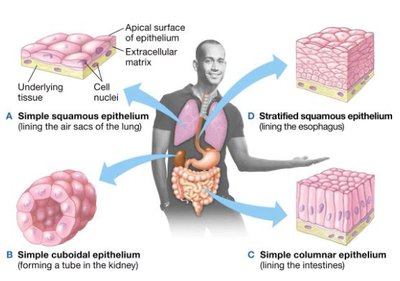
Epithelial Tissue: Structure & Function
Cell Layers and Shapes
Epithelial tissue is arranged in layers: simple (one layer) or stratified (multiple layers). Cell shapes include:
Squamous: Flat and thin, ideal for diffusion (e.g., lung alveoli).
Cuboidal: Cube-shaped, specialized for secretion and absorption.
Columnar: Tall, absorb nutrients, often ciliated (e.g., respiratory tract).
Key functions: Barrier, Secretion, Absorption, Protection.
Connective Tissue — Types & Roles
Classification and Functions
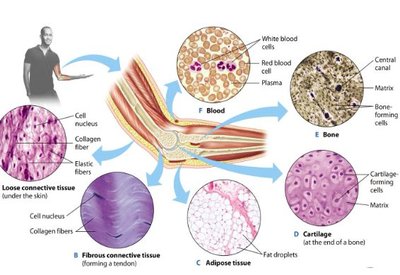
Connective tissue consists of cells embedded in an extracellular matrix. Types include:
Loose: Cushions organs and binds epithelia.
Fibrous: Dense collagen fibers; tendons (muscle to bone), ligaments (bone to bone).
Adipose: Fat tissue for energy storage, insulation, cushioning.
Cartilage: Flexible support in nose, ears, joints.
Bone: Rigid support, mineralized.
Blood: Liquid matrix (plasma) carrying cells and nutrients.
Muscle Tissue Types & Characteristics
Types and Functions
Muscle tissue enables movement and is classified as:
Skeletal: Voluntary, striated, attached to bones.
Cardiac: Involuntary, striated, branched fibers, heart walls.
Smooth: Involuntary, non-striated, lines internal organs.
Muscle contraction is essential for movement, posture, and heat production.
Nervous Tissue & Signal Transmission
Structure and Function
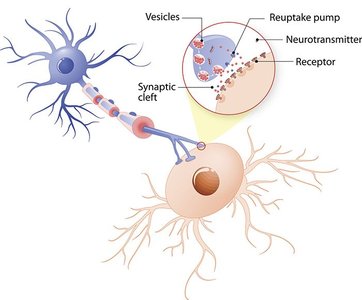
Nervous tissue is composed of neurons and glial cells. Neurons have:
Cell body: Contains nucleus and organelles.
Dendrites: Receive signals.
Axon: Transmits signals to other cells.
Nervous tissue enables rapid communication and coordination.
Organs — Multiple Tissues Working Together
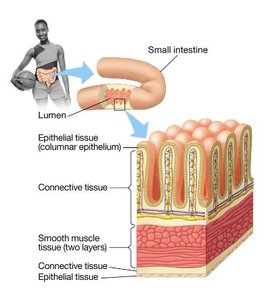
Integration of Tissue Types
Organs combine different tissues for complex functions. Example: the heart uses muscle for contraction, connective for strength, nervous for regulation, and epithelial for lining.
Organ Systems & Their Coordination
System Integration and Homeostasis
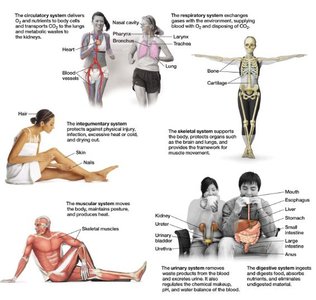
Organ systems integrate organs for large-scale processes (digestion, circulation, respiration). Systems are regulated by nervous and endocrine controls to maintain homeostasis.
Homeostasis & Feedback Mechanisms
Regulation of Internal Conditions
Homeostasis maintains stable internal conditions. Feedback mechanisms include:
Negative feedback: Reverses changes to restore balance (e.g., temperature regulation).
Positive feedback: Amplifies changes to reach a goal (e.g., blood clotting).
Feedback loops involve sensors, control centers, and effectors.
Nervous System: Main Divisions and Components
CNS and PNS
The nervous system is divided into:
Central Nervous System (CNS): Brain and spinal cord; processes information.
Peripheral Nervous System (PNS): Nerves outside CNS; connects CNS to body.
Neurons transmit electrical impulses; neurotransmitters carry signals across synapses.
Brain, Spinal Cord & Functions
Core Functions
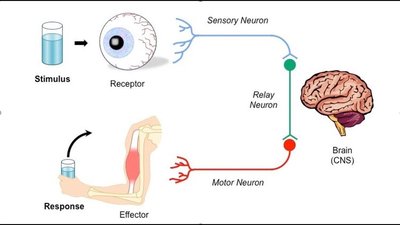
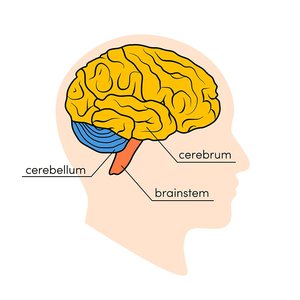
The brain controls thought, memory, emotions, and body functions. The spinal cord conducts signals and controls reflexes. Three core functions:
Sensory input: Detect changes.
Integration: Process information.
Motor output: Activate muscles/glands.
Digestive System: Main Functions
Stages of Digestion
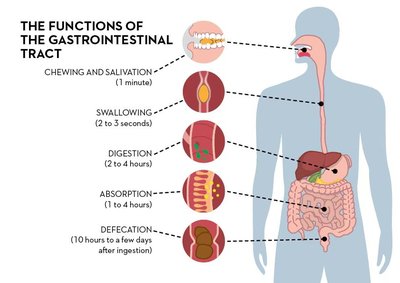
The digestive system processes food through four main stages:
Ingestion: Taking food in.
Digestion: Breaking food down mechanically and chemically.
Absorption: Nutrients enter the bloodstream.
Elimination: Removal of undigested materials.
From Mouth to Small Intestine
Digestive Tract and Enzymes
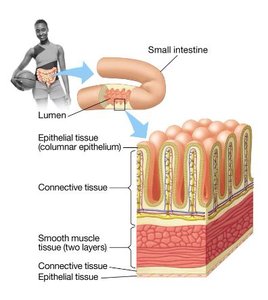
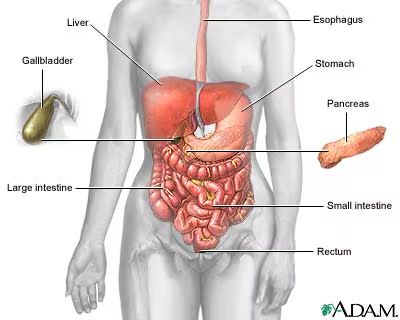
Food travels from mouth (chewing, saliva) to esophagus (peristalsis), stomach (churning, gastric juice), and small intestine (main site of digestion and absorption). The small intestine is divided into duodenum, jejunum, and ileum, lined with villi and microvilli for increased surface area.
Large Intestine & Accessory Organs
Functions and Key Terms
The large intestine absorbs water and forms feces. The rectum/anus stores and eliminates waste. The liver produces bile, gallbladder stores bile, and pancreas releases digestive enzymes. Key terms: enzymes, peristalsis, sphincters, bile.
Comparative Digestive Systems
Herbivores, Carnivores, Omnivores, Suspension Feeders
Digestive systems vary by diet:
Herbivores: Longer tracts for plant material.
Carnivores: Shorter tracts, strong acids.
Omnivores: Eat both plants and animals.
Suspension feeders: Strain food from water.
Skeletal System: Support, Protection & Movement
Functions and Components
The skeletal system provides support, protection, movement, and mineral storage. Key components: bones, joints, ligaments, cartilage.
Endoskeleton: Internal (vertebrates).
Exoskeleton: External (invertebrates).
Muscular System: Movement, Posture & Heat
Types and Function
The muscular system enables movement, posture, and heat production. Muscles contract by shortening fibers, pulling on bones, and work in antagonistic pairs.
Skeletal: Voluntary, striated.
Cardiac: Involuntary, striated.
Smooth: Involuntary, non-striated.
Respiratory System: Structures of the Airway
Airway Anatomy and Gas Exchange
The respiratory system exchanges oxygen and carbon dioxide. Structures include nasal cavity, pharynx, larynx, trachea, lungs (bronchi, bronchioles, alveoli), and diaphragm.
Respiratory System: Key Processes
Inhalation, Exhalation, Gas Exchange
Inhalation: diaphragm contracts, chest expands, air drawn in. Exhalation: diaphragm relaxes, chest contracts, air pushed out. Gas exchange: O2 moves into blood, CO2 out across alveolar walls.
Circulatory System: The Heart & Blood Vessels
Heart Structure and Blood Flow
The heart is a four-chambered pump. Blood vessels include arteries (away from heart), veins (toward heart), and capillaries (exchange with tissues). The right side sends blood to lungs; left side sends to body.
Pulmonary circuit: Heart → lungs → heart.
Systemic circuit: Heart → body → heart.
Circulatory System: Related Diseases
Hypertension and Stroke
Hypertension: high blood pressure, risk factors include age, diet, cholesterol, exercise. Stroke: reduced blood flow to brain, causes cell death, symptoms include numbness, paralysis, speech issues.
Immune System: Innate Immunity
First Line of Defense
Innate immunity is nonspecific and immediate. Barriers include skin and mucous membranes; phagocytes engulf pathogens; natural killer cells target infected cells. Inflammatory responses recruit immune cells and cause fever.
Immune System: Adaptive Immunity
Specific Defense and Memory
Adaptive immunity is specific and develops after exposure. Lymphocytes (B cells, T cells) recognize antigens, activate, and multiply. Features: specificity and memory. Passive immunity is temporary protection from another source.
Immune System: Lymphatic System & Immune Cells
Fluid Balance and Defense
The lymphatic system collects excess fluid and returns it to the bloodstream. Lymph nodes filter lymph and contain immune cells. Antigen-presenting cells activate lymphocytes.
Immune System: Primary & Secondary Immune Responses
Immunity and Vaccination
Primary response: slow, few antibodies. Secondary response: faster, stronger, due to memory cells. Basis for vaccination and long-term immunity.
Immune System: Helper & Cytotoxic T Cells
Coordination and Cell-Mediated Immunity
Helper T cells activate B cells and cytotoxic T cells, release cytokines. Cytotoxic T cells kill infected or abnormal cells. Both are essential for adaptive immunity.
Immune System: HIV & AIDS
Impact on Immunity
HIV infects and destroys helper T cells, weakening the immune system and leading to AIDS. AIDS causes vulnerability to infections and cancers. Prevention includes safe sex, clean needles, education, and testing.
Immune System: Immune Disorders — Autoimmunity & Allergies
Autoimmune Diseases and Allergies
Autoimmune diseases: immune system attacks own tissues (e.g., lupus, rheumatoid arthritis, MS). Allergies: overreaction to harmless substances, histamine release, anaphylaxis treated with epinephrine.
Excretory / Urinary System: Filtering Waste From the Blood
Functions and Structures
Filtration removes waste from blood; reabsorption recovers useful substances; secretion adds waste; excretion eliminates urine. Key structures: kidneys (nephrons), ureters, bladder, urethra. Kidneys regulate water, salt, and pH balance.
Excretory / Urinary System: Key Terms
Definitions
Urea: Nitrogen-containing waste from protein metabolism.
Filtrate: Liquid collected during kidney filtration.
ADH: Regulates water reabsorption.
Osmoregulation: Maintaining water and salt balance.
Endocrine System: Major Glands & Hormones
Glands and Functions
Pineal gland: Melatonin, regulates sleep-wake cycles.
Pituitary gland: Master gland, regulates other glands.
Hypothalamus: Link between nervous and endocrine systems.
Thyroid gland: Thyroxine, regulates metabolism.
Pancreas: Insulin lowers, glucagon raises blood glucose.
Parathyroid glands: PTH, regulates calcium.
Adrenal glands: Adrenaline, cortisol, stress response.
Ovaries: Estrogen, progesterone, female reproductive cycle.
Testes: Testosterone, male reproductive functions.
Endocrine System: Hormone Function & Regulation
Mechanisms and Effects
Hormones are chemical messengers carried by blood to target cells with specific receptors. Release is often controlled by negative feedback. Effects include metabolism, growth, reproduction, mood.
Reproductive System: Reproduction & Development
Structures and Key Steps
Male: testes produce sperm and testosterone. Female: ovaries produce eggs and hormones. Fertilization occurs in fallopian tubes, implantation in uterus, gestation in uterus, birth through vagina. Hormones regulate cycles and development.
