 Back
Hypersensitivity and Autoimmune Disorders: Mechanisms and Clinical Examples (PP 6)
Study Guide - Smart Notes
 Tailored notes based on your materials, expanded with key definitions, examples, and context.
Hypersensitivity and Autoimmune Disorders
Overview of Immune System Disorders
The immune system can malfunction in several ways, leading to hypersensitivity, autoimmune diseases, or immunodeficiencies. Hypersensitivity refers to an exaggerated immune response to antigens, while autoimmunity involves the immune system attacking the body's own tissues.
Hypersensitivity: Immune response to harmless antigens (allergens) causing tissue damage.
Autoimmunity: Immune response against self-antigens, resulting in organ or tissue damage.
Immunodeficiency: Reduced or absent immune response, increasing susceptibility to infections.
Gell and Coombs Classification of Hypersensitivity
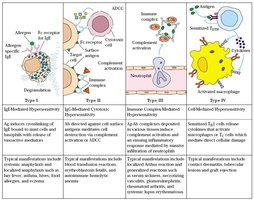
Hypersensitivity reactions are classified into four types based on their immunological mechanisms:
Type | Mechanism | Key Features | Examples |
|---|---|---|---|
Type I | IgE-mediated (Anaphylactic) | Rapid onset, mast cell degranulation, histamine release | Hay fever, asthma, food allergies, anaphylactic shock |
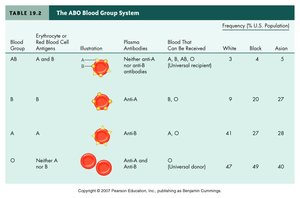
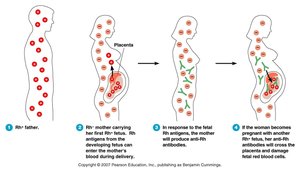
Type II | IgG/IgM-mediated (Cytotoxic) | Antibody binds to cell surface antigens, complement activation, cell lysis | ABO blood group incompatibility, hemolytic disease of the newborn |
Type III | Immune complex-mediated | Antigen-antibody complexes deposit in tissues, complement activation, inflammation | Systemic lupus erythematosus (SLE), serum sickness |
Type IV | T cell-mediated (Delayed) | Activation of T cells, cytokine release, macrophage recruitment | Contact dermatitis, Mantoux test, type I diabetes |
Type I Hypersensitivity: IgE-Mediated (Anaphylactic)
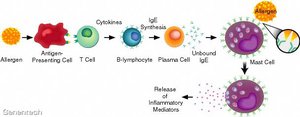
Type I hypersensitivity is a rapid allergic reaction involving IgE antibodies and mast cells. Sensitization occurs after the first exposure to an allergen, and subsequent exposures trigger mast cell degranulation and mediator release.
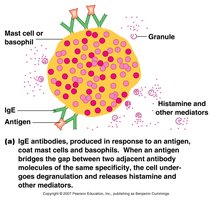
Mechanism: Allergen exposure leads to IgE production, which binds to FcεR on mast cells and basophils. Upon re-exposure, crosslinking of IgE triggers degranulation.
Mediators: Histamine (increases capillary permeability, mucus secretion, smooth muscle contraction), prostaglandins, and leukotrienes.
Clinical manifestations: Local (hay fever, asthma, food allergy) or systemic (anaphylactic shock).
Treatment: Adrenaline for anaphylactic shock; desensitization therapy to induce IgG instead of IgE.

Type II Hypersensitivity: IgG/IgM-Mediated (Cytotoxic)
Type II hypersensitivity involves antibodies binding to cell surface antigens, leading to complement activation and cell destruction. This reaction is slower than Type I, typically occurring within hours.
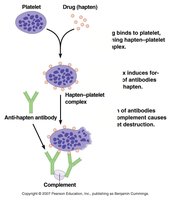
Mechanism: IgG or IgM binds to antigens on cells, activating complement and causing cell lysis or attracting phagocytes.
Examples: ABO blood group incompatibility, hemolytic disease of the newborn (Rh incompatibility), drug-induced cytotoxicity.
Type III Hypersensitivity: Immune Complex-Mediated
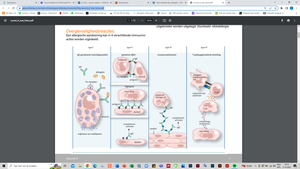
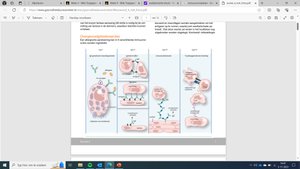
Type III hypersensitivity is caused by immune complexes formed between antibodies and soluble antigens. These complexes deposit in tissues, activating complement and causing inflammation.
Mechanism: Antigen-antibody complexes form in circulation or tissues, deposit in vessel walls, activate complement, and attract neutrophils.
Clinical manifestations: Systemic lupus erythematosus (SLE), serum sickness, glomerulonephritis.
Difference from Type II: Type III involves soluble antigens and immune cell activation, not direct cell lysis.
Type IV Hypersensitivity: T Cell-Mediated (Delayed)
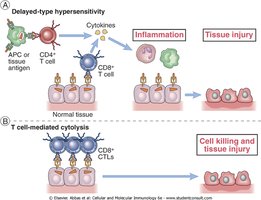
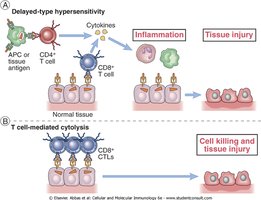
Type IV hypersensitivity is a delayed reaction (24–48 hours) mediated by T cells. It involves cytokine release and recruitment of macrophages, leading to tissue damage.
Mechanism: Allergen activates memory T cells (TDTH), which release cytokines and attract macrophages.
Examples: Mantoux test for tuberculosis, contact dermatitis (e.g., nickel allergy), autoimmune diseases like type I diabetes.
Autoimmunity
Mechanisms of Autoimmune Diseases
Autoimmune diseases occur when the immune system loses self-tolerance and attacks the body's own tissues. Tolerance is maintained by clonal deletion of autoreactive T and B cells.
Loss of tolerance: Can be due to genetic predisposition or environmental factors (e.g., alcohol, smoking).
Types of autoimmune reactions: Cytotoxic (Type II), immune complex (Type III), and cell-mediated (Type IV).
Classification: Organ-specific (e.g., Grave's disease, Hashimoto's thyroiditis) or systemic (e.g., SLE).
Autoimmune Diseases: Examples
Grave's Disease (Type II): Antibodies activate thyroid receptors, causing hyperthyroidism.
Myasthenia Gravis (Type II): Antibodies block acetylcholine receptors, leading to muscle weakness.
Systemic Lupus Erythematosus (Type III): Immune complexes deposit in tissues, causing chronic inflammation.
Multiple Sclerosis (Type IV): T cells and macrophages destroy myelin sheaths around neurons.
Hashimoto's Thyroiditis (Type IV): T cells attack thyroid cells, causing hypothyroidism.
Type I Diabetes (Type IV): T cells destroy pancreatic β-cells.
Summary Table: Hypersensitivity Types
Summary Table: ABO Blood Group System
Summary Table: Rh Incompatibility
Summary Table: Immune Complex-Mediated Injury
Summary Table: Delayed-Type Hypersensitivity
Key Equations and Concepts
Complement Activation:
Clonal Deletion:
Additional info: Academic context was added to clarify mechanisms, clinical examples, and differences between hypersensitivity types.
