 Back
Immunology and Antibody Applications: Vaccination, Antibody Production, and Diagnostic Techniques (PP 7, immunologie)
Study Guide - Smart Notes
 Tailored notes based on your materials, expanded with key definitions, examples, and context.
Immunology: Acquired Immunity and Vaccination
Types of Acquired Immunity
Acquired immunity is the protection developed against pathogens through exposure or medical intervention. It is divided into active and passive forms, each with natural and artificial variants.
Natural Active Immunity: Immunity developed after recovering from an infection.
Natural Passive Immunity: Immunity transferred from mother to child (e.g., IgG via placenta, IgA via breast milk).
Artificial Active Immunity: Immunity induced by vaccination.
Artificial Passive Immunity: Immunity provided by injection of antibodies (immunoglobulins).
Vaccination: Principles and Effects
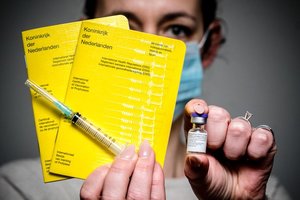
Vaccination exposes the body to a controlled dose of a pathogen or its components, stimulating the immune system to develop immunological memory. This results in a faster and stronger response upon subsequent exposure.
Immunological Memory: Enables a rapid and effective response to repeat infections.
Types of Vaccines: Whole pathogens (live attenuated or inactivated), subunit vaccines (purified proteins or carbohydrates), recombinant, synthetic peptide, RNA, and DNA vaccines.
Examples: DKTP (Diphtheria, Tetanus, Pertussis, Polio), BMR (Mumps, Measles, Rubella), COVID-19 (RNA and subunit vaccines).
Primary and Secondary Immune Responses
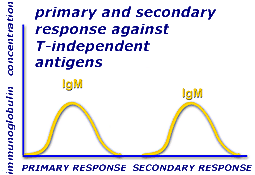
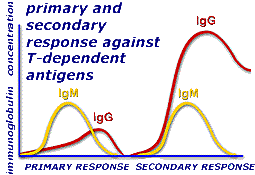
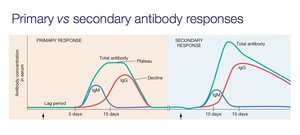
The immune system responds differently to first and subsequent exposures to antigens. The primary response is slower and less robust, while the secondary response is faster and stronger due to memory cells.
T-independent Antigens: Only IgM is produced; no memory cells, so secondary response is similar to primary.
T-dependent Antigens: Both IgM and IgG are produced; memory cells enable a rapid and strong secondary response.
Adjuvants in Vaccines
Adjuvants are substances added to vaccines to enhance the immune response. They promote inflammation and improve antigen presentation, especially important for inactivated and subunit vaccines.
Examples: Alum, polysorbate, emulsions, Complete Freund’s Adjuvant.
Mechanism: Many adjuvants are PAMPs (Pathogen-Associated Molecular Patterns) that bind to Toll-like receptors (TLRs).
Impact of Vaccination: Disease Eradication and Herd Immunity
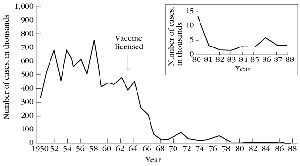
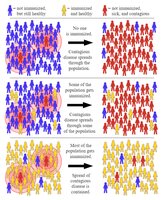
Widespread vaccination can lead to the eradication of pathogens and the establishment of herd immunity, where most of the population is immune, preventing outbreaks.
Eradication: Pathogens cannot find suitable hosts and die out.
Herd Immunity: Protects vulnerable individuals by reducing the spread of disease.
Antibodies: Structure, Production, and Applications
Antibody Structure and Properties
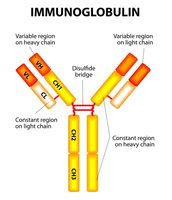
Antibodies (immunoglobulins) are highly specific proteins produced by B cells. They bind to antigens with high affinity and are used in various medical and biotechnological applications.
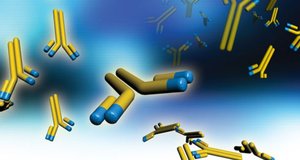
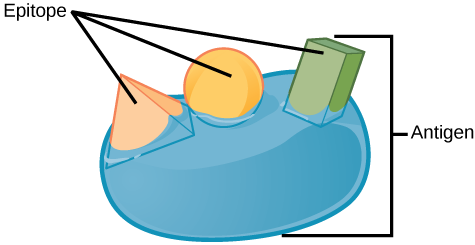
Structure: Y-shaped molecules with variable and constant regions; variable regions bind to specific epitopes on antigens.
Types: IgG, IgM, IgA, IgE, IgD (each with distinct functions).
Antibody Production: Polyclonal and Monoclonal
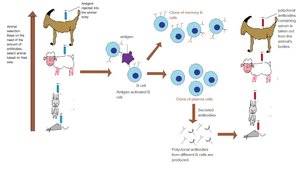
Antibodies can be produced as polyclonal or monoclonal preparations, each with specific advantages and disadvantages.
Polyclonal Antibodies: Produced by multiple B cell clones; recognize multiple epitopes on an antigen. Easy to produce but may have batch variability and cross-reactivity.
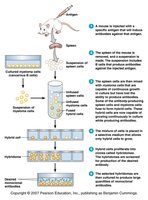
Monoclonal Antibodies (mAb): Produced by a single B cell clone; recognize one epitope. Highly specific, consistent, and used in diagnostics and therapy.

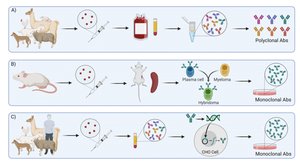
Modern Antibody Production Techniques
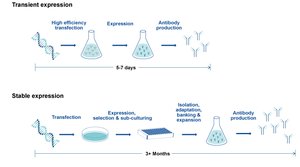
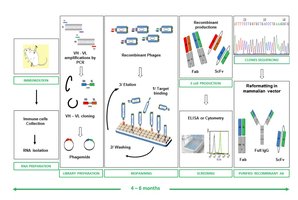
Advanced methods include B-cell sequencing, CHO cell expression systems, and phage display, allowing for recombinant antibody production and reduced animal use.
B-cell Sequencing: Determines antibody gene sequences for expression in cell systems.
CHO Cell Expression: Chinese Hamster Ovary cells used for large-scale antibody production.
Phage Display: Uses bacteriophages to select antibodies with desired specificity.
Applications of Antibodies
Medical Applications
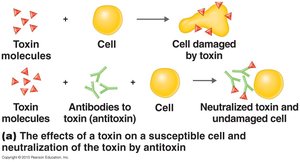
Antibodies are used for neutralization of toxins and viruses, blocking receptors, targeting drugs, and molecular imaging. Therapeutic monoclonal antibodies are used in cancer, autoimmune diseases, and transplantation.
Neutralization: Antibodies bind toxins or viruses, preventing cell damage.
Therapeutic mAbs: Examples include Alemtuzumab (leukemia), Infliximab (Crohn’s disease), Rituximab (lymphoma), Trastuzumab (breast cancer), Basiliximab (transplant immunosuppression), Palivizumab (RSV), Bevacizumab (VEGF blocker).
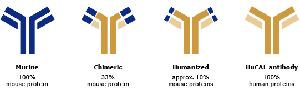
Humanization: Reduces immunogenicity by making antibodies more similar to human proteins.
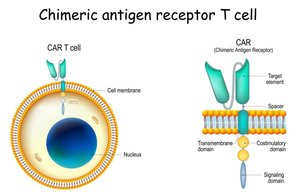
CAR T-cell Therapy: Uses engineered T cells with chimeric antigen receptors for cancer treatment.
Biotechnological and Analytical Applications
Antibodies are essential tools in protein purification, detection, and quantification. They are used in research, diagnostics, and clinical laboratories.
ELISA (Enzyme-Linked Immunosorbent Assay): Detects and quantifies antigens in solution.
FACS (Fluorescence Activated Cell Sorting): Sorts and analyzes cells based on surface markers.
Immunohistochemistry (IHC): Detects antigens in tissue sections.
Western Blot: Identifies proteins in cell extracts.
Comparison of Diagnostic Methods
Method | Antigen Location | Application |
|---|---|---|
ELISA | In solution | Quantification of soluble antigens |
FACS | On cell membrane | Cell sorting and marker analysis |
Western Blot | In cell | Protein identification |
Immunohistochemistry | In tissue | Antigen localization in tissue |
Diagnostic Techniques: Agglutination and Precipitation
Agglutination and precipitation are used to detect the presence of antigens or antibodies in samples. Agglutination involves the clumping of particles, while precipitation involves the formation of insoluble complexes.
Agglutination: Used for blood typing, pathogen detection, and antibody titration.
Precipitation: Used in pregnancy tests and rapid viral diagnostics.
Summary Table: Types of Acquired Immunity
Type | Source | Example |
|---|---|---|
Natural Active | Infection | Recovery from measles |
Natural Passive | Maternal antibodies | IgG via placenta |
Artificial Active | Vaccination | Polio vaccine |
Artificial Passive | Injected antibodies | Rabies immunoglobulin |
Key Terms and Definitions
Antigen: A molecule capable of inducing an immune response.
Epitope: The specific part of an antigen recognized by an antibody.
Immunoglobulin: Another term for antibody; a protein produced by B cells.
Adjuvant: A substance added to vaccines to enhance the immune response.
Hybridoma: A cell line used to produce monoclonal antibodies.
CAR T-cell: T cell engineered to express a chimeric antigen receptor for targeted therapy.
Additional info: Modern antibody production techniques such as recombinant expression and phage display are increasingly used to reduce animal use and improve specificity. Humanization of therapeutic antibodies is essential to minimize immune reactions in patients.
