Back
BackLEC 14:Inhibitors, Alternative Pathways, and Regulation of Cellular Respiration
Study Guide - Smart Notes
 Tailored notes based on your materials, expanded with key definitions, examples, and context.
Inhibitors of Cellular Respiration
Cyanide as an Irreversible Enzyme Inhibitor
Cyanide ions are potent inhibitors of cellular respiration, specifically targeting the electron transport chain in mitochondria. Cyanide binds irreversibly to the iron atoms in cytochrome c oxidase (Complex IV), halting electron flow and ATP synthesis.
Mechanism: Cyanide prevents electron transfer to oxygen, stopping the electron transport chain.
Consequences: No proton (H+) pumping, no ATP synthesis, and cellular energy failure.
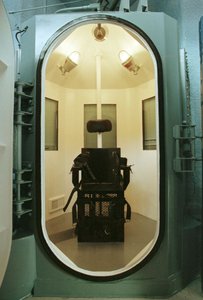
Application: Hydrogen cyanide has been used as a lethal agent in gas chambers.
Dinitrophenol (DNP) as an Uncoupler
Dinitrophenol (DNP) disrupts the mitochondrial inner membrane's impermeability to protons, uncoupling electron transport from ATP synthesis. This leads to increased metabolic rates and energy dissipation as heat.
Mechanism: DNP allows H+ to cross the membrane, preventing the formation of a proton gradient.
Effects: No ATP is produced (in extreme cases), but electron transport continues, and energy is released as heat.
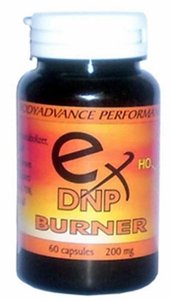
Historical Note: DNP was once sold as a diet pill but was banned due to severe side effects, including cataracts, brain damage, and death.
Alternative Metabolic Pathways and Oxygen Requirements
Oxygen and Cellular Respiration
Oxygen is essential for many organisms but can be toxic due to its reactivity. Organisms are classified based on their oxygen requirements:
Obligate Anaerobes: Cannot use O2; O2 is toxic (e.g., Clostridium botulinum).
Aerotolerant Anaerobes: Do not use O2 but tolerate its presence (e.g., Lactobacillus acidophilus).
Facultative Anaerobes: Can use O2 if available but can survive without it (e.g., brewer’s yeast).
Obligate Aerobes: Require O2 for survival (e.g., most multicellular organisms).
Alternative Pathways in the Absence of Oxygen
When oxygen is unavailable, organisms that rely on electron transport chains have two main options:
Anaerobic Respiration: Some prokaryotes use alternative terminal electron acceptors (e.g., sulfate ions SO42-), producing H2S instead of H2O.
Fermentation: ATP is generated via glycolysis, and NAD+ is regenerated by transferring electrons to organic molecules.
Fermentation Pathways
Alcohol Fermentation
Alcohol fermentation occurs in yeast and some bacteria, converting pyruvate to ethanol and CO2. This process is used in brewing, winemaking, and baking.
Key Steps: Pyruvate is decarboxylated to acetaldehyde, which is then reduced to ethanol.
Applications: Bread and alcoholic beverages are produced using this pathway.


Lactic Acid Fermentation
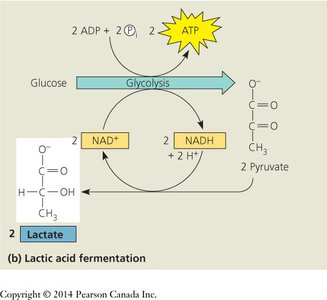
Lactic acid fermentation reduces pyruvate to lactate using NADH, regenerating NAD+ without releasing CO2. This pathway is used by muscle cells during intense exercise and by certain bacteria and fungi in food production.
Key Steps: Pyruvate + NADH → Lactate + NAD+
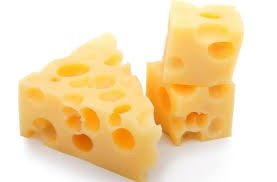
Applications: Production of cheese and yogurt; energy generation in muscles when O2 is scarce.

Limitations of Fermentation
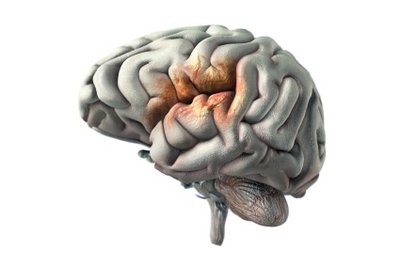
Not all cells can perform fermentation. For example, nerve cells in the brain lack the necessary enzymes and are highly sensitive to oxygen deprivation, leading to rapid cell death during events such as strokes.
Metabolic Integration and Regulation
Entry of Other Nutrients into Cellular Respiration
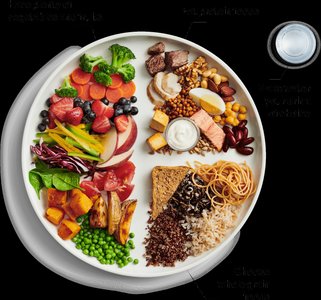
Besides glucose, cells can metabolize proteins and fats for energy. These macromolecules are broken down into intermediates that enter glycolysis or the citric acid cycle.
Proteins: Broken down into amino acids, which are deaminated and enter the cycle as pyruvate, acetyl CoA, or other intermediates.
Fats: Glycerol enters glycolysis; fatty acids are converted to acetyl CoA via beta-oxidation.
Carbohydrates: Broken down into sugars that enter glycolysis.

Regulation of Glycolysis: Phosphofructokinase (PFK)
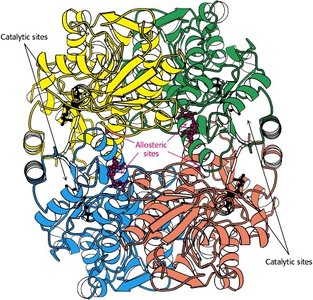
Phosphofructokinase (PFK) is a key regulatory enzyme in glycolysis. Its activity is modulated allosterically by cellular energy status:
Inhibition: High ATP or citrate levels inhibit PFK, slowing glycolysis when energy is abundant.
Stimulation: High AMP levels stimulate PFK, increasing glycolysis when energy is needed.
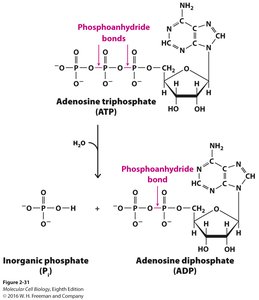
ATP, ADP, and AMP Interconversion
ATP is hydrolyzed to ADP and inorganic phosphate (Pi), and further to AMP and pyrophosphate (PPi). AMP accumulation signals low energy status, activating glycolysis.
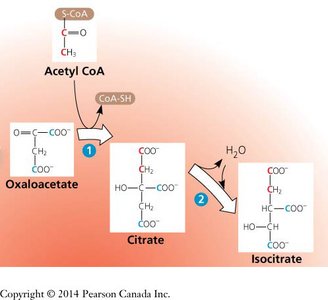
Feedback Inhibition by Citrate
Citrate, the first product of the citric acid cycle, inhibits PFK when its concentration is high, signaling that the cell does not need to produce more ATP via glycolysis.
Cell Division: General Features
Overview of Cell Division
Cell division ensures the transmission of genetic material to daughter cells. In eukaryotes, the process is more complex due to larger genomes and multiple chromosomes. Both prokaryotic and eukaryotic cell division share common steps:
Reproductive Signal: Internal or external cues trigger cell division.
DNA Replication: Each daughter cell receives a complete copy of the genome.
DNA Segregation: Replicated DNA is distributed to new cells.
Cytokinesis: The cytoplasm divides, forming two new cells, each with its own membrane (and cell wall, if present).