 Back
BackInnate and Adaptive Immunity: Structure, Function, and Mechanisms
Study Guide - Smart Notes
 Tailored notes based on your materials, expanded with key definitions, examples, and context.
Innate Immunity
Introduction to Immunity and Pathogens
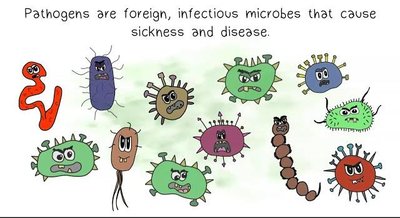
The immune system is a complex network that protects organisms from disease by identifying and eliminating pathogens. Immunity refers to the ability of an organism to resist infection, while pathogens are foreign agents such as bacteria, viruses, and fungi that cause disease. All animals possess innate immunity, which provides immediate, non-specific defense against pathogens.
Immunity: The biological defense system against infectious agents.
Pathogen: Any microorganism or agent that causes disease.
Innate Immunity: Present at birth, does not require prior exposure to pathogens, and responds rapidly.
Types of Immunity: Innate vs. Adaptive
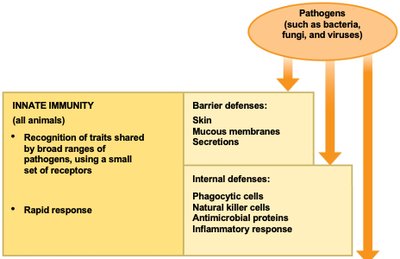
There are two major types of immunity: innate and adaptive. Innate immunity is found in all animals and is characterized by rapid, generic responses to a broad range of pathogens. Adaptive immunity, unique to vertebrates, develops after exposure to specific pathogens and provides a targeted response.
Innate Immunity: Immediate, non-specific, uses a limited set of receptors.
Adaptive Immunity: Delayed, highly specific, uses a vast array of receptors, and has memory.
Barrier Defenses and Internal Defenses
Innate immunity consists of barrier defenses and internal defenses. Barrier defenses prevent pathogen entry, while internal defenses eliminate pathogens that breach barriers.
Barrier Defenses: Skin, mucous membranes, and secretions (e.g., saliva, tears, mucus).
Internal Defenses: Phagocytic cells, natural killer cells, antimicrobial proteins, and the inflammatory response.
Barrier defenses are the first line of defense, while internal defenses are activated if pathogens bypass barriers.
Innate Immunity in Invertebrates
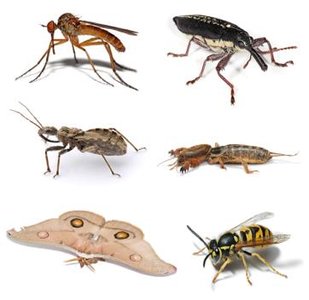
Invertebrates rely solely on innate immunity, which includes physical barriers, enzymes, and immune cells.
Exoskeleton: Physical barrier against infection.
Lysozyme: Enzyme that breaks down bacterial cell walls in the digestive tract.
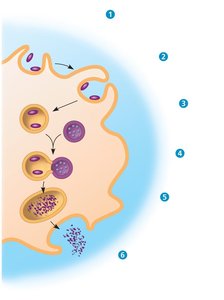
Hemocytes: Immune cells that perform phagocytosis and release antimicrobial proteins.
Innate Immunity in Vertebrates
Vertebrates possess both innate and adaptive immunity. Their innate immune system shares similarities with invertebrates but also includes unique components.
Common Features: Barrier defenses, phagocytosis, antimicrobial proteins.
Unique Features: Natural killer cells, interferons, and an inflammatory response.
Barrier Defenses in Vertebrates
Barrier defenses in vertebrates include the skin and mucous membranes of the respiratory, digestive, urinary, and reproductive systems. Secretions such as saliva, mucus, and tears are hostile to many pathogens, and the low pH of skin and digestive tract inhibits bacterial growth.
Recognition of Pathogens by Immune Cells
Phagocytic cells recognize pathogens using Toll-like receptors (TLRs), which bind to molecular patterns characteristic of groups of pathogens. This recognition triggers innate immune responses.
Phagocytic Cells in Vertebrates
Vertebrate phagocytic cells include:
Neutrophils: Circulate in blood, attracted to infection sites.
Macrophages: Large phagocytic cells found throughout the body.
Dendritic Cells: Stimulate adaptive immunity.
Mast Cells: Release chemicals to regulate immune response.
Natural Killer Cells: Detect and destroy abnormal cells, including cancerous or virus-infected cells.
Antimicrobial Proteins
Vertebrate innate immunity uses antimicrobial proteins such as interferons (which interfere with viral replication and activate macrophages) and complement proteins (which lead to lysis of invading cells).
The Inflammatory Response
The inflammatory response is a key component of vertebrate innate immunity. It is triggered by injury or infection and involves the release of signaling molecules (cytokines and histamine) that recruit immune cells and increase blood flow to the affected area.
Cytokines: Released by activated macrophages, attract neutrophils.
Histamine: Released by mast cells, causes blood vessel dilation and increased permeability.
Result: Enhanced delivery of immune cells and proteins, accumulation of pus, and tissue repair.
Complications of the Inflammatory Response
Fever: Systemic inflammatory response that may enhance phagocytosis and tissue repair.
Septic Shock: Life-threatening condition caused by overwhelming inflammation.
Chronic Inflammation: Can threaten human health if not resolved.
Adaptive Immunity
Introduction to Adaptive Immunity
Adaptive immunity is unique to vertebrates and provides a specific response to pathogens. It is characterized by immunological memory, allowing for a faster and stronger response upon subsequent exposures to the same pathogen.
Major Characteristics of Adaptive Immunity
Diversity: B- and T-lymphocytes and their receptors can recognize a vast array of antigens.
Self-Tolerance: Immune cells do not react against the organism's own molecules.
Clonal Selection: B and T cells proliferate after activation, producing effector and memory cells.
Immunological Memory: Memory cells enable a rapid and robust response to repeated exposures.
Lymphocytes: B Cells and T Cells
Lymphocytes are a type of leukocyte (white blood cell) central to adaptive immunity. There are two main types:
B Cells: Responsible for antibody-mediated (humoral) immunity.
T Cells: Responsible for cell-mediated immunity.
Antigen Recognition
Antigens are substances that elicit an immune response. B and T cells recognize antigens via specific receptors. Each lymphocyte has receptors for only one antigen epitope.
Epitope: The specific region of an antigen recognized by a receptor.
Clonal Selection and Immunological Memory
Upon activation by an antigen, B or T cells undergo clonal selection, producing effector cells (which act immediately) and memory cells (which provide long-term immunity).
T Cell Receptors and Antigen Presentation
T cell receptors are composed of two polypeptide chains (α and β) with variable and constant regions. T cells recognize antigens only when presented by other cells using Major Histocompatibility Complex (MHC) proteins. Cells that present antigens are called Antigen Presenting Cells (APCs).
Types of T Cells
Cytotoxic T Cells: Kill infected cells by secreting perforin and granzymes, inducing apoptosis.
Helper T Cells: Activate cytotoxic T cells and B cells using signaling molecules called interleukins.
B Cell Receptors and Antibodies
B cell receptors are Y-shaped molecules with two identical heavy and two identical light chains. Upon activation, B cells differentiate into plasma cells (which secrete antibodies) and memory B cells.
Antibody-Mediated (Humoral) Immunity
Antibodies bind to antigens in body fluids, neutralizing pathogens or marking them for destruction by other immune cells and complement proteins. This is known as the humoral response.
Cell-Mediated Immunity
Cell-mediated immunity involves cytotoxic T cells destroying infected or abnormal cells. Helper T cells assist in activating both cytotoxic T cells and B cells.
Active vs. Passive Adaptive Immunity
Active Immunity: Resistance developed after exposure to an antigen, either naturally (infection) or artificially (vaccination). Results in immunological memory.
Passive Immunity: Direct transfer of antibodies from another individual (e.g., mother to fetus, antibody injections). Provides immediate, short-term protection without memory.
Vaccination and Global Health
Vaccines stimulate the adaptive immune system by introducing antigens, leading to the formation of memory cells. This prepares the immune system for future exposures and has been instrumental in reducing or eliminating many infectious diseases worldwide.
Mechanism: Vaccines contain inactivated toxins, killed/weakened pathogens, or genes encoding microbial proteins.
Importance: Vaccination programs have drastically reduced diseases like polio and measles.
Summary Table: Innate vs. Adaptive Immunity
Feature | Innate Immunity | Adaptive Immunity |
|---|---|---|
Presence | All animals | Vertebrates only |
Response Time | Immediate | Slower (days) |
Specificity | Generic, broad | Highly specific |
Memory | None | Present |
Main Components | Barriers, phagocytes, NK cells, complement, inflammation | B cells, T cells, antibodies |
Key Equations and Concepts
Clonal Selection:
Antibody Structure:
Study Tips
Create a flowchart summarizing the branches of the immune system.
Memorize the main cell types and their functions.
Understand the differences between innate and adaptive immunity, and between cell-mediated and antibody-mediated responses.
