 Back
Innate and Adaptive Immunity: Structure, Function, and Cellular Mechanisms (PP 1)
Study Guide - Smart Notes
 Tailored notes based on your materials, expanded with key definitions, examples, and context.
Immunology Overview
Introduction to Immunology
Immunology is the study of the immune system, which protects the body from pathogens such as bacteria, viruses, fungi, and parasites. The immune system is divided into two main branches: innate immunity (non-specific) and adaptive immunity (specific). Each branch has distinct cells, proteins, and mechanisms that work together to defend the body. 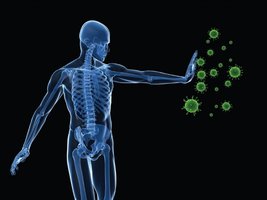
Concept Map of Immunity
Innate vs. Adaptive Immunity
The immune system consists of innate and adaptive components, each with unique properties and functions.
Innate Immunity: Rapid, non-specific, no memory, always the same response.
Adaptive Immunity: Slower, highly specific, memory formation, response improves with repeated exposure.
Key Cells and Proteins:
Innate: Granulocytes, macrophages, dendritic cells, NK cells; complement proteins, type I interferons, antimicrobial proteins.
Adaptive: B cells, T cells; antibodies, IFN-gamma, antigen receptors.
Processes:
Innate: Phagocytosis, antigen presentation, inflammation.
Adaptive: Memory formation, gene rearrangement, selection for auto-reactivity, differentiation of T cell subsets.
Three Lines of Defense
Physical, Chemical, and Cellular Barriers
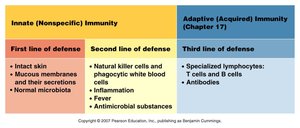
The immune system employs three lines of defense to protect against pathogens.
First Line: Physical and chemical barriers (skin, mucous membranes, normal flora).
Second Line: Innate immune cells (phagocytes, NK cells), inflammation, antimicrobial substances.
Third Line: Adaptive immune response (T cells, B cells, antibodies).
Physical and Chemical Barriers
Physical barriers such as intact skin and mucous membranes prevent pathogen entry. Tight junctions between cells, continuous renewal, and dryness/saltiness of skin enhance protection. Chemical barriers include antimicrobial proteins in saliva, tears, mucus, sweat, and breast milk. 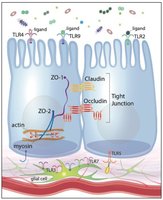
Innate Immunity: Cellular Mechanisms
Cells of the Innate Immune System
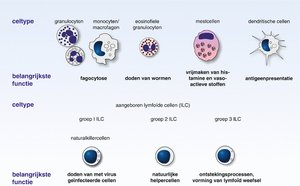
Innate immunity relies on several cell types for rapid, non-specific defense.
Granulocytes: Neutrophils (strongly phagocytic, early inflammation), eosinophils (attack parasites, some phagocytosis), basophils (release histamine in allergies).
Macrophages: Phagocytosis, tissue repair.
Dendritic Cells: Antigen presentation.
Natural Killer (NK) Cells: Kill virus-infected and tumor cells.
Phagocytosis
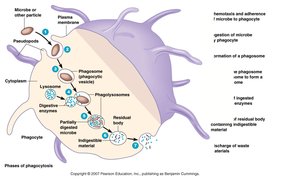
Phagocytosis is the process by which cells (macrophages, neutrophils) engulf and digest pathogens or particles. The steps include chemotaxis, ingestion, formation of a phagosome, fusion with lysosome (phagolysosome), digestion, and exocytosis of indigestible material.
Chemotaxis: Movement toward pathogen.
Ingestion: Engulfment by cell membrane.
Phagosome Formation: Internal vesicle containing pathogen.
Phagolysosome Formation: Fusion with lysosome, enzymatic digestion.
Exocytosis: Release of waste.
Oxidative Burst
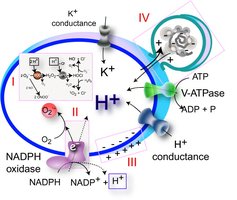
During phagocytosis, the phagolysosome generates reactive oxygen species (ROS) such as superoxide () and hydrogen peroxide () to kill pathogens. Myeloperoxidase converts to hypochlorite (), which is highly toxic to microbes.
NADPH oxidase: Generates superoxide.
Superoxide dismutase: Converts superoxide to hydrogen peroxide.
Myeloperoxidase: Converts hydrogen peroxide to hypochlorite.
Recognition of Pathogens
Pattern Recognition Receptors (PRRs) and PAMPs
Innate immune cells recognize pathogens using pattern recognition receptors (PRRs) that detect pathogen-associated molecular patterns (PAMPs) and damage-associated molecular patterns (DAMPs).
PAMPs: LPS (Gram-negative bacteria), peptidoglycan (Gram-positive), CpG DNA, viral RNA.
PRRs: Toll-like receptors (TLRs), NOD-like receptors (NLRs), C-type lectin receptors (CLRs), RIG-I-like receptors (RLRs).
Example: TLR4 recognizes LPS, triggering an immune response.
Inflammation and Cytokines
Role of Cytokines in Inflammation
Cytokines are signaling proteins released by immune cells to coordinate the inflammatory response. Key cytokines include TNF-α, IL-1, and IL-6.
TNF-α: Produced by macrophages, stimulates acute-phase protein synthesis in the liver, amplifies immune response.
IL-1, IL-6: Promote inflammation, fever, and recruitment of immune cells.
Excessive cytokine production can lead to chronic inflammatory diseases (e.g., rheumatoid arthritis).
Acute-Phase Response
The liver produces acute-phase proteins in response to cytokines, enhancing pathogen clearance and tissue repair.
Inflammation: Signs and Purpose
Four Pillars of Inflammation
Inflammation is characterized by four classic signs:
Warmth (calor)
Redness (rubor)
Swelling (tumor)
Pain (dolor)
A fifth sign, loss of function (functio laesa), may occur in chronic inflammation.
Purpose of Inflammation
Destroy and remove the source of infection or injury.
Contain the infection or injury.
Repair damaged tissue.
Lymphatic System
Structure and Function
The lymphatic system is an immunological filter that returns tissue fluid to the blood, transports dietary fats and vitamins, and plays a crucial role in immunity. Lymph nodes filter pathogens from lymph before it returns to circulation.
Primary and Secondary Lymphoid Organs
Primary: Bone marrow, thymus (site of cell production and selection).
Secondary: Spleen, lymph nodes, MALT (site of immune response).
Tertiary: Accumulation of immune cells in chronic inflammation or cancer.
Summary Table: Innate vs. Adaptive Immunity
Comparison of Defense Mechanisms
Innate (Nonspecific) Immunity | Adaptive (Acquired) Immunity |
|---|---|
First line: Intact skin, mucous membranes, secretions, normal microbiota | Third line: Specialized lymphocytes (T cells, B cells), antibodies |
Second line: NK cells, phagocytes, inflammation, fever, antimicrobial substances |
*Additional info: Table adapted from Pearson Education, summarizing the three lines of defense in immunity.*
Further Study and Resources
Campbell Biology, Chapter 43: The Immune System
Tortora, Microbiology, Chapter 16: Innate Immunity
Mastering Microbiology online resources
