 Back
Innate Immunity: The Body’s First and Second Lines of Defense
Study Guide - Smart Notes
 Tailored notes based on your materials, expanded with key definitions, examples, and context.
Innate Immunity
Overview of Immunity
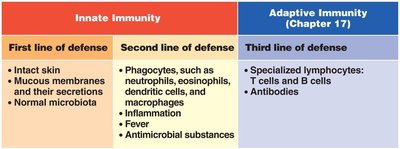
Immunity refers to the ability of an organism to resist and ward off disease. The immune system is divided into innate immunity (nonspecific defenses present from birth) and adaptive immunity (specific defenses acquired after exposure to pathogens). Innate immunity provides the first and second lines of defense against pathogens, while adaptive immunity constitutes the third line of defense.
Innate Immunity | Adaptive Immunity (Chapter 17) |
|---|---|
First line of defense
Second line of defense
| Third line of defense
|
Key Vocabulary
Susceptibility: Lack of resistance to a disease.
Immunity: Ability to ward off disease.
Innate immunity: Defenses against any pathogen; present from birth.
Adaptive immunity: Immunity or resistance to a specific pathogen; acquired after exposure.
Transferrins: Proteins that bind serum iron, limiting bacterial growth.
First Line of Defense: Physical and Chemical Barriers
Physical Barriers
The first line of defense consists of physical barriers that prevent pathogen entry. These include the skin, mucous membranes, and normal microbiota.
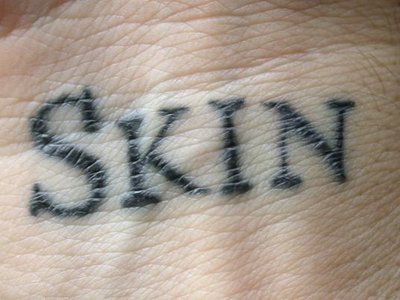
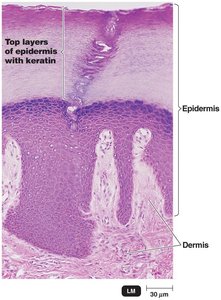
Skin: The epidermis is composed of tightly packed cells containing keratin, a protective protein that provides a formidable barrier to pathogens.
Mucous membranes: Line the body cavities open to the exterior and secrete mucus, which traps microbes and particles.
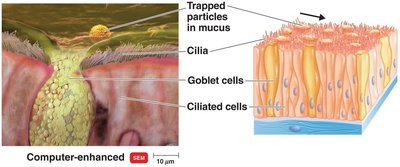
Ciliary escalator: In the respiratory tract, cilia move mucus and trapped microbes upward away from the lungs.
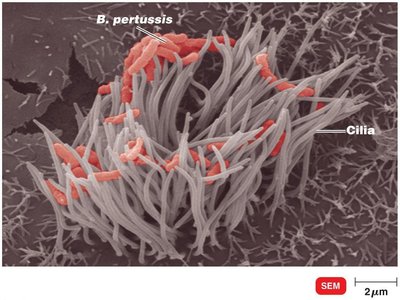
Normal microbiota: Compete with pathogens for niches, produce acids, and secrete bacteriocins that inhibit pathogen growth.
Chemical Barriers
Chemical factors also inhibit the growth of pathogenic organisms.
Sebum: Contains fungistatic fatty acids.
Low pH: The skin (pH 3–5), gastric juice (pH 1.2–3.0), and vaginal secretions (pH 3–5) create hostile environments for pathogens.
Lysozyme: An enzyme present in perspiration, tears, saliva, and urine that breaks down bacterial cell walls.
Second Line of Defense: Cellular and Chemical Responses
Leukocytes (White Blood Cells)
Leukocytes are divided into granulocytic and agranulocytic types, each with specialized immune functions.
Granulocytes: Include neutrophils, eosinophils, and basophils, named for the staining properties of their granules.
Agranulocytes: Include lymphocytes, monocytes, and dendritic cells.
Granulocytes
Neutrophils: Perform phagocytosis, release antimicrobial granules, and form neutrophil extracellular traps (NETs).
Eosinophils: Ingest substances associated with the humoral immune response, help ingest large organisms (e.g., protozoa, parasitic worms), and contain anti-inflammatory substances.
Basophils: Release histamine (initiates inflammation and allergic reactions) and heparin (anticoagulant).
Agranulocytes
Lymphocytes: Include T cells, B cells, and natural killer (NK) cells. NK cells can destroy tumor cells and virus-infected cells without prior activation.
Monocytes: Differentiate into macrophages in tissues, where they remove debris, ingest foreign substances, and present antigens.
Dendritic cells: Specialized in antigen presentation and activation of adaptive immunity.
Phagocytosis
Phagocytosis is the process by which phagocytes engulf and destroy pathogens. Some microbes evade phagocytosis by inhibiting adherence, killing phagocytes, escaping the phagosome, or surviving within phagolysosomes.
Inflammation
Inflammation is a local defensive response to tissue damage, characterized by redness, swelling, pain, and heat. It involves vasodilation, increased permeability of blood vessels, and migration of phagocytes to the site of injury.
Key mediators: Histamine, kinins, prostaglandins, and leukotrienes.
Fever
Fever is an abnormally high body temperature, often caused by infection. It is triggered by cytokines such as interleukin-1 (IL-1) and results in increased metabolism, shivering, and elevated temperature. Fever can enhance immune responses but may also have harmful effects if too high.
The Complement System
The complement system is a group of serum proteins that enhance immune responses through a cascade of activation. It can be triggered by antigen-antibody reactions or pathogen surfaces.
Major outcomes:
Opsonization (C3b): Enhanced phagocytosis
Inflammation (C3a, C5a): Attracts phagocytes and increases vascular permeability
Cytolysis (C5b-C9): Formation of the membrane attack complex (MAC) that lyses cells
Pathogens may evade complement by producing capsules, altering surface molecules, or degrading complement proteins.
Interferons (IFNs)
Interferons are cytokines with antiviral properties. IFN-α and IFN-β induce cells to produce antiviral proteins, while IFN-γ activates neutrophils and macrophages to enhance phagocytosis.
Application: Nosocomial Infections
Nosocomial (hospital-acquired) infections can occur when innate defenses are compromised, such as in patients who are intubated and mechanically ventilated. Pathogens like Burkholderia cepacia can be transmitted via contaminated equipment or solutions, leading to infection in susceptible individuals.
