 Back
BackInside the Cell: Structure and Function of Organelles
Study Guide - Smart Notes
 Tailored notes based on your materials, expanded with key definitions, examples, and context.
Inside the Cell: Structure and Function of Organelles
Introduction to Cellular Organization
Cells are the fundamental units of life, and their internal structures—organelles—enable them to perform complex biological functions. This section explores the diversity of cell types, the organization of cellular components, and the specialized roles of organelles in both prokaryotic and eukaryotic cells.
Cell Types and Classification
Prokaryotic vs. Eukaryotic Cells
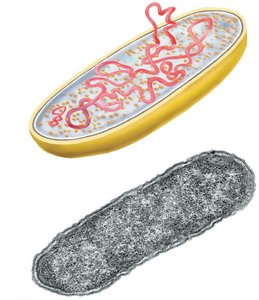
Prokaryotes lack a membrane-bound nucleus and organelles. Their DNA is located in a region called the nucleoid.
Eukaryotes possess a true nucleus and a variety of membrane-bound organelles. This group includes protists, fungi, plants, and animals.
Organisms are classified into three domains based on evolutionary history: Bacteria (prokaryotic), Archaea (prokaryotic), and Eukarya (eukaryotic).
Cell Size and Complexity
Prokaryotic cells are generally smaller and simpler than eukaryotic cells.
Eukaryotic cells can be unicellular or multicellular and exhibit a wide range of sizes and forms.
Basic Cellular Structures
Plasma Membrane
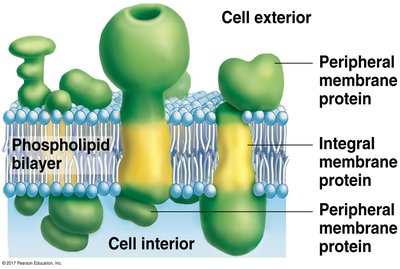
The plasma membrane is a phospholipid bilayer embedded with proteins, separating the cell from its environment and regulating the movement of substances in and out of the cell.
Integral membrane proteins span the membrane and are involved in transport and signaling.
Peripheral membrane proteins are attached to the membrane surface and play roles in signaling and maintaining cell shape.
Cytoplasm and Cytosol
Cytoplasm refers to the entire contents within the plasma membrane, excluding the nucleus in eukaryotes.
Cytosol is the fluid portion of the cytoplasm where many metabolic reactions occur.
Ribosomes
Ribosomes are macromolecular complexes composed of RNA and proteins. They are the sites of protein synthesis (translation) in all cells.
Ribosomes can be free in the cytosol or bound to the endoplasmic reticulum in eukaryotes.
They function as ribozymes, catalyzing peptide bond formation.
Prokaryotic Cell Structures
Genetic Material
Prokaryotes have a single, circular chromosome located in the nucleoid region.
They may also contain plasmids, which are small, circular DNA molecules carrying additional genes.
Cell Wall
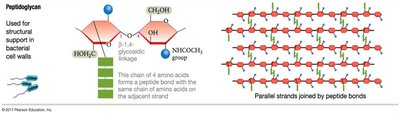
The cell wall provides structural support and protection. In bacteria, it is primarily composed of peptidoglycan, a polymer of sugars and amino acids.
External Structures
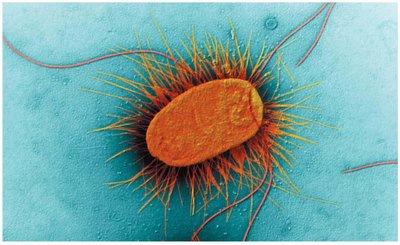
Flagella are long, whip-like structures used for movement.
Fimbriae are hair-like projections that help cells attach to surfaces.
Eukaryotic Cell Structures
Overview of Eukaryotic Diversity
Eukaryotes include a wide range of organisms, from microscopic algae to large plants and animals.
They may be unicellular or multicellular and possess complex internal compartmentalization.
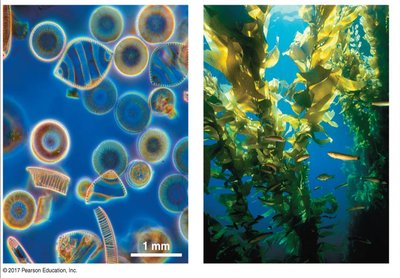
Compartmentalization and Organelles
Eukaryotic cells contain numerous organelles, each with specialized functions. Compartmentalization allows for separation of incompatible reactions and increased efficiency.
Examples of organelles: nucleus, endoplasmic reticulum, Golgi apparatus, mitochondria, chloroplasts, lysosomes, peroxisomes, and vacuoles.
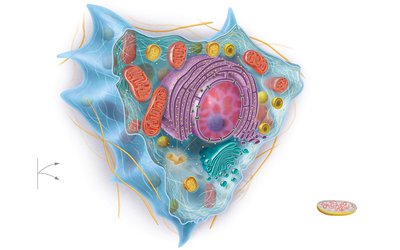
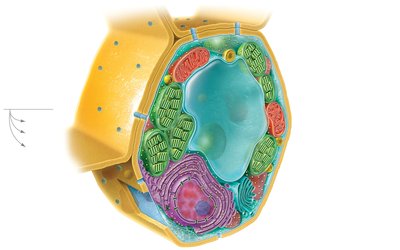
Generalized Animal and Plant Cells
Animal and plant cells share many organelles but also have unique structures.
Animal cells contain centrioles and lysosomes, which are generally absent in plant cells.
Plant cells have a cell wall, chloroplasts, and a large central vacuole, which are not found in animal cells.
Key Eukaryotic Organelles and Their Functions
Nucleus
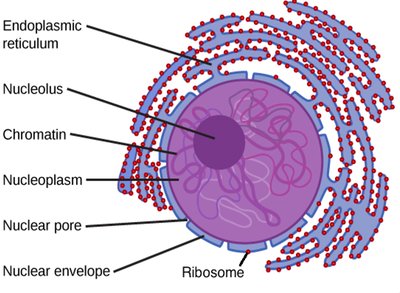
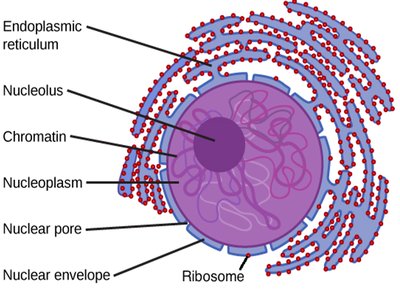
The nucleus is the control center of the cell, containing most of the cell's genetic material. It is surrounded by a double membrane called the nuclear envelope, which contains nuclear pores for transport.
The nucleolus is the site of ribosomal RNA synthesis and ribosome assembly.
The nuclear lamina provides structural support to the nucleus.
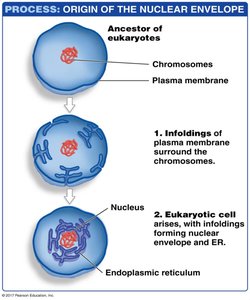
Origin of the Nuclear Envelope
The nuclear envelope likely originated from infoldings of the plasma membrane in ancestral cells, which eventually surrounded the chromosomes and formed a double membrane structure.
Endoplasmic Reticulum (ER)
Rough ER (RER): Studded with ribosomes; synthesizes proteins that are either secreted, inserted into membranes, or sent to organelles.
Smooth ER (SER): Lacks ribosomes; involved in lipid synthesis, detoxification, and calcium ion storage.
Golgi Apparatus
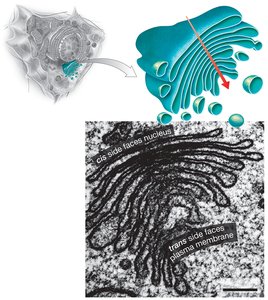
The Golgi apparatus processes, sorts, and ships proteins and lipids received from the ER. It has a distinct polarity with a cis face (receiving side) and a trans face (shipping side).
Lysosomes
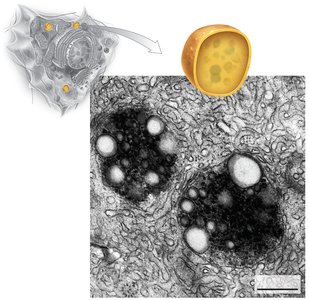
Lysosomes are recycling centers found only in animal cells. They contain acid hydrolases that digest macromolecules and export monomers to the cytosol. Lysosomes maintain a low internal pH for enzyme activity.
Endomembrane System
The endomembrane system includes the ER, Golgi apparatus, and lysosomes. It is responsible for the production, processing, and transport of proteins and lipids within the cell.
Proteins are synthesized in the ER, processed in the Golgi, and delivered to their destinations, including lysosomes.
Vacuoles
Vacuoles are large, membrane-bound organelles found in plants and fungi. They function in storage, protection, and, in some cases, digestion.
Mitochondria
Mitochondria are the sites of ATP synthesis through cellular respiration. They have two membranes, their own DNA, and ribosomes. The inner membrane forms cristae, increasing surface area for energy production.
Chloroplasts
Chloroplasts are found in plants and algae and are the sites of photosynthesis. They have two outer membranes and an internal system of thylakoids. Chloroplasts also contain their own DNA and ribosomes.
Endosymbiosis Theory
The endosymbiosis theory proposes that mitochondria and chloroplasts originated from free-living bacteria that were engulfed by ancestral eukaryotic cells, leading to a symbiotic relationship.
Cell Structure and Function
Correlation of Structure and Function
The structure and composition of eukaryotic cells are closely related to their specific functions. Cells are dynamic, with interacting parts and constant molecular movement.
Summary Table: Comparison of Prokaryotic and Eukaryotic Cells
Feature | Prokaryotic Cells | Eukaryotic Cells |
|---|---|---|
Nucleus | Absent | Present |
Organelles | Few, non-membrane-bound | Many, membrane-bound |
Cell Size | Small (0.1–5 µm) | Larger (10–100 µm) |
DNA Structure | Single, circular chromosome | Multiple, linear chromosomes |
Examples | Bacteria, Archaea | Protists, Fungi, Plants, Animals |
Key Terms
Organelle: Specialized structure within a cell that performs a specific function.
Endomembrane system: Network of membranes involved in protein and lipid synthesis and transport.
Endosymbiosis: Evolutionary theory explaining the origin of mitochondria and chloroplasts from symbiotic bacteria.
Additional info: The notes above integrate foundational concepts from cell biology, including the structure and function of organelles, the evolutionary origins of eukaryotic complexity, and the importance of compartmentalization for cellular efficiency. This content is essential for understanding the molecular basis of life and is directly relevant to college-level biology courses.
