 Back
Inside the Cell: Structure and Function of Prokaryotic and Eukaryotic Cells
Study Guide - Smart Notes
 Tailored notes based on your materials, expanded with key definitions, examples, and context.
Inside the Cell
Introduction to Cell Structure
Cells are the fundamental units of life, and all organisms are composed of one or more cells. The properties of life emerge from the collaboration of internal structures within a cell. Understanding the differences and similarities between prokaryotic and eukaryotic cells is essential for grasping the diversity and complexity of life.
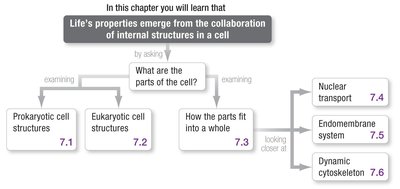
Prokaryotic and Eukaryotic Cell Structures
Domains of Life
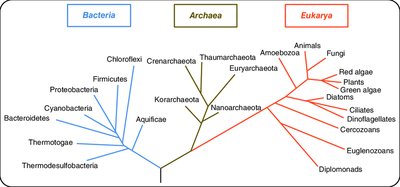
All living organisms are classified into three domains: Bacteria, Archaea, and Eukarya. Prokaryotes include Bacteria and Archaea, while Eukaryotes include plants, animals, fungi, and protists.
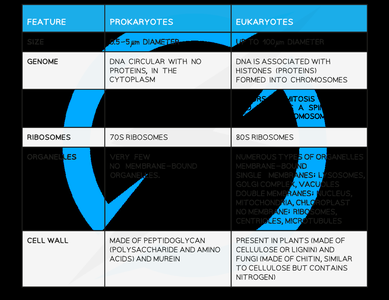
Comparison of Prokaryotic and Eukaryotic Cells
Prokaryotic and eukaryotic cells differ in size, complexity, and the presence of membrane-bound organelles. The table below summarizes the main differences:
Feature | Prokaryotes | Eukaryotes |
|---|---|---|
Size | 0.5–5 μm diameter | Up to 40 μm diameter |
Genome | DNA circular, no histones, in cytoplasm | DNA associated with histones, in chromosomes |
Ribosomes | 70S ribosomes | 80S ribosomes |
Organelles | Very few, no membrane-bound organelles | Numerous types of organelles, membrane-bound |
Cell Wall | Peptidoglycan (bacteria), various in archaea | Plants: cellulose; Fungi: chitin; Animals: none |
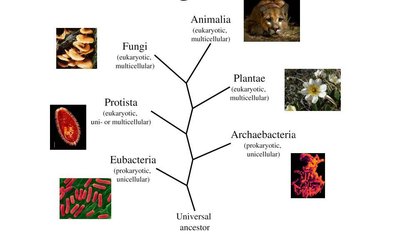
Phylogenetic Relationships
The evolutionary relationships among the major groups of life are depicted in phylogenetic trees, showing the divergence from a universal ancestor into the domains and kingdoms.
Prokaryotic Cell Structure
Genetic Material and Supercoiling
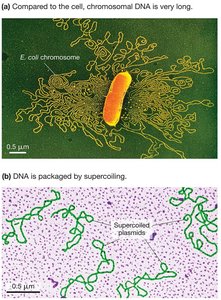
Most prokaryotes have a single, circular chromosome located in the nucleoid region. DNA is often supercoiled to fit within the cell, and additional small DNA molecules called plasmids may be present.
Supercoiling allows the long DNA molecule to be compacted into the small cell volume.
Plasmids often carry genes that confer advantages, such as antibiotic resistance.
Internal Membrane Systems
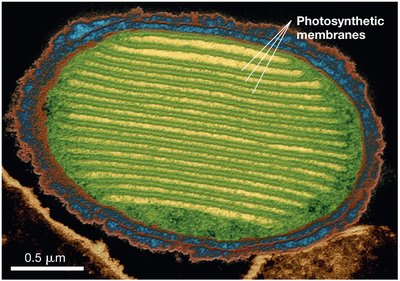
Some prokaryotes, especially photosynthetic bacteria, have extensive internal membrane systems that increase the surface area for metabolic reactions, such as photosynthesis.
Specialized Organelles in Prokaryotes
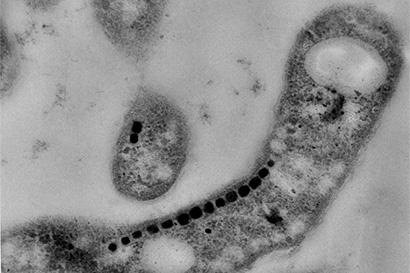
Certain prokaryotes possess simple organelles for specialized functions, such as storing ions or orienting the cell using magnetic crystals (magnetosomes).
External Structures: Movement and Attachment
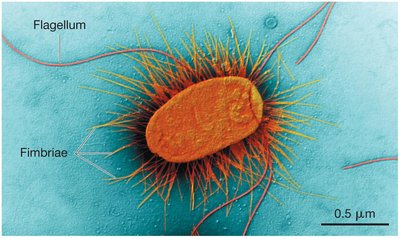
Prokaryotes interact with their environment using external structures:
Flagella: Long, whip-like structures that rotate to propel the cell.
Fimbriae: Short, needle-like projections that help cells attach to surfaces or other cells.
Eukaryotic Cell Structure
General Features
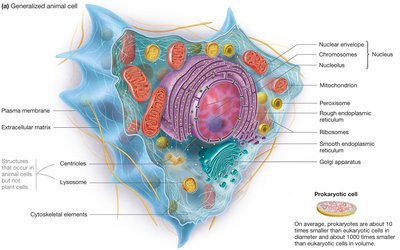
Eukaryotic cells are generally larger and more complex than prokaryotic cells. They contain numerous membrane-bound organelles that compartmentalize cellular functions.
Examples: Protists, fungi, plants, and animals
Size: 5–100 μm
Specialized Structures in Plant Cells
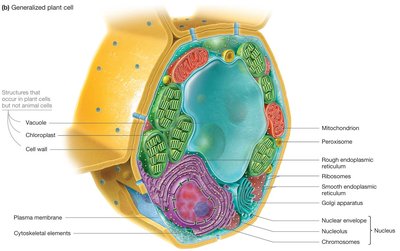
Plant cells have unique organelles not found in animal cells:
Vacuole: Stores water, ions, pigments, and sometimes toxins.
Chloroplast: Site of photosynthesis.
Cell Wall: Provides structural support and protection.
The Nucleus
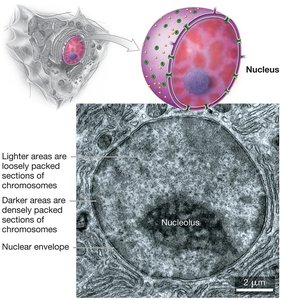
The nucleus is a large, membrane-bound compartment that contains the cell's genetic material. It is surrounded by a double-membrane nuclear envelope with pore-like openings. The nucleolus, a distinct region within the nucleus, is the site of ribosomal RNA synthesis and ribosome assembly.
Ribosomes
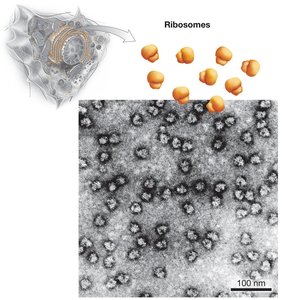
Ribosomes are molecular machines responsible for protein synthesis. They are found free in the cytosol or attached to the endoplasmic reticulum (ER). Ribosomes are not membrane-bound and are present in both prokaryotic and eukaryotic cells.
Endoplasmic Reticulum (ER)
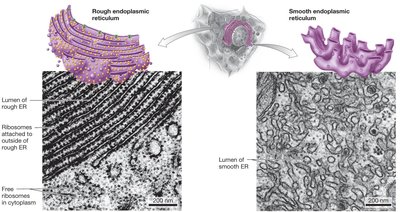
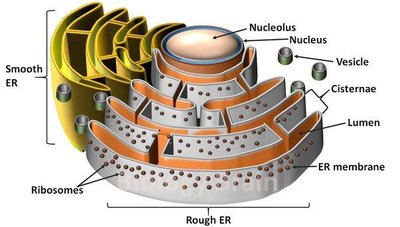
The ER is an extensive network of membranes continuous with the nuclear envelope. It has two regions:
Rough ER (RER): Studded with ribosomes; synthesizes proteins destined for secretion, membranes, or organelles.
Smooth ER (SER): Lacks ribosomes; involved in lipid synthesis and detoxification.
Golgi Apparatus
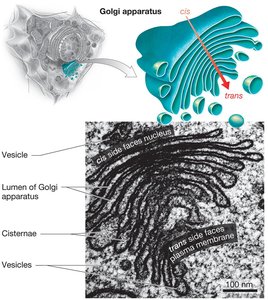
The Golgi apparatus processes, sorts, and ships proteins received from the RER. It consists of stacked, flat membranous sacs called cisternae, with a cis face (receiving side) and a trans face (shipping side).
Lysosomes
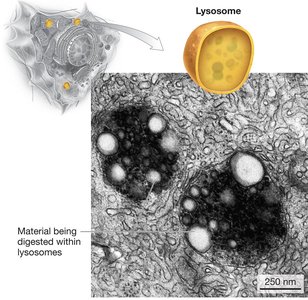
Lysosomes are recycling centers found only in animal cells. They contain hydrolytic enzymes (acid hydrolases) that digest macromolecules. The internal pH is maintained at around 5.0 by proton pumps.
Peroxisomes
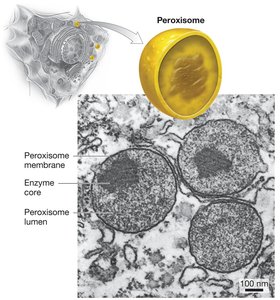
Peroxisomes are globular organelles found in all eukaryotic cells. They are the site of reduction-oxidation (redox) reactions, including the breakdown of fatty acids and detoxification of harmful substances. In plants, specialized peroxisomes called glyoxysomes convert fats into sugars.
Mitochondria
Mitochondria are the powerhouses of the cell, supplying ATP through cellular respiration. They have two membranes, their own DNA (mtDNA), and can grow and divide independently of the cell cycle. The inner membrane is highly folded into cristae to increase surface area for energy production.
Chloroplasts
Chloroplasts are found in plant and algal cells and are the site of photosynthesis. They have three membranes, with the innermost forming thylakoids arranged in stacks called grana. Like mitochondria, chloroplasts contain their own DNA and ribosomes and can divide independently.
Endosymbiosis Theory
The endosymbiosis theory proposes that mitochondria and chloroplasts originated as free-living bacteria that were engulfed by ancestral eukaryotic cells. This mutually beneficial relationship led to the evolution of modern eukaryotes.
Summary
Cells are the basic units of life, with prokaryotic and eukaryotic cells differing in complexity and internal organization. Eukaryotic cells contain specialized organelles that compartmentalize functions, allowing for greater efficiency and specialization. Understanding cell structure is fundamental to all areas of biology.
