 Back
BackIntroduction to Animal Diversity (Chapter 32): Structure, Evolution, and Classification
Study Guide - Smart Notes
 Tailored notes based on your materials, expanded with key definitions, examples, and context.
Introduction to Animal Diversity
Overview of Animal Characteristics
Animals are a diverse group of eukaryotic, multicellular organisms distinguished by their mode of nutrition, structural proteins, and unique tissues. This section outlines the fundamental features that define animals and distinguish them from other kingdoms.
Eukaryotic and Multicellular: Animals are composed of multiple cells with membrane-bound organelles.
Heterotrophic: Animals ingest food and digest it internally, unlike plants (autotrophic) and fungi (which digest externally and absorb nutrients).
Structural Support: Animals lack cell walls and are supported by proteins such as collagen.
Unique Tissues: Nervous and muscle tissues are defining features of animals.
Reproduction: Most animals reproduce sexually, with the diploid stage dominating the life cycle. Gametes are produced directly by meiosis.
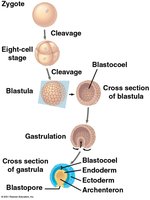
Development: Animal development involves cleavage, blastula formation, and gastrulation, leading to specialized embryonic tissues.
Regulatory Genes: All animals possess developmental genes, including a unique family called Hox genes, which control body plan and morphology.
History of Animal Evolution
Origins and Early Evidence
The evolutionary history of animals is traced through fossil records, molecular data, and comparative morphology. The earliest evidence of animals dates back over 700 million years.
Earliest Evidence: Chemical traces of steroids used by sponges found in 710-million-year-old sediments.
Common Ancestor: Molecular analysis suggests the animal lineage diverged from a common ancestor about 770 million years ago.
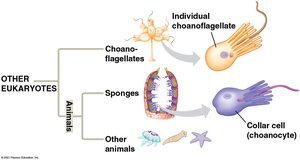
Closest Relatives: Protists called choanoflagellates are the closest living relatives to animals.
Major Eras in Animal Evolution
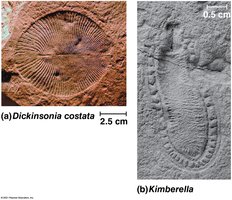
Neoproterozoic Era (1 billion – 541 million years ago): First macroscopic animal fossils (Ediacaran biota) appear, including forms resembling molluscs, sponges, and cnidarians.
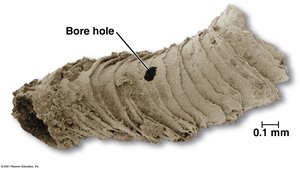
Evidence of Predation: Fossils such as Cloudina show bore holes, indicating predator-prey interactions.
Paleozoic Era (541–252 million years ago): The Cambrian explosion marks a rapid diversification of animal forms, including the first hard skeletons and the emergence of most major animal groups.
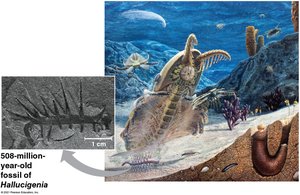
Mesozoic Era (252–66 million years ago): Formation of coral reefs, diversification of reptiles (including dinosaurs), and the appearance of mammals and flowering plants.
Cenozoic Era (66 million years ago to present): Extinction of large reptiles, rise of mammals, and cooling of the global climate. Primate ancestors of humans adapted to new environments.
Animal Body Plans and Classification
Body Symmetry
Animal body plans are classified based on symmetry, which often correlates with lifestyle and movement.
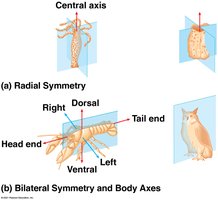
Radial Symmetry: Body parts arranged around a central axis; typical of sessile or planktonic animals (e.g., jellyfish).
Bilateral Symmetry: Body has distinct left and right sides, with dorsal (top), ventral (bottom), anterior (head), and posterior (tail) ends. Associated with active movement and cephalization (concentration of sensory organs at the head).
Tissues and Germ Layers
Animals are also classified by the number of germ layers formed during embryonic development, which give rise to tissues and organs.
Diploblastic: Two germ layers (ectoderm and endoderm); found in cnidarians and a few others.
Triploblastic: Three germ layers (ectoderm, mesoderm, endoderm); characteristic of all bilaterians.
Ectoderm: Forms outer covering and nervous system.
Endoderm: Forms lining of digestive tract and organs.
Mesoderm: Forms muscles and most internal organs (in triploblasts).
Body Cavities
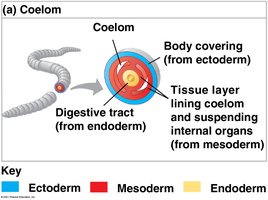
Most triploblastic animals possess a body cavity (coelom), which serves various functions such as cushioning organs, acting as a hydrostatic skeleton, and allowing organ movement.
Coelom: A true body cavity completely lined by mesoderm-derived tissue.
Functions: Organ protection, movement, and growth independent of the body wall.
Developmental Modes: Protostomes vs. Deuterostomes
Cleavage Patterns
Protostome Development: Spiral and determinate cleavage; fate of each embryonic cell is set early.
Deuterostome Development: Radial and indeterminate cleavage; each cell in early stages can develop into a complete embryo.
Coelom Formation
Protostomes: Coelom forms by splitting of solid masses of mesoderm.
Deuterostomes: Coelom forms from mesodermal outpocketings of the archenteron.
Fate of the Blastopore
Protostomes: Blastopore becomes the mouth.
Deuterostomes: Blastopore becomes the anus.
Diversification and Phylogeny of Animals
Major Clades and Phylogenetic Relationships
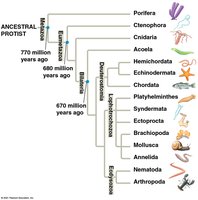
Modern animal diversity is organized into major clades based on molecular and morphological data. Phylogenetic trees illustrate evolutionary relationships among animal phyla.
All animals share a common ancestor.
Sponges (Porifera) are the sister group to all other animals.
Eumetazoa: Clade of animals with true tissues (all except sponges and a few others).
Bilateria: Most animal phyla belong to this clade, characterized by bilateral symmetry and three germ layers.
Chordata: The only phylum with vertebrates (animals with a backbone).
Examples of Major Animal Groups
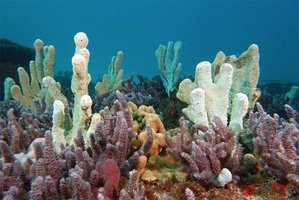
Porifera (Sponges): Simple, aquatic invertebrates, mostly marine.
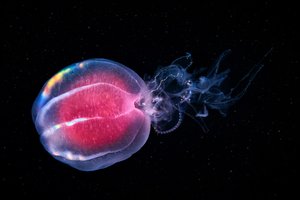
Ctenophora (Comb Jellies): Marine invertebrates with rows of cilia for locomotion.
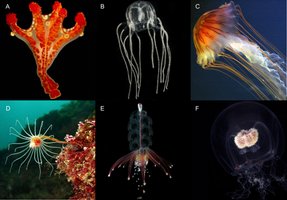
Cnidaria: Soft-bodied, stinging animals such as corals, sea anemones, and jellyfish.
Bilaterian Clades
Deuterostomia: Includes some invertebrates (e.g., acorn worms, sea stars) and all vertebrates.
Ecdysozoa: Characterized by molting (ecdysis) of an external skeleton; includes nematodes and arthropods.
Lophotrochozoa: Defined by the presence of a lophophore (feeding structure) or trochophore larva; includes molluscs and annelids.
