 Back
BackIntroduction to Animal Diversity: Structure, Evolution, and Classification
Study Guide - Smart Notes
 Tailored notes based on your materials, expanded with key definitions, examples, and context.
Introduction to Animal Diversity
Overview of Kingdom Animalia
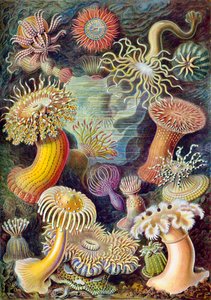
The animal kingdom, or Kingdom Animalia, encompasses a vast diversity of multicellular, heterotrophic eukaryotes. Over 1.3 million extant animal species have been identified, but estimates suggest the true number may reach 100–200 million. Animals are defined by several unique characteristics, including their mode of nutrition, lack of cell walls, and the presence of specialized tissues.
Multicellularity: Animals are composed of multiple cells that form complex structures.
Heterotrophy: Animals obtain nutrients by ingesting other organisms.
No Cell Walls: Animal cells are held together by structural proteins such as collagen.
Specialized Tissues: Most animals possess nervous and muscle tissues, which are not found in plants or fungi.
Example: The diversity of animal forms includes sponges, insects, birds, mammals, and more.
Animal Life Cycles and Development
Ploidy and Sexual Reproduction
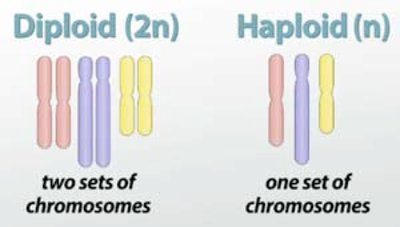
Most animals reproduce sexually, with the diploid stage dominating the life cycle. Ploidy refers to the number of sets of chromosomes in a cell. Animals alternate between haploid (n) gametes and diploid (2n) zygotes.
Diploid (2n): Two sets of chromosomes (one from each parent).
Haploid (n): One set of chromosomes (gametes: sperm and egg).
Early Embryonic Development
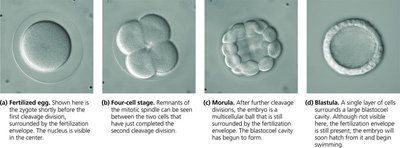
After fertilization, the diploid zygote undergoes a series of mitotic divisions called cleavage, forming a hollow ball of cells known as the blastula. Gastrulation follows, producing the gastrula and establishing the primary germ layers.
Cleavage: Rapid mitotic divisions without cell growth.
Blastula: Hollow ball of cells.
Gastrulation: Rearrangement of cells to form germ layers (ectoderm, endoderm, mesoderm).
Germ Layers and Tissue Organization
Germ layers are formed during gastrulation and give rise to all tissues and organs in the animal body:
Ectoderm: Forms the outer covering and nervous tissue.
Endoderm: Lines the digestive tract and associated organs.
Mesoderm: Develops into muscles and most internal organs (present in triploblastic animals).
Diploblastic animals have two germ layers (ectoderm and endoderm), while triploblastic animals have all three.
Larval Stages and Metamorphosis
Some animals undergo a sexually immature larval stage, which is morphologically distinct from the adult. The process of metamorphosis transforms the larva into a juvenile form that resembles the adult.
Genetic Regulation of Animal Development
Hox Genes and Morphological Diversity
All eukaryotes possess regulatory genes, but animals have unique Hox genes containing homeobox DNA sequences. These genes control the expression of other genes, influencing body plan and morphology. The evolution of the Hox gene complex contributed to the diversity of animal forms.
History of Animal Life on Earth
Major Eras in Animal Evolution
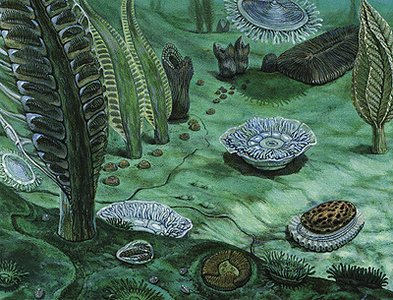
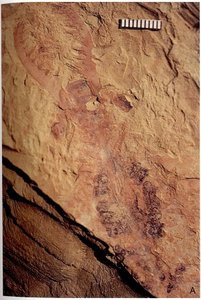
Neoproterozoic Era (1 billion – 542 mya): The oldest accepted animal fossils (Ediacaran biota) date to 565–550 million years ago. These were multicellular, eukaryotic, and often radially symmetrical organisms.
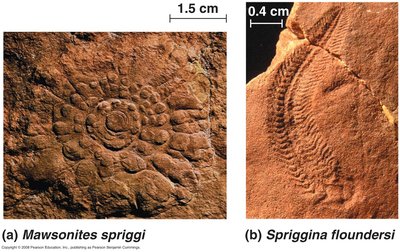
Paleozoic Era (542 – 251 mya): The Cambrian Explosion (about 530 mya) saw a dramatic diversification of animal phyla. Hypotheses for this event include new predator-prey relationships, increased atmospheric oxygen, and the evolution of Hox genes.
Mesozoic Era (251 – 65.5 mya): Few new body plans emerged, but animals spread into new habitats. This era saw the rise of dinosaurs, birds, and the first mammals.
Cenozoic Era (65.5 mya – present): Mass extinctions (e.g., the K-T extinction) led to the disappearance of large dinosaurs, allowing mammals to diversify and exploit new ecological niches.
Animal Body Plans and Classification
Key Features Defining Animal Groups
Animal groups are classified based on several key features:
Symmetry: Asymmetry, radial symmetry, and bilateral symmetry.
Organization of Tissues: Presence and arrangement of germ layers.
Type of Body Cavity: Coelomate, pseudocoelomate, and acoelomate conditions.
Pattern of Embryonic Development: Fate of the blastopore (protostome vs. deuterostome).
Body Symmetry
Asymmetry: No symmetry (e.g., sponges).
Radial Symmetry: Any slice through the central axis produces mirror images; top and bottom, but no left/right sides (e.g., cnidarians).
Bilateral Symmetry: Only one plane produces mirror images; distinct dorsal/ventral and anterior/posterior ends (e.g., most animals).
Organization of Tissues (Germ Layers)
Diploblastic: Two germ layers (ectoderm and endoderm).
Triploblastic: Three germ layers (ectoderm, mesoderm, endoderm).
The distinction between diploblastic and triploblastic embryos can be made at the gastrulation stage.
Body Cavities
Body cavities are present only in triploblastic animals and are classified as follows:
Type | Description |
|---|---|
Coelomate | Body cavity completely lined by mesoderm |
Pseudocoelomate | Body cavity not completely lined by mesoderm |
Acoelomate | No body cavity |
Functions of the body cavity:
Cushions organs to prevent injury
Acts as a hydrostatic skeleton in some animals
Provides space for organ growth and movement
Pattern of Embryonic Development
Protostomes: Spiral and determinate cleavage; blastopore becomes the mouth.
Deuterostomes: Radial and indeterminate cleavage; blastopore becomes the anus.
Modern Animal Phylogeny
Traditional vs. Molecular Classification
Animal phylogeny has been shaped by both morphological and molecular data. Both approaches agree that all animals share a single origin, with sponges (or possibly ctenophores) as the most basal group. Most animals are Bilaterians, and chordates belong to the clade Deuterostomia. However, molecular data have led to the recognition of two additional major clades within Bilateria: Ecdysozoa and Lophotrochozoa.
Deuterostomia: Includes vertebrates (fish, amphibians, reptiles, birds, mammals).
Ecdysozoa: Protostomes that molt their exoskeleton (ecdysis).
Lophotrochozoa: Protostomes with a trochophore larva or lophophore feeding structure.
Animal Diversity and Extinction
Despite the great diversity of living animal species, it is estimated that 99% of all animal species that have ever lived are now extinct. Major events such as the Cambrian explosion and the Cretaceous (K-T) extinction have shaped the evolutionary history of animals through cycles of diversification and extinction.
Additional info: The notes above integrate foundational concepts from introductory animal biology, including evolutionary history, developmental biology, and modern phylogenetic classification, as covered in college-level courses.
