 Back
Introduction to Animals: Body Plans, Development, and Diversity
Study Guide - Smart Notes
 Tailored notes based on your materials, expanded with key definitions, examples, and context.
Introduction to Animals
Key Characteristics of Animals
Animals are a diverse group of eukaryotic, multicellular organisms that share several defining characteristics. Understanding these features is essential for distinguishing animals from other life forms.
Eukaryotic: Animals possess cells with membrane-bound organelles and a true nucleus.
Heterotrophic (via ingestion): Animals obtain nutrients by consuming other organisms.
Lack cell walls: Animal cells are supported by structural proteins such as collagen rather than rigid cell walls.
Organized tissues: Most animals have specialized tissues that perform distinct functions.
Dominant diploid stage: The multicellular stage of animals is typically diploid.

Animal Body Plans
Symmetry in Animals
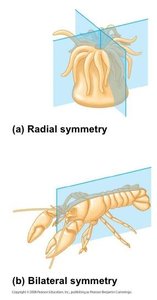
Animal body plans are often categorized by their symmetry, which influences movement and sensory perception.
Radial symmetry: Body parts are arranged around a central axis, allowing the organism to sense the environment equally from all sides. Common in sessile or drifting animals (e.g., jellyfish).
Bilateral symmetry: Body has distinct left and right sides, with dorsal (top), ventral (bottom), anterior (front), and posterior (back) orientations. Associated with cephalization (concentration of nervous tissue at the head) and more complex movement.
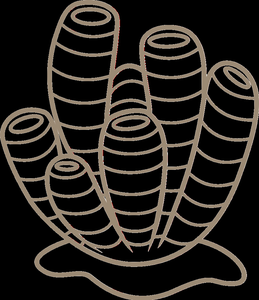
No symmetry: Some animals, such as sponges (Phylum Porifera), lack any plane of symmetry.
Body Plans: Tissues and Germ Layers
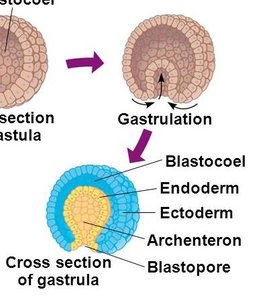
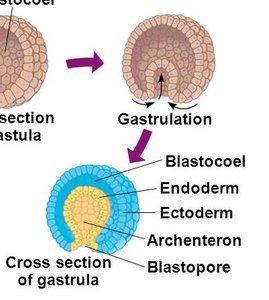
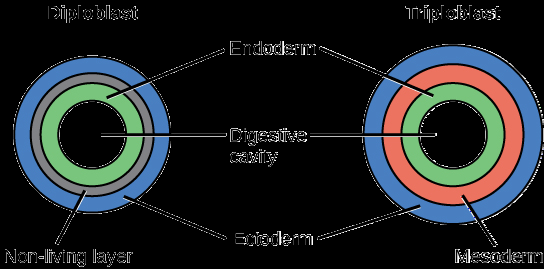
Animal embryos develop distinct tissue layers through the process of gastrulation, which is fundamental to the formation of complex body structures.
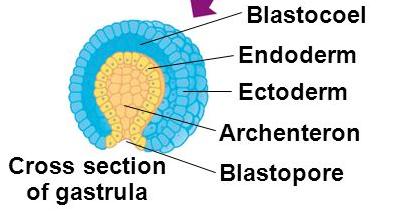
Gastrulation: The blastula (a single-layered sphere of cells) folds inward to form a gastrula with multiple layers.
Germ layers:
Ectoderm: Forms the outer covering and, in some animals, the central nervous system.
Endoderm: Forms the lining of the digestive tract and associated organs.
Mesoderm: (in triploblastic animals) Forms muscles and many internal organs.
Diploblasts vs. Triploblasts
Animals are classified based on the number of germ layers present in the embryo.
Diploblasts: Have two germ layers (ectoderm and endoderm). Example: Cnidarians.
Triploblasts: Have three germ layers (ectoderm, mesoderm, endoderm). Most animals, including all bilaterians, are triploblastic.
Body Cavities in Triploblasts
Types of Body Cavities
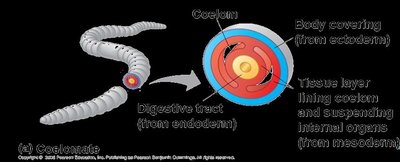
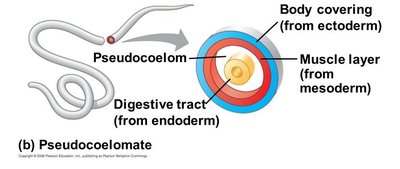
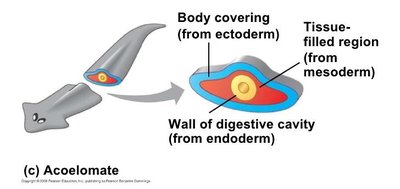
Triploblastic animals may possess a body cavity (coelom), which plays a critical role in organ development and movement.
Coelomate: True coelom completely lined by mesoderm-derived tissue.
Pseudocoelomate: Body cavity partially lined by mesoderm.
Acoelomate: Lack a body cavity between the digestive tract and outer body wall.
Type | Body Cavity | Lining |
|---|---|---|
Coelomate | True coelom | Completely mesoderm |
Pseudocoelomate | Pseudocoelom | Partially mesoderm |
Acoelomate | None | No cavity |
Functions of the Coelom
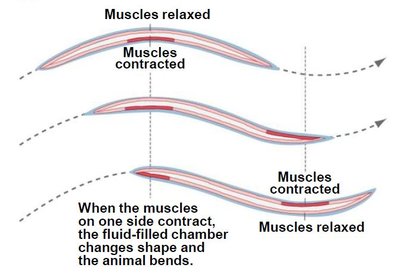
The coelom serves several important functions in animal physiology and movement.
Cushions internal organs against mechanical shock.
Allows organs to grow and move independently of the outer body wall.
Facilitates movement in animals without limbs by acting as a hydrostatic skeleton.
Developmental Modes: Protostomes vs. Deuterostomes
Key Differences in Early Development
Triploblastic animals are further divided based on their embryonic development patterns.
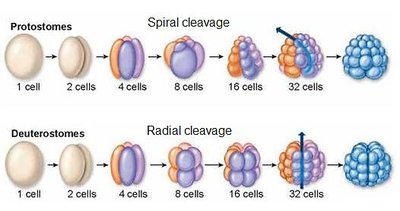
Cleavage:
Protostomes: Spiral and determinate cleavage (cell fate determined early).
Deuterostomes: Radial and indeterminate cleavage (cells retain the capacity to develop into a complete embryo).
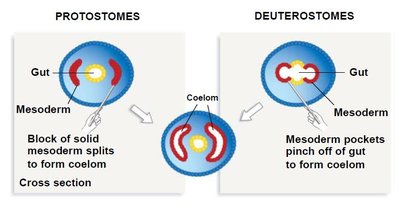
Coelom formation:
Protostomes: Coelom forms from solid masses of mesoderm splitting.
Deuterostomes: Coelom forms from mesodermal outpocketings of the archenteron.
Fate of the blastopore:
Protostomes: Blastopore becomes the mouth.
Deuterostomes: Blastopore becomes the anus.
Animal Diversity and Evolution
Phylogeny of Animals
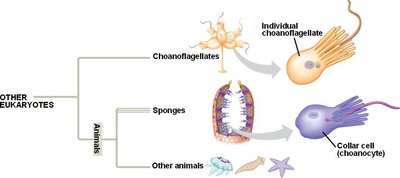
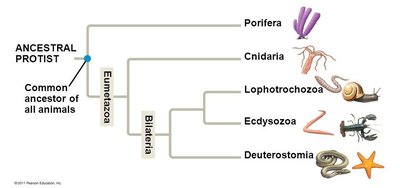
Animals are classified into major groups based on evolutionary relationships, with the closest living relatives being choanoflagellates (a group of protists).
Major groups: Porifera (sponges), Cnidaria, Lophotrochozoa, Ecdysozoa, Deuterostomia.
Choanoflagellates: Considered the closest living relatives to animals, sharing similarities with sponge collar cells (choanocytes).
Porifera (Sponges)
Sponges are among the simplest animals and provide insight into early animal evolution.
Lack true tissues: Composed of two cell layers separated by a gelatinous region (mesohyl).
Suspension feeders: Filter food particles from water drawn through their bodies.
Sessile: Adult sponges are non-motile and attached to substrates.
Reproduction: Sequential hermaphrodites; sperm is released into the water and taken in by neighboring sponges. The flagellated zygote swims to a new location to settle.
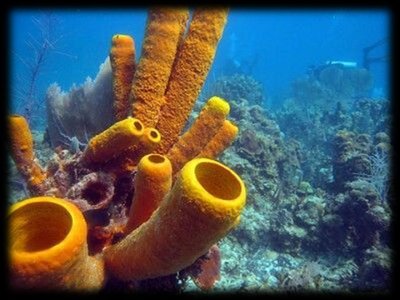
Sequential Hermaphroditism in Sponges
Sequential hermaphroditism is common in non-mobile organisms like sponges and plants. This reproductive strategy allows individuals to function as both male and female at different times, increasing the likelihood of successful reproduction in environments where mates are scarce or immobile.
Benefit: Maximizes reproductive opportunities for sessile organisms.
Summary Table: Key Animal Features
Feature | Description | Example |
|---|---|---|
Symmetry | Radial, bilateral, or none | Jellyfish (radial), lobster (bilateral), sponge (none) |
Germ Layers | Diploblastic (2), triploblastic (3) | Cnidarian (2), human (3) |
Body Cavity | Coelomate, pseudocoelomate, acoelomate | Earthworm (coelomate), roundworm (pseudocoelomate), flatworm (acoelomate) |
Developmental Mode | Protostome, deuterostome | Snail (protostome), human (deuterostome) |
Additional info: The study of animal body plans and development provides a foundation for understanding the diversity and evolutionary history of the animal kingdom. These concepts are essential for further exploration of animal physiology, ecology, and phylogeny.
