 Back
BackIntroduction to Animals: Structure, Classification, and Diversity
Study Guide - Smart Notes
 Tailored notes based on your materials, expanded with key definitions, examples, and context.
Introduction to Animals
Origin and Classification of Animalia
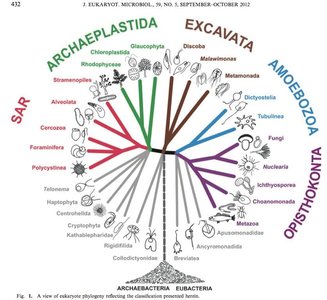
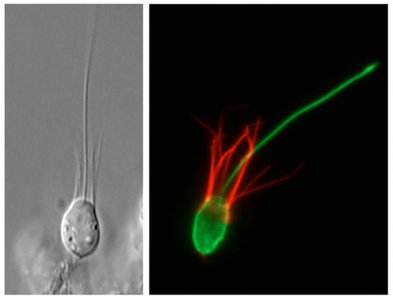
Animals belong to the kingdom Animalia, which originated from single-celled eukaryotes in the lineage Opisthokonta. This lineage also includes fungi, and the closest living relatives to animals are Choanoflagellates, unicellular flagellate protozoans. Animals are a monophyletic group, meaning all animals share a single common ancestor that was multicellular.
Multicellularity: Animal cells lack cell walls and possess an extensive extracellular matrix.
Heterotrophy: Animals obtain carbon compounds from other organisms, typically by ingestion.
Motility: Animals move under their own power at some stage in their life cycle.
Neurons and Muscle Cells: Most animals (except sponges) have neurons and muscle cells for movement and signal transmission.
Sponges: The Most Primitive Animals
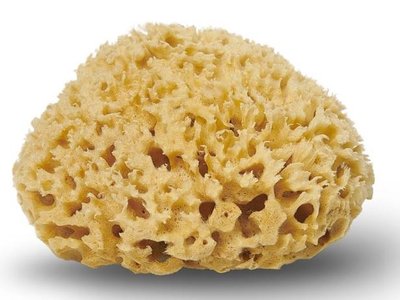
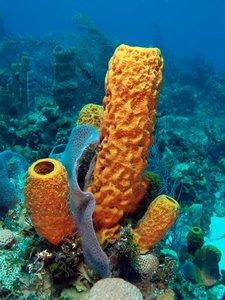
Sponges represent the most ancient lineage of animals and lack complex tissues. They possess the basic genetic toolkit for cell–cell and cell–ECM adhesion, and some have simple epithelium.
No true tissues: Sponges do not have organs or differentiated tissues.
Genetic toolkit: Genes for cell adhesion and basic tissue formation are present.
Animal Embryonic Development
Protostomes and Deuterostomes
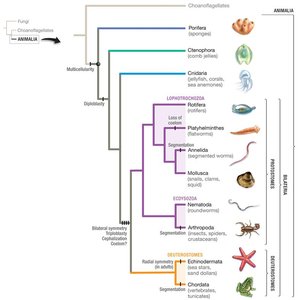
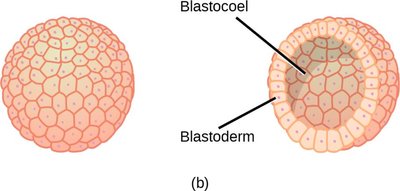
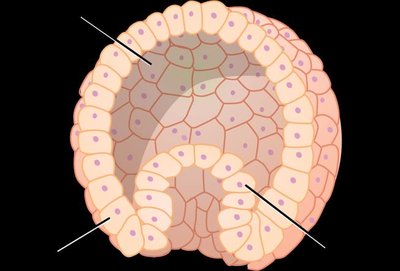
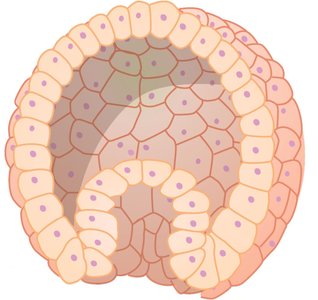
Embryonic development divides animals into two major subgroups: Protostomes and Deuterostomes. The distinction is based on the fate of the blastopore during gastrulation.
Protostomes: The blastopore becomes the mouth; anus forms later.
Deuterostomes: The blastopore becomes the anus; mouth forms later.
Germ Layers: Diploblasts and Triploblasts
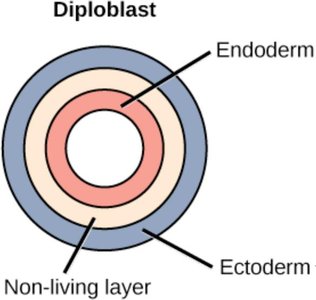
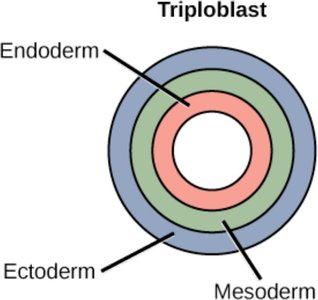
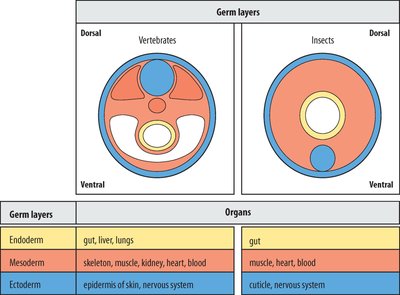
During gastrulation, animals develop distinct germ layers that give rise to adult tissues and organs. Animals are classified as diploblasts (two germ layers) or triploblasts (three germ layers).
Diploblasts: Have ectoderm and endoderm.
Triploblasts: Have ectoderm, endoderm, and mesoderm.
Sponges: Have only one germ layer and lack true tissue organization.
Diploblast Groups: Ctenophora and Cnidaria
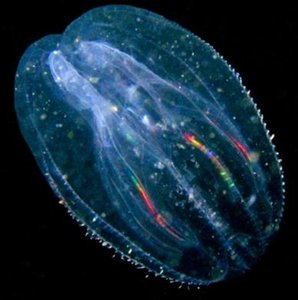
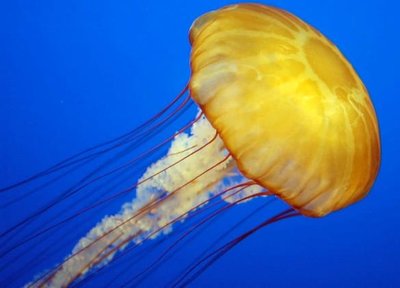
Two groups traditionally recognized as diploblasts are Ctenophora (comb jellies) and Cnidaria (jellyfish, corals, sea pens, hydra, and anemones). These animals develop contractile tissue for movement but lack true muscle.
Contractile proteins: All animals share homologous genes for actin and myosin.
Movement: Ctenophores and cnidarians move using contractile tissue, not true muscle.
Body Plan: Gut, Coelom, and Symmetry
Origin of the Gut and Coelom
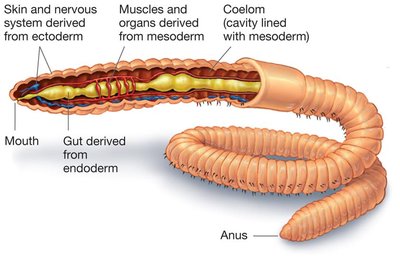
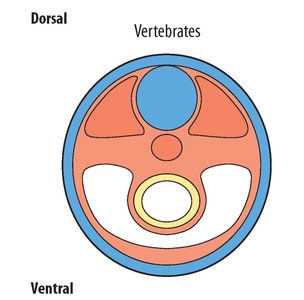
The basic bilaterian body shape is a tube within a tube, with the inner tube forming the gut and the outer tube forming the nervous system and skin. The coelom is a fluid-filled cavity between these tubes, providing space for organ movement and nutrient circulation.
True coelomates: Coelom completely lined with mesoderm.
Acoelomates: No coelom (e.g., flatworms).
Pseudocoelomates: Coelom partially lined with mesoderm (e.g., roundworms).
Body Symmetry and Cephalization
Animals exhibit different types of body symmetry, which are closely related to the organization of their nervous systems. Most animals are bilaterally symmetric, while cnidarians, ctenophores, and some sponges exhibit radial symmetry.
Bilateral symmetry: Single plane of symmetry, associated with cephalization (development of a head).
Radial symmetry: Multiple planes of symmetry, associated with nerve nets.
Cephalization: Concentration of neurons and sensory structures at one end of the body.
Animal Diversity: Feeding, Movement, and Reproduction
Feeding Strategies
Animals are classified by their ecological roles and feeding strategies. The main ecological roles include detritivores, herbivores, carnivores, and omnivores. Feeding tactics are further divided into suspension feeders, deposit feeders, fluid feeders, and mass feeders.
Detritivores: Feed on dead organic matter.
Herbivores: Feed on plants or algae.
Carnivores: Feed on other animals.
Omnivores: Feed on a combination of plants, animals, fungi, protists, archaea, and/or bacteria.
Ecological Role | Example |
|---|---|
Detritivores | Millipedes feed on decaying leaves |
Herbivores | Pandas eat bamboo |
Carnivores | Owls hunt prey |
Omnivores | Humans |
Feeding Strategy | Example |
|---|---|
Suspension feeders | Barnacles filter plankton |
Deposit feeders | Sea cucumbers mop up detritus |
Fluid feeders | Butterflies drink nectar |
Mass feeders | Lions bite chunks of meat |
Movement and Skeletal Systems
Animal locomotion is powered by muscle and enables functions such as finding food, mates, escaping predators, and dispersing. There are three main types of skeletal systems: hydrostatic, exoskeleton, and endoskeleton.
Hydrostatic skeletons: Use incompressible fluid for movement.
Exoskeletons: Rigid structures outside the body (e.g., arthropods).
Endoskeletons: Rigid structures inside the body (e.g., vertebrates).
Reproduction and Life Cycles
Most animals reproduce sexually via meiosis and fusion of gametes, but asexual reproduction also occurs. Modes of embryonic development include viviparous (live birth), oviparous (egg-laying), and ovoviviparous (eggs hatch inside the female).
Sexual reproduction: Increases genetic diversity; can be internal or external fertilization.
Asexual reproduction: More efficient but leads to lower genetic diversity; includes parthenogenesis.
Viviparous: Embryos nourished by placenta or yolk inside the female.
Oviparous: Embryos nourished by yolk within the egg.
Reproductive Strategy | Example |
|---|---|
Asexual reproduction | Polyps in coral colonies |
Sexual reproduction (external fertilization) | Corals release eggs and sperm into water |
Sexual reproduction (internal fertilization) | Damselflies copulate |
Life Cycles and Metamorphosis
Most sexually reproducing animals have a diploid-dominant life stage. Metamorphosis is a drastic change from one developmental stage to another, often involving larval, juvenile, and adult stages.
Larvae: Look different from adults, live in different habitats, and eat different foods.
Juveniles: Resemble adults but are not sexually mature.
Adults: Reproductive stage in the life cycle.
Summary
This lecture provides an overview of animal origins, classification, embryonic development, body plans, feeding strategies, movement, reproduction, and life cycles. Understanding these fundamental concepts is essential for studying animal diversity and evolution.
