 Back
Introduction to Biochemistry: Key Concepts for Biology
Study Guide - Smart Notes
 Tailored notes based on your materials, expanded with key definitions, examples, and context.
Introduction to Biochemistry
Overview of Biochemistry in Biology
Biochemistry is the study of the chemical processes and substances that occur within living organisms. Understanding the chemical basis of life is essential for exploring cellular structure, function, and genetics. This section introduces the foundational chemical concepts that underpin biological systems.
Elements and Atoms in Living Matter
Basic Chemical Building Blocks
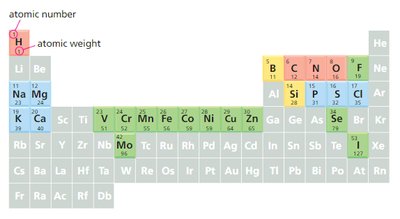
Elements are pure substances that cannot be broken down into other substances by chemical means. Living organisms are primarily composed of a limited set of elements, such as carbon, hydrogen, oxygen, and nitrogen.
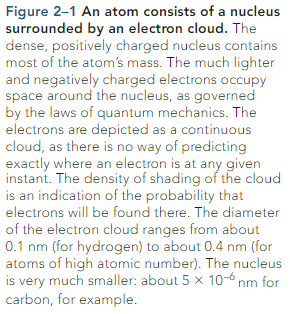
The atom is the smallest unit of an element that retains its distinctive chemical properties.
Each atom consists of a dense, positively charged nucleus (containing protons and neutrons) surrounded by a negatively charged electron cloud.
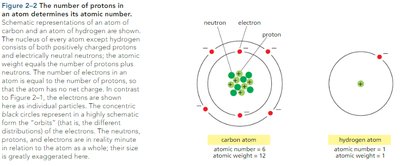
The arrangement and number of protons in the nucleus determine the atomic number and the identity of the element.
Atomic Structure and Chemical Properties
Protons, Neutrons, and Electrons
The number of protons in an atom defines its atomic number, while the sum of protons and neutrons gives the atomic weight.
Electrons occupy specific energy levels or electron shells around the nucleus.

The outermost electron shell (valence shell) determines an atom's chemical reactivity. Atoms with incomplete outer shells tend to form chemical bonds to achieve stability.
Moles, Avogadro's Number, and Molar Solutions
Quantifying Atoms and Molecules
One mole of a substance contains particles (Avogadro's number).
The molecular weight (M) of a substance in grams contains one mole of molecules.
A one molar solution (1 M) contains one mole of solute per liter of solution.
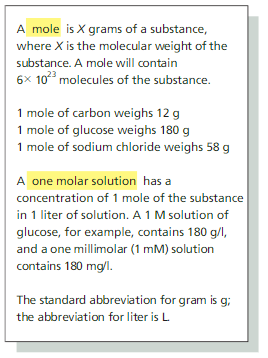
Example: 1 mole of glucose (C6H12O6) weighs 180 g; a 1 M solution contains 180 g/L.
Chemical Bonds and Molecular Structure
Covalent and Ionic Bonds
Atoms interact to achieve stable electron configurations, primarily through covalent and ionic bonds.
Covalent bonds involve the sharing of electron pairs between atoms, resulting in molecules with specific geometries and bond angles.
Ionic bonds form when one atom donates an electron to another, creating oppositely charged ions that attract each other.
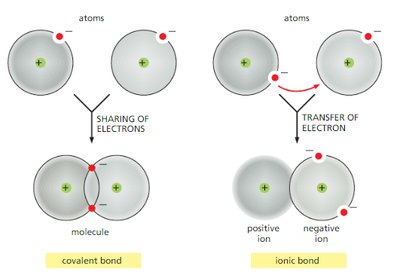
Covalent bonds can be single (one pair of electrons shared) or double (two pairs shared). Double bonds are shorter, stronger, and more rigid, restricting molecular rotation.
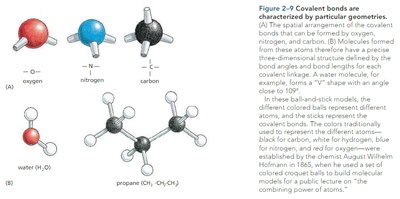
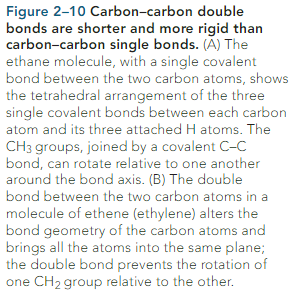

Example: In ethane (C2H6), the single bond allows rotation; in ethene (C2H4), the double bond restricts rotation.
Polarity and Water
A polar covalent bond occurs when electrons are shared unequally, creating partial positive and negative charges within the molecule.
Water (H2O) is a classic example of a polar molecule, with oxygen being more electronegative than hydrogen.
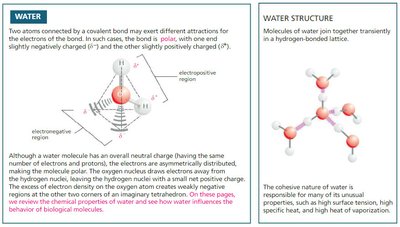
Polarity allows water molecules to form hydrogen bonds with each other, contributing to water's unique properties.
Water: The Solvent of Life
Importance of Water in Biological Systems
Cells are approximately 70% water, and most biochemical reactions occur in aqueous environments.
Water's polarity enables it to dissolve a wide range of substances, supporting cellular processes.
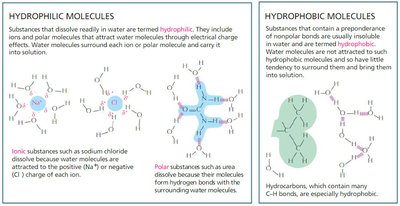
Hydrophilic and Hydrophobic Molecules
Hydrophilic molecules (e.g., ions, polar molecules) dissolve readily in water due to their ability to form hydrogen bonds or electrostatic interactions with water molecules.
Hydrophobic molecules (e.g., hydrocarbons) do not dissolve in water because they contain nonpolar bonds and cannot form favorable interactions with water.

Noncovalent Interactions in Cells
Role of Weak Bonds
Noncovalent bonds (hydrogen bonds, ionic interactions, van der Waals forces) are weaker than covalent bonds but are crucial for the structure and function of biological macromolecules.
Hydrogen bonds form when a hydrogen atom covalently bonded to an electronegative atom (like O or N) is attracted to another electronegative atom.
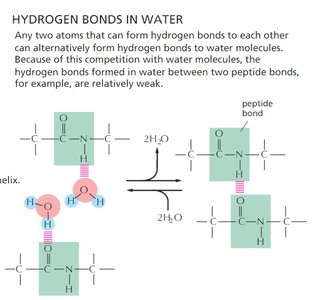
These weak interactions allow for the dynamic assembly and disassembly of molecular complexes in cells.
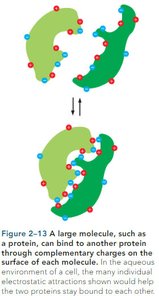
Example: Hydrogen bonds stabilize the secondary structure of proteins and the double helix of DNA.
Recommended Reading and Resources
Campbell Biology, 11th Edition, pp. 28-50
Selected educational videos (see original material for links)
