 Back
Introduction to Biology and Scientific Inquiry: Unifying Themes and Methods
Study Guide - Smart Notes
 Tailored notes based on your materials, expanded with key definitions, examples, and context.
Biology and Scientific Inquiry
What is Biology?
Biology is the scientific study of life, encompassing the structure, function, growth, origin, evolution, and distribution of living organisms. The discipline seeks to understand the characteristics and behaviors of living things, as well as their interactions with each other and their environments.
Key Point: Biology investigates what constitutes life and how living organisms function.
Key Point: Life is recognized by what living things do, such as growth, reproduction, response to stimuli, and adaptation.
Example: The diversity of life on Earth includes organisms ranging from microscopic bacteria to large mammals.
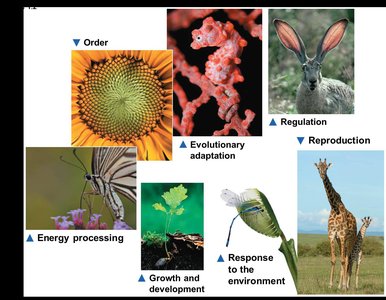
Five Unifying Themes of Biology
Biology is organized around five unifying themes that help make sense of the vast information in the field:
Organization: Biological systems are structured hierarchically, from atoms to molecules, organelles, cells, tissues, organs, organ systems, organisms, populations, communities, ecosystems, and the biosphere.
Heritable Information: Genetic information is passed from one generation to the next, primarily through DNA.
Energy and Matter: Life requires the transfer and transformation of energy and matter, such as photosynthesis and cellular respiration.
Interactions: Organisms interact with their environment and other organisms, affecting both themselves and their surroundings.
Evolution: Evolution explains the unity and diversity of life, as well as adaptation to environments.
Theme 1: Organization
Biological Hierarchy
Biological organization is based on a hierarchy of structural levels, each building on the levels below. The lowest level consists of atoms ordered into complex biological molecules, which form organelles and cells—the fundamental unit of structure and function in living things.
Key Point: Cells are organized into tissues, organs, organ systems, and ultimately the organism.
Key Point: Populations, communities, ecosystems, and the biosphere represent higher levels of organization.
Example: Plant cells contain organelles such as chloroplasts, which are essential for photosynthesis.
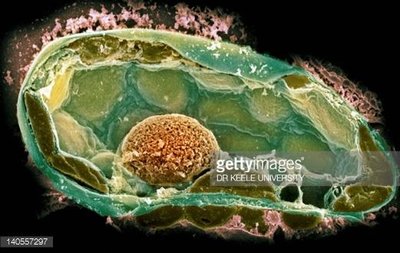
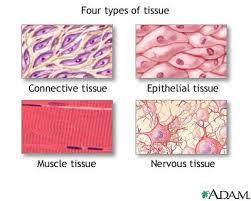
Emergent Properties
Emergent properties arise at each level of biological organization. These are properties not present at the preceding level, such as photosynthesis occurring only when molecules are arranged in a specific way within a chloroplast.
Key Point: Emergent properties are not unique to life; for example, a bicycle only functions when its parts are assembled correctly.
Example: The ability of a cell to metabolize nutrients is an emergent property of its organized molecular structure.
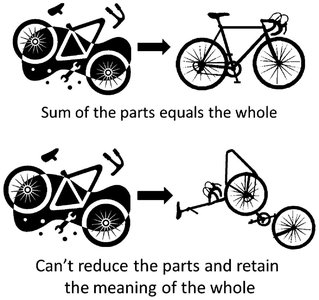
Reductionism and Systems Biology
Reductionism involves breaking down complex systems into simpler components for study, such as analyzing the molecular structure of DNA. However, biology also balances reductionism with the study of emergent properties and complex interactions, known as systems biology.
Key Point: Systems biology models dynamic behavior of biological systems, emphasizing that the whole is greater than the sum of its parts.
Example: Understanding how microorganisms clean up environmental waste requires a holistic approach.
Form Fits Function
Structure and function are correlated at all levels of biological organization. The shape and arrangement of biological structures are directly related to their function.
Key Point: Cells and their organelles are specialized for particular functions.
Example: Muscle cells are elongated to facilitate contraction, while nerve cells have long extensions for transmitting signals.
Cell Types: Prokaryotic and Eukaryotic
Cells are the basic unit of life and can be classified as prokaryotic or eukaryotic.
Prokaryotic cells: Simpler, lack organelles and a membrane-bound nucleus, usually smaller (found in Bacteria and Archaea).
Eukaryotic cells: More complex, contain organelles and a nucleus (found in plants, animals, fungi, and protists).
Example: Plant and animal cells are eukaryotic, while bacteria are prokaryotic.
Domains of Life
The diversity of life is organized into three domains:
Bacteria: Most diverse and widespread prokaryotes.
Archaea: Prokaryotes often found in extreme environments.
Eukarya: Includes single-celled protists and multicellular fungi, animals, and plants.
Theme 2: Heritable Information
DNA and Genes
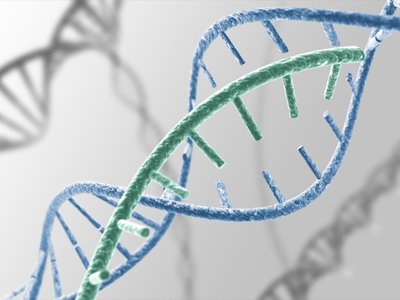
Heritable information is stored in DNA, the substance of genes. Genes are units of inheritance that transmit information from parents to offspring, controlling development and maintenance of organisms.
Key Point: DNA is organized into chromosomes and inherited by offspring.
Key Point: DNA provides blueprints for making proteins, which build and maintain cells.
Example: The double helix structure of DNA consists of two strands made up of four nucleotides: adenine (A), guanine (G), cytosine (C), and thymine (T).
Gene Expression
DNA controls protein production indirectly, using RNA as an intermediary. The sequence of nucleotides in a gene is transcribed into RNA, which is then translated into a specific protein. This process is called gene expression.
Key Point: All forms of life use essentially the same genetic code, making the process universal.
Example: The genetic code is conserved across species, allowing for genetic engineering and biotechnology.
Theme 3: Energy and Matter
Energy Transformation
Living organisms require energy to perform activities. Energy flows through ecosystems, entering as light and exiting as heat. Chemical nutrients are recycled within ecosystems, with decomposers breaking down dead material and returning nutrients to the soil.
Key Point: Producers (such as plants) convert solar energy into chemical energy, which is passed to consumers (such as animals).
Key Point: In every energy transformation, some energy is lost as heat.
Example: Photosynthesis and cellular respiration are key processes in energy transformation.
Theme 4: Interactions of Organisms and Their Environment
Ecological Interactions
Organisms interact with their environment, including other organisms and physical factors. These interactions affect both the organism and the environment, facilitating nutrient cycling and ecosystem stability.
Key Point: Feedback regulation is critical for maintaining homeostasis.
Example: Negative feedback (e.g., blood glucose regulation) and positive feedback (e.g., blood clotting) are mechanisms of biological control.
Theme 5: Evolution
Evolution and Natural Selection
Evolution is the scientific explanation for the unity and diversity of life. Organisms living today are modified descendants of common ancestors. Natural selection is the process by which individuals with traits best suited to their environment produce more offspring, leading to adaptation.
Key Point: "Descent with modification" describes how species evolve over generations.
Key Point: Evolution occurs as the unequal reproductive success of individuals leads to adaptation.
Example: Darwin's theory of evolution explains both the kinship among species and the diversity of life.
The Scientific Method
Steps of the Scientific Method
The scientific method is a problem-solving approach used to understand natural phenomena. It involves observation, hypothesis formation, prediction, testing, and iteration.
Key Point: Hypotheses must be testable and falsifiable.
Key Point: Controlled experiments compare experimental and control groups to isolate variables.
Example: Testing why a flashlight does not work by hypothesizing about dead batteries or a burnt-out bulb.
Reasoning in Science
Two types of reasoning are used in science:
Inductive reasoning: Makes generalizations based on specific observations.
Deductive reasoning: Uses general premises to make specific predictions, often in "If...then..." format.
Theories in Science
A scientific theory is broader in scope than a hypothesis and is supported by a large body of evidence. Theories explain many observations and are subject to modification or rejection when new evidence arises.
Key Point: Theories are foundational to scientific understanding but are not absolute.
Example: The theory of evolution by natural selection.
