 Back
Introduction to Biology and the Nature of Life
Study Guide - Smart Notes
 Tailored notes based on your materials, expanded with key definitions, examples, and context.
Introduction to Biology
What is Biology?
Biology is the scientific study of life and living organisms. It encompasses a wide range of topics, from the molecular mechanisms inside cells to the interactions of organisms with their environment. Understanding biology helps us answer fundamental questions about what it means to be alive.
Biology investigates the structure, function, growth, origin, evolution, and distribution of living things.
It is a foundational science for medicine, environmental science, and biotechnology.
What is Life?
Defining life is a central question in biology. Scientists use several characteristics to distinguish living things from non-living matter.
Metabolism: Living things carry out chemical reactions to obtain and use energy.
Growth and Development: Organisms increase in size and complexity over time.
Reproduction: Living things produce offspring, passing on genetic information.
Evolution: Populations of living things change over generations through genetic variation and natural selection.
Homeostasis: The ability to maintain a stable internal environment.
Response to Stimuli: Living things can sense and respond to changes in their environment.
Definitions of Life
There is no single, universally accepted definition of life. Scientists propose definitions based on current understanding, and these definitions may change as new discoveries are made.
Abel (2002): Homeostatic metabolism, development, growth, and reproduction.
Schulze-Makuch and Irwin (2004): Thermodynamic disequilibrium, low-entropy state, information encoding and transformation.
National Research Council (2007): Evolution, reproduction, and metabolism.
Who defines life? Scientists propose definitions in peer-reviewed publications, and the scientific community adopts working definitions. These definitions are subject to change as our understanding evolves.
Viruses and the Definition of Life
What is a Virus?
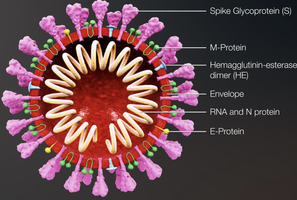
Viruses are microscopic infectious agents that consist of genetic material (DNA or RNA) enclosed in a protein coat, and sometimes surrounded by a membrane. They are unique because they can only reproduce inside the cells of a host organism.
Structure: Nucleic acid (DNA or RNA) + protein coat (capsid); some have an outer membrane (envelope).
Reproduction: Viruses replicate by hijacking the machinery of host cells.
Are Viruses Alive?
Whether viruses are considered alive is debated. According to the working definition of life (evolution, reproduction, metabolism):
Evolution: Yes. Viruses evolve rapidly, as seen in drug resistance and new variants.
Reproduction: Yes, but only with the help of a host cell.
Metabolism: No. Viruses do not carry out metabolic processes independently; they rely on the host cell's metabolism.
Thus, viruses occupy a gray area between living and non-living entities.
Examples of Viruses
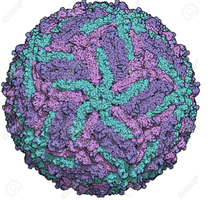
Zika Virus: A single-stranded RNA virus known for causing outbreaks in tropical regions.
SARS-CoV-2: The virus responsible for COVID-19, also a single-stranded RNA virus.
Influenza Virus: Another single-stranded RNA virus that causes seasonal flu.
Summary Table: Characteristics of Life and Viruses
Characteristic | Living Organisms | Viruses |
|---|---|---|
Metabolism | Yes | No |
Growth/Development | Yes | No |
Reproduction | Yes | Yes (only in host) |
Evolution | Yes | Yes |
Homeostasis | Yes | No |
Additional info: The debate about whether viruses are alive highlights the complexity of defining life. As our understanding of biology advances, definitions may continue to evolve.
