 Back
Introduction to Biology and the Scientific Method
Study Guide - Smart Notes
 Tailored notes based on your materials, expanded with key definitions, examples, and context.
Introduction to Biology
What is Life?
Biology is the scientific study of life. Living organisms share several fundamental properties that distinguish them from non-living matter. Understanding these properties is essential for studying biology at any level.
Membrane delimited: All living things are separated from their environment by a membrane, typically the plasma membrane.
Information storage and transmission: Life stores and transmits instructions, primarily through genetic material such as DNA.
Energy transformation and use: Organisms store, transform, and utilize energy to maintain order and carry out functions.
Regulation and response: Living things control their internal functions and respond to environmental changes.
Self-replication: Life is capable of reproducing itself.
Evolution: Populations of living organisms evolve over time.
Biomolecules: Life’s properties are facilitated by complex molecules such as proteins, nucleic acids, lipids, and carbohydrates.
The cell: The cell is the smallest unit of life, capable of performing all life functions.

Fundamentals of Biology: Building Concepts
Learning Strategies for Success
Biology builds upon foundational concepts. Effective study habits are crucial for mastering the material and succeeding in future courses and standardized exams.
Set goals and schedule: Plan your reading, class attendance, and assignments.
Study groups and office hours: Collaborate with peers and seek help from instructors and learning assistants (LAs).
Active learning: Use concept maps, drawings, and flashcards to reinforce understanding.
Self-testing: Regularly test your ability to explain concepts without notes.

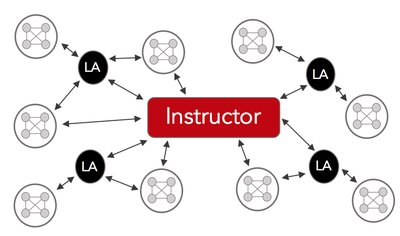
Effective Study Patterns
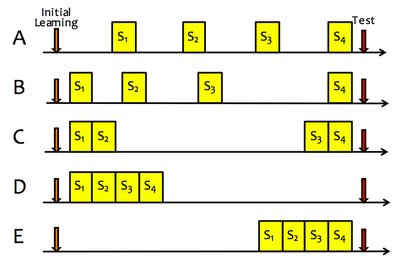
Research shows that we forget more than 50% of what we learn within one hour. Spaced repetition and active recall are more effective than cramming.
Spaced repetition: Distribute study sessions over time for better retention.
Active recall: Practice retrieving information from memory.
Understanding Data and Graphs in Biology
Variables in Experiments
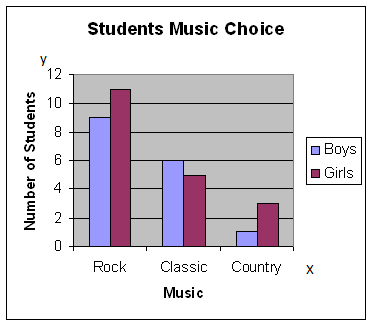
Biological data is often presented graphically. Understanding variables is key to interpreting graphs:
Independent variable: The factor that is changed or controlled in an experiment (plotted on the x-axis).
Dependent variable: The factor that is measured or observed (plotted on the y-axis).
Experimental Variable (Independent Variable) | Responding Variable (Dependent Variable) |
|---|---|
Factor of the experiment being tested | Result or change that occurs due to the experimental variable |
Types of Graphs
Graphs are used to visualize relationships between variables. Common types include bar graphs, line graphs, and scatter plots.
Bar graphs: Compare quantities across categories.
Line graphs: Show changes over time or continuous data.
Scatter plots: Display relationships between two quantitative variables.
The Scientific Method
Steps of the Scientific Method
The scientific method is a systematic approach used to investigate natural phenomena. It involves several key steps:
Observation: Gathering information about a phenomenon.
Hypothesis: Formulating a testable explanation for the observation.
Prediction: Making a logical statement about what will happen if the hypothesis is correct.
Experiment: Testing the prediction with a controlled experiment.
Analysis and Conclusion: Interpreting results to accept, reject, or modify the hypothesis.

Controls in Experiments
A control group is a subset of subjects that does not receive the experimental treatment. It serves as a baseline for comparison, ensuring that observed effects are due to the variable being tested.
Example: In a cake-baking experiment, the control would be the cake made without the added baking powder, to compare with the cake made with baking powder.
Application Example: Tomato Plants
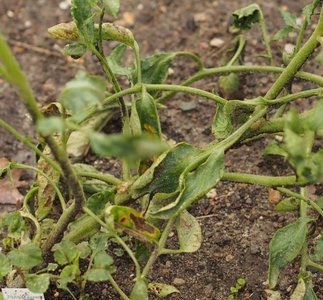
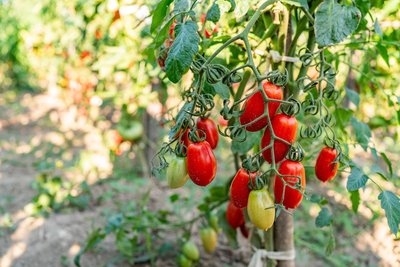
Suppose you observe that your neighbor's tomato plants are healthier than yours. You hypothesize that a specific factor (e.g., amount of sunlight or water) is responsible. You design an experiment with a control group to test your hypothesis.
Summary Table: Experimental Design
Step | Description | Example (Tomato Plants) |
|---|---|---|
Observation | Notice a phenomenon | Neighbor's plants are healthier |
Hypothesis | Propose explanation | Sunlight affects plant health |
Prediction | State expected outcome | More sunlight = healthier plants |
Experiment | Test prediction | Vary sunlight for different plants |
Control | Baseline group | Plants with normal sunlight |
Analysis | Interpret results | Compare health of plants |
Key Terms
Biomolecule: A molecule produced by living organisms, including proteins, nucleic acids, lipids, and carbohydrates.
Cell: The smallest structural and functional unit of an organism.
Hypothesis: A testable statement explaining an observation.
Control group: The group in an experiment that does not receive the experimental treatment.
Independent variable: The variable that is changed or controlled in an experiment.
Dependent variable: The variable being tested and measured in an experiment.
