 Back
Introduction to Biology and the Scientific Method: Foundations for General Biology
Study Guide - Smart Notes
 Tailored notes based on your materials, expanded with key definitions, examples, and context.
Introduction to Biology
Defining Life and Its Properties
Biology is the scientific study of life, focusing on the structure, function, growth, origin, evolution, and distribution of living organisms. Life exhibits several defining properties that distinguish living things from non-living matter.
Membrane Delimited: All living organisms are bounded by membranes that separate their internal environment from the external world.
Information Storage and Transmission: Life stores and transmits genetic instructions, primarily through DNA.
Energy Transformation and Use: Living organisms acquire, transform, and utilize energy to maintain order and support cellular processes.
Regulation and Response: Life controls its internal functions and responds to environmental changes.
Self-Replication: Living systems are capable of reproducing themselves.
Evolution: Populations of living organisms evolve over generations through genetic variation and natural selection.
Biomolecules: The unique properties of life are facilitated by complex biomolecules such as proteins, nucleic acids, lipids, and carbohydrates.
Cell Theory: The cell is the smallest unit of life, capable of performing all life functions.

Fundamental Concepts in Biology
Building Knowledge and Study Strategies
Understanding biology requires building upon fundamental concepts and developing effective study habits. Success in biology courses is foundational for advanced studies in the life sciences.
Conceptual Building Blocks: Biology is cumulative; new knowledge builds on previous understanding.
Active Learning: Engage with material through drawing, concept mapping, and self-testing.
Study Groups: Collaborative learning enhances understanding and retention.
Consistent Practice: Regular review and practice are more effective than last-minute studying.

Organization of a Biology Course
Course Structure and Resources
General Biology courses are typically organized into modules, with resources such as syllabi, homework, quizzes, and exams available through learning management systems (e.g., Canvas).
Modules: The course is divided into thematic units covering major biological concepts.
Assessment: Includes quizzes, exams, and assignments to reinforce learning.
Support: Office hours, Learning Assistants (LAs), and study groups provide additional help.
Effective Study Habits in Biology
Strategies for Success
Biology students benefit from evidence-based study strategies that promote long-term retention and understanding.
Goal Setting: Establish clear academic goals and a study schedule.
Active Recall: Test yourself regularly to reinforce memory.
Distributed Practice: Space out study sessions over time for better retention.
Visualization: Use diagrams and concept maps to organize information.
Application: Practice explaining concepts to others without notes.
Data Interpretation and Graphs in Biology
Understanding Variables and Graph Types
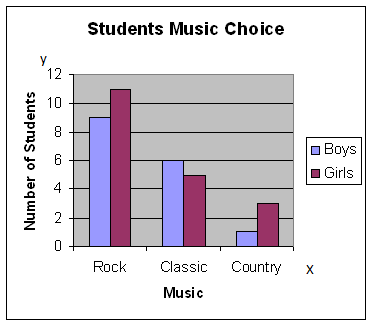
Biologists use graphs to visualize data and interpret experimental results. Understanding the roles of independent and dependent variables is essential for analyzing scientific data.
Independent Variable (x-axis): The factor manipulated or categorized by the experimenter (e.g., time, treatment).
Dependent Variable (y-axis): The measured outcome that responds to changes in the independent variable (e.g., growth, response rate).
Types of Graphs: Common types include bar graphs, line graphs, and scatter plots, each suited for different data presentations.
Experimental Variable (Independent Variable) | Responding Variable (Dependent Variable) |
|---|---|
Factor of the experiment being tested | Result or change that occurs due to the experimental variable |
The Scientific Method
Steps and Application in Biology
The scientific method is a systematic approach used to investigate natural phenomena, develop hypotheses, and test predictions through controlled experiments.
Observation: Gathering information about the natural world.
Hypothesis: A testable explanation for an observation.
Prediction: A logical outcome expected if the hypothesis is correct.
Experiment: A controlled test to evaluate the hypothesis, including both experimental and control groups.
Analysis: Interpreting data to accept or reject the hypothesis.
Conclusion: Summarizing findings and their implications.

Control Groups in Experiments
A control group is a baseline group in an experiment that does not receive the experimental treatment. It allows for comparison to determine if the treatment causes a change.
Purpose: Ensures that observed effects are due to the experimental variable and not other factors.
Example: In a baking experiment, the control would be the cake made without the added variable (e.g., baking powder).
Example Application: Tomato Plant Experiment
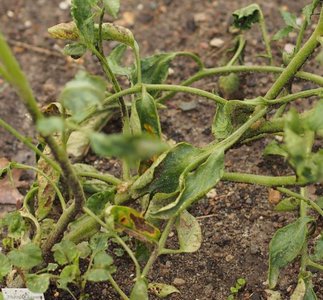
Suppose you observe that your neighbor's tomato plants are healthier than yours. You hypothesize that a specific factor (e.g., fertilizer, sunlight) is responsible. You design an experiment with a control group (no change) and an experimental group (with the variable applied) to test your hypothesis.

Summary Table: Key Terms in Experimental Design
Term | Definition |
|---|---|
Independent Variable | The factor that is changed or controlled in a scientific experiment. |
Dependent Variable | The factor that is measured or observed in response to changes in the independent variable. |
Control Group | The group in an experiment that does not receive the experimental treatment and serves as a baseline for comparison. |
Hypothesis | A testable statement that explains an observation and can be supported or refuted by experimentation. |
Additional info: These foundational concepts are essential for success in all areas of biology, from cell biology to ecology and evolution. Mastery of the scientific method and experimental design is critical for interpreting biological research and conducting your own investigations.
