 Back
Introduction to Biology and the Scientific Method: Fundamentals of Biology I Study Guide
Study Guide - Smart Notes
 Tailored notes based on your materials, expanded with key definitions, examples, and context.
Introduction to Biology
Defining Life and Its Properties
Biology is the scientific study of life, focusing on the characteristics and processes that define living organisms. Life is distinguished by several key properties, all facilitated by biomolecules and cellular structures.
Membrane Delimited: All living cells are surrounded by a membrane that separates internal processes from the external environment.
Information Storage and Transmission: Organisms store genetic instructions (DNA/RNA) and transmit them to offspring.
Energy Utilization: Life stores energy (e.g., in ATP) and uses it for cellular functions.
Response to Environment: Living things sense and react to changes in their surroundings.
Self-Replication: Life reproduces, ensuring continuity of species.
Evolution: Populations of organisms change over time, adapting to their environment.
The cell is the smallest unit of life, and all organisms are descendants from a common ancestor. The diversity of life is shaped by Earth's history and environmental changes, resulting in the Tree of Life.

Course Structure and Study Practices
Course Overview and Resources
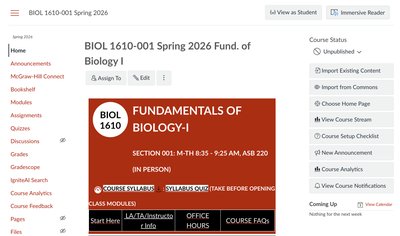
Success in Fundamentals of Biology I requires engagement with course materials and active study practices. The course uses Canvas for assignments, quizzes, and exams, and McGraw-Hill for the textbook.
Assignments: Pre-class work is due before class; other assignments are due by the end of the week.
iClicker: Used for in-class participation and group work.
Accommodations: Automatic grade drops allow flexibility for missed assignments.
Effective Study Strategies
Developing strong study habits is essential for mastering biology concepts and preparing for future courses and exams.
Scheduling: Set aside regular time for reading, attending class, and completing assignments.
Study Groups: Collaborate with peers and attend office hours.
Active Learning: Use concept maps, flash cards, and self-testing to reinforce understanding.
Drawing and Mapping: Visual tools help organize and connect concepts.

Memory and Retention
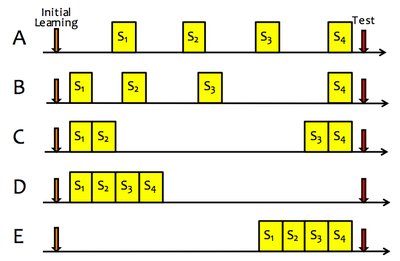
Research shows that we forget more than 50% of what we learn within one hour. Spaced repetition and active recall are the most effective study protocols.
Spaced Repetition: Reviewing material at intervals improves long-term retention.
Testing Effect: Regular self-testing enhances memory and understanding.
Scientific Method in Biology
Overview of the Scientific Method
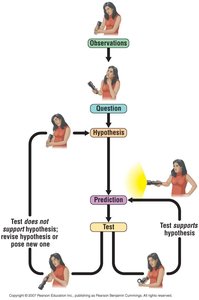
The scientific method is a systematic approach used to investigate questions and solve problems in biology. It involves making observations, forming hypotheses, making predictions, testing with controls, and analyzing results.
Observation: Gathering information about phenomena.
Question: Identifying a problem or area of curiosity.
Hypothesis: Proposing a possible explanation.
Prediction: Forecasting outcomes based on the hypothesis.
Experiment: Testing predictions with controlled variables.
Analysis: Interpreting results to accept, modify, or reject the hypothesis.
Controls and Variables
Experiments require controls to minimize the effects of variables other than the independent variable. This increases reliability and allows for comparison between control and experimental groups.
Independent Variable (Experimental Variable): The factor being tested or manipulated.
Dependent Variable (Responding Variable): The result or change measured in response to the independent variable.
Control Group: A group where the independent variable is not applied, serving as a baseline for comparison.
Experimental Variable (Independent Variable) | Responding Variable (Dependent Variable) |
|---|---|
Factor of the experiment being tested | Result or change that occurs due to the experimental variable |

Example: Experimental Design
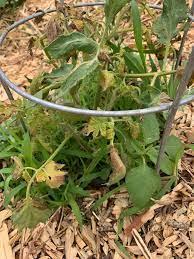
Consider an experiment to test whether fertilizer improves tomato yield:
Observation: Neighbor's plants are healthier.
Hypothesis: Soil quality affects plant growth.
Prediction: Adding fertilizer will increase tomato yield.
Experiment: Apply fertilizer to test group; leave control group untreated.
Independent Variable: Fertilizer application.
Dependent Variable: Number of tomatoes produced.
Control Group: Plants grown without fertilizer.

Data Presentation and Graphs
Understanding Graphs
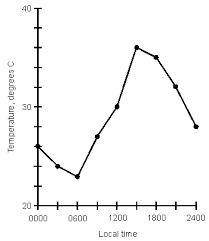
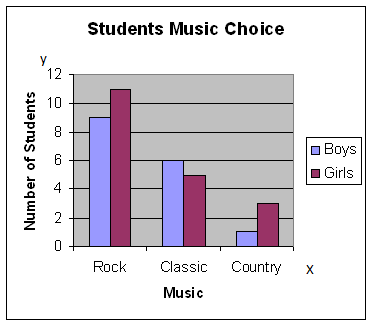
Data in biology is often presented graphically to illustrate relationships between variables. Graphs have two axes: the horizontal axis (independent variable) and the vertical axis (dependent variable).
Horizontal Axis (x-axis): Represents the independent variable (e.g., time).
Vertical Axis (y-axis): Represents the dependent variable (e.g., growth, temperature).
Types of Graphs: Line graphs, bar graphs, scatter plots, etc.
Experimental Variables in Graphs
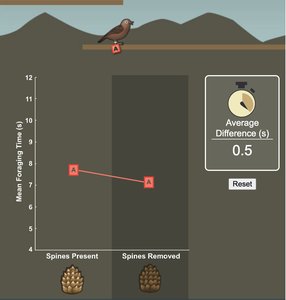
Graphs help identify which variable is dependent and which is independent. For example, in a foraging experiment, the presence or absence of spines is the independent variable, and mean foraging time is the dependent variable.
Independent Variable: Spines present/removed.
Dependent Variable: Mean foraging time.
Summary Table: Scientific Method Steps
Step | Description | Example |
|---|---|---|
Observation | Gathering information | Neighbor's plants are healthier |
Hypothesis | Possible explanation | Soil quality affects growth |
Prediction | Forecasting outcome | Fertilizer will increase yield |
Experiment | Testing with controls | Apply fertilizer to test group |
Analysis | Interpreting results | Compare tomato yield |
Key Terms and Concepts
Biomolecule: Organic molecules (proteins, lipids, carbohydrates, nucleic acids) essential for life.
Cell: Basic unit of life.
Evolution: Change in populations over time.
Scientific Method: Systematic approach to investigation.
Control Group: Baseline group in experiments.
Independent Variable: Factor manipulated in experiment.
Dependent Variable: Factor measured in experiment.
Equations and Formulas
While introductory biology does not focus heavily on mathematical equations, understanding variable relationships is essential:
Relationship between variables:
For example, in plant growth experiments:
Additional info: These notes provide foundational concepts for General Biology, including the scientific method, experimental design, and data interpretation. Mastery of these topics is essential for success in advanced biology courses and standardized exams.
