 Back
Introduction to Biology and the Scientific Method: Study Guide
Study Guide - Smart Notes
 Tailored notes based on your materials, expanded with key definitions, examples, and context.
Introduction to Biology
What is Life?
Biology is the scientific study of life. To understand what constitutes life, biologists identify several key properties that all living things share:
Membrane Delimited: All living organisms are bounded by membranes that separate their internal environment from the external world.
Information Storage and Transmission: Life stores and transmits instructions, primarily through genetic material such as DNA.
Energy Utilization: Living things store, transform, and use energy to carry out cellular processes.
Regulation and Response: Organisms control their internal functions and respond to environmental changes.
Self-Replication: Life is capable of reproducing itself.
Evolution: Populations of living organisms evolve over generations.
Biomolecules: The properties of life are facilitated by complex molecules such as proteins, lipids, carbohydrates, and nucleic acids.
Cell Theory: The cell is the smallest unit of life.
Example: A bacterium is a single-celled organism that can grow, reproduce, respond to its environment, and evolve over time.
Fundamentals of Biology: Building Concepts
Effective Study Habits in Biology
Success in biology requires building foundational concepts and effective study strategies. Biologists often use models and figures to explain complex mechanisms, and students are encouraged to use similar strategies for learning.
Set Goals and Schedule: Plan your reading, class attendance, and assignments.
Study Groups: Collaborate with peers and attend office hours for support.
Active Learning: Use concept maps, drawings, and flashcards to reinforce learning.
Self-Testing: Regularly test your understanding by explaining concepts without notes.
This foundational course prepares students for advanced studies and standardized exams (e.g., MCAT, DAT, GRE).

Data and Graphical Analysis in Biology
Understanding Variables and Graphs
Biologists use data and graphs to analyze and present experimental results. Understanding the types of variables and how to interpret graphs is essential.
Independent Variable: The factor that is changed or controlled in an experiment (plotted on the x-axis).
Dependent Variable: The factor that is measured or observed (plotted on the y-axis).
Graphs visually represent the relationship between variables, making it easier to identify trends and draw conclusions.
Experimental Variable (Independent Variable) | Responding Variable (Dependent Variable) |
|---|---|
Factor of the experiment being tested | Result or change that occurs due to the experimental variable |
The Scientific Method
Steps of the Scientific Method
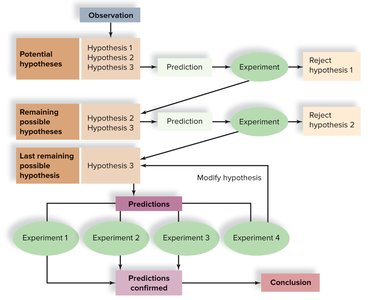
The scientific method is a systematic approach used to investigate natural phenomena. It involves several key steps:
Observation: Gathering information about a phenomenon or problem.
Hypothesis: Formulating a testable explanation or prediction.
Prediction: Stating what will happen if the hypothesis is correct.
Experiment: Testing the hypothesis through controlled experiments.
Control Group: A group that does not receive the experimental treatment, serving as a baseline for comparison.
Analysis and Conclusion: Interpreting results to accept, reject, or modify the hypothesis.
Example: If you hypothesize that adding baking powder makes a cake lighter, the control group would be cakes made without baking powder.
Application: Tomato Plant Experiment
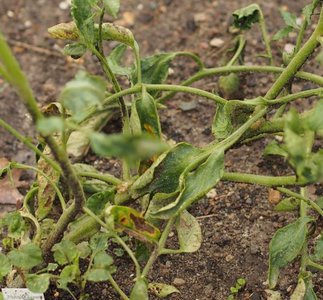
Suppose you observe that your neighbor's tomato plants are healthier than yours. You hypothesize that a specific variable (e.g., amount of sunlight or water) is responsible. You design an experiment with a control group to test your hypothesis.
Observation: Neighbor's tomato plants are thriving; yours are not.
Hypothesis: Sunlight exposure affects plant health.
Prediction: Increasing sunlight will improve your plants' health.
Experiment: Vary sunlight for different groups of plants, keeping other factors constant.
Control Group: Plants grown under current sunlight conditions.

Controls in Experiments
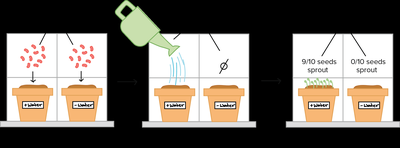
A control group is essential for determining whether the experimental variable is responsible for observed changes. For example, in testing a cake recipe, the control would be the cake made exactly as the original recipe (without baking powder), while the experimental group includes baking powder.
Purpose of Control: Ensures that any observed effect is due to the variable being tested, not other factors.
Example: In Sam's cake experiment, the correct control is the cake recipe without baking powder.
Summary Table: Key Terms in Experimental Design
Term | Definition | Example |
|---|---|---|
Independent Variable | Factor changed by the experimenter | Amount of sunlight |
Dependent Variable | Factor measured in response | Plant growth |
Control Group | Group not exposed to the experimental variable | Cake without baking powder |
Conclusion
Understanding the properties of life, the importance of foundational study habits, and the scientific method are essential for success in biology. Mastery of experimental design, including the use of controls and variables, allows biologists to draw valid conclusions about the natural world.
