 Back
Introduction to Biology and the Scientific Method
Study Guide - Smart Notes
 Tailored notes based on your materials, expanded with key definitions, examples, and context.
Biology: The Study of Life
Definition and Scope
Biology is the scientific study of life and all associated behaviors. It encompasses a wide range of fields, each focusing on different aspects of living organisms and their interactions.
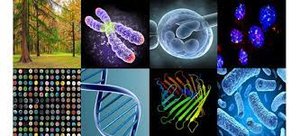
Molecular Biology: Studies the composition, structure, and interactions of cellular molecules such as nucleic acids and proteins.
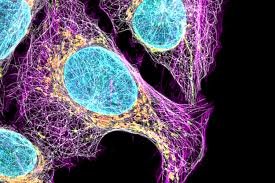
Cell Biology: Focuses on cell structure and function.
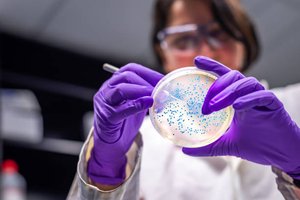
Microbiology: Examines microorganisms.
Ecology: Investigates relationships among living organisms and their physical environment.
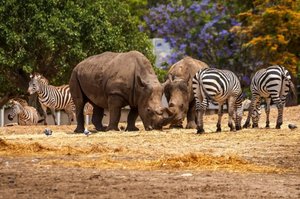
Zoology: Studies animals, including their behavior, physiology, classification, and distribution.
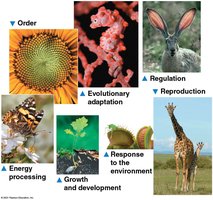
Properties of Living Organisms
Scientists recognize life by what organisms do. The properties of living organisms include:
Order: Organized structure and function.
Evolutionary adaptation: Ability to adapt over generations.
Regulation: Maintenance of internal conditions.
Energy processing: Acquisition and use of energy.
Growth and development: Increase in size and complexity.
Response to the environment: Reacting to external stimuli.
Reproduction: Producing offspring.
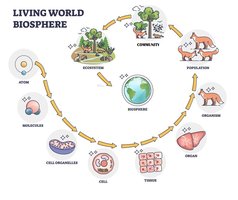
Levels of Biological Organization
Hierarchical Structure
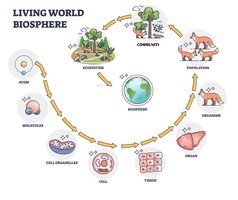
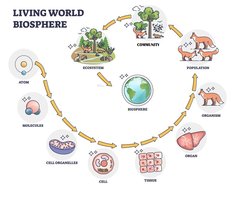
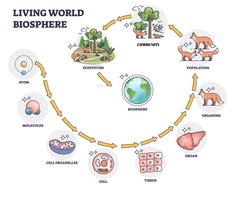
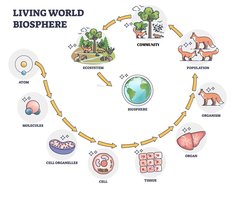
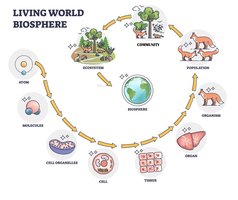
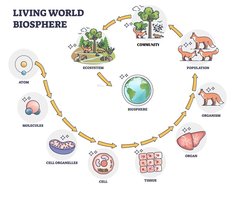
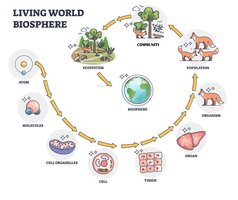
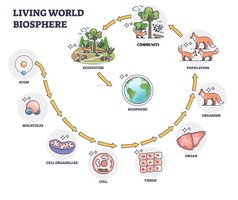
Biology examines life at various levels of organization, from molecules to the biosphere. Each level represents increasing complexity and interaction.
Biosphere
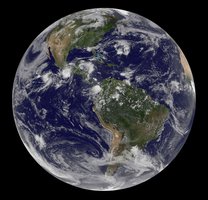
The biosphere is the broadest level, consisting of all life on Earth and all places where life exists.
Ecosystem
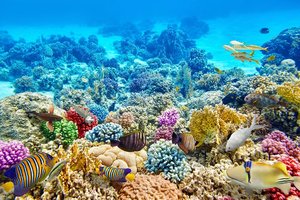
An ecosystem includes all living and nonliving things in a particular area, such as soil, water, gases, and light. Examples include grasslands, deserts, and coral reefs.

Community
A community consists of all living organisms inhabiting a particular ecosystem, including plants, animals, fungi, and bacteria.
Population
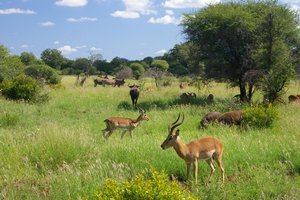
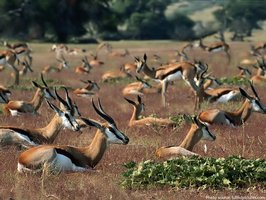
A population is all individuals of a species living within a specified area. For example, meadows may contain populations of mule deer.
Organism
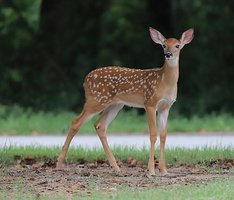
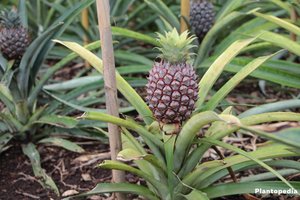
An organism is an individual living thing, such as each plant, deer, or fungus in a meadow.
Organ
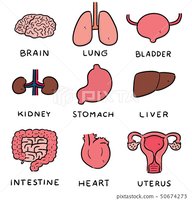
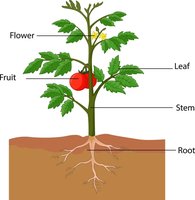
An organ is a body part made up of multiple tissues and has specific functions. Examples include lungs, heart, leaves, and roots.
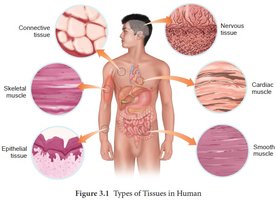
Tissue
Tissues are groups of cells working together to perform a specific function, such as epidermis or skeletal muscle.
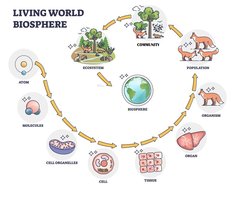
Cell
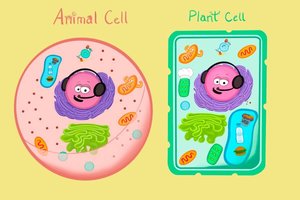
The cell is the structural and functional unit of life. Organisms may be unicellular or multicellular. Examples include plant and animal cells.
Organelle
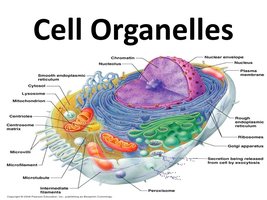
Organelles are functional components within cells, such as chloroplasts, mitochondria, and the nucleus.
Molecule
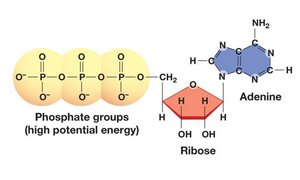
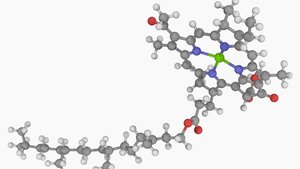
A molecule is a chemical structure consisting of two or more atoms. Molecules serve various functions, including structural support, transportation, and energy. Examples include chlorophyll and ATP.
Systems Biology and Reductionism
Systems biology studies how structural levels of life interact and influence one another as complexity increases. Reductionism simplifies complex systems to manageable components. Both approaches complement each other in biological research.
The Scientific Method
Definition and Steps
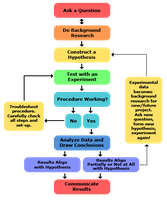
Science is an approach to understanding the natural world. The scientific method is a systematic procedure used to search for explanations of nature.
Observations/questions & background research
Formulating hypotheses
Performing experiments
Collecting data and analysis
Conclusion & communication
Hypothesis and Experimentation
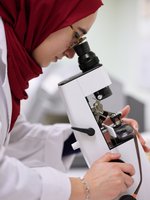
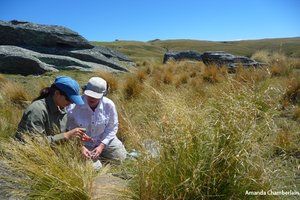
A hypothesis is a proposed explanation for a set of observations that leads to testable predictions. Predictions are tested by making additional observations or performing experiments.
Data Collection
Experiments are scientific tests carried out under controlled conditions. Scientists collect and analyze data from experiments, which can be qualitative or quantitative.
Qualitative Data: Recorded descriptions such as color, smell, appearance, behavior, and interviews.
Quantitative Data: Numerical measurements with units, such as weight, size, length, time, temperature, and frequency.
Hypothesis Testing and Theory Development
If experiments show a hypothesis is incorrect, it can be modified and retested. This cycle refines the hypothesis. A hypothesis can never be proven true, as there is always more to learn. When a hypothesis is supported by extensive experimentation, it may lead to the development of a scientific theory.
Theory: An accepted explanation of why something happens, usually a general principle or broad concept. Examples include Newton's theory of gravitation, cell theory, and germ theory.
Communication and Societal Impact
Science does not work in isolation. Results and new findings are communicated to the scientific community for review, feedback, and publication. The main goal is societal benefit, including technology development, policy formation, problem-solving, and knowledge building.
Controlled Experiments
Experiments are designed to manipulate one component at a time. A controlled experiment compares a manipulated component to a standard. Variables in controlled experiments include:
Independent variable: The factor manipulated by the researcher.
Dependent variable: The variable measured to evaluate the outcome.
Controlled variable: The variable that remains constant.
Positive control: A group for which a change is expected.
Negative control: A group for which no change is expected.
Interpreting Graphs
Bar graphs and line graphs are used to represent experimental data. The independent variable is graphed on the X-axis, while the dependent variable is graphed on the Y-axis. Line graphs are typically used to show changes over time.
Five Unifying Themes of Biology
Overview
Biology is unified by five major themes:
Evolution: Explains the unity and diversity of life.
Genetics-flow of information: Describes how genetic information is transferred and expressed.
Structure and function are correlated: Biological structures are adapted to their functions.
Cell structure and function: Cells are the basic units of life.
Flow of Energy: Life depends on energy transformations, such as photosynthesis and cellular respiration.
Interactions within and between systems: Life depends on complex interactions at all levels.
Evolutionary Theory
Evolution is the scientific explanation for the unity and diversity of life. Fossil records and DNA evidence support the idea of a common ancestor. Darwin's theory of evolution, presented in the Origin of Species, proposed that species arise from a succession of ancestors through descent with modification. The mechanism for this process is natural selection.
Natural Selection: Individuals with certain inherited traits are more likely to survive and reproduce.
Competition: Organisms compete for survival, food, and to avoid predators. Those better adapted live longer and reproduce.
Summary Table: Levels of Biological Organization
The following table summarizes the main levels of biological organization:
Level | Description | Example |
|---|---|---|
Biosphere | All life and places where life exists | Earth |
Ecosystem | Living and nonliving things in an area | Grassland, desert, coral reef |
Community | All living organisms in an ecosystem | Plants, animals, fungi, bacteria |
Population | Individuals of a species in an area | Mule deer in a meadow |
Organism | Individual living thing | Deer, plant, fungus |
Organ | Body part with specific function | Heart, leaf, root |
Tissue | Group of cells with specific function | Epidermis, skeletal muscle |
Cell | Structural and functional unit of life | Plant cell, animal cell |
Organelle | Functional component in cells | Mitochondria, chloroplast |
Molecule | Chemical structure of atoms | ATP, chlorophyll |
Additional info:
Reductionism and systems biology are complementary approaches in research.
Scientific theories are not guesses; they are well-supported explanations.
Controlled experiments are essential for reliable scientific results.
