 Back
Introduction to Biology and the Scientific Method
Study Guide - Smart Notes
 Tailored notes based on your materials, expanded with key definitions, examples, and context.
Biology: The Study of Life
Definition and Scope
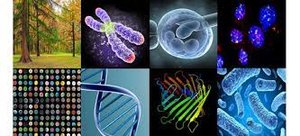
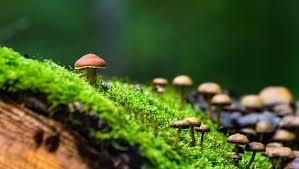
Biology is the scientific study of life and all associated behaviors. It encompasses a wide range of fields that investigate life at different levels of organization, from molecules to ecosystems.
Molecular Biology: Studies the composition, structure, and interactions of cellular molecules such as nucleic acids and proteins.
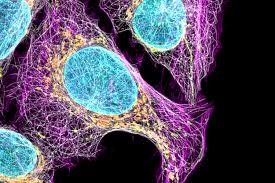
Cell Biology: Focuses on cell structure and function.
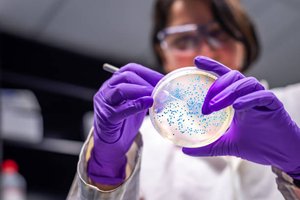
Microbiology: Examines microorganisms.
Ecology: Investigates relationships among living organisms and their physical environment.
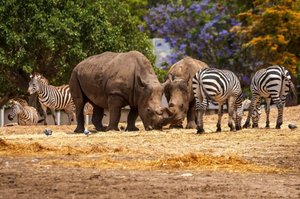
Zoology: Studies animals, their behavior, physiology, classification, and distribution.
Properties of Living Organisms
Recognizing Life
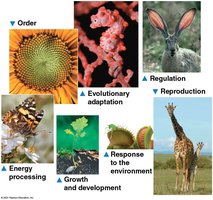
Scientists identify life by observing what organisms do. The properties of living organisms include:
Order: Organized structure and function.
Evolutionary adaptation: Ability to adapt over generations.
Regulation: Maintenance of internal conditions.
Energy processing: Acquisition and use of energy.
Growth and development: Increase in size and complexity.
Response to the environment: Reacting to stimuli.
Reproduction: Producing offspring.
Levels of Biological Organization
Hierarchical Structure of Life
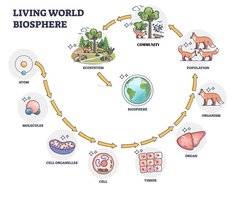
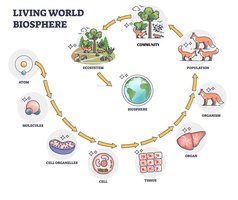
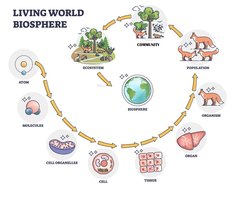
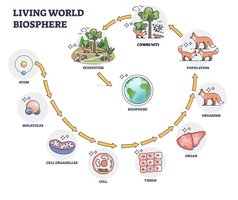
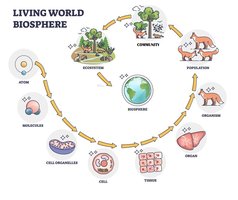
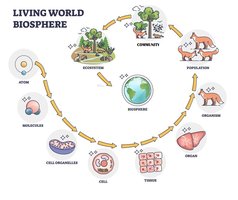
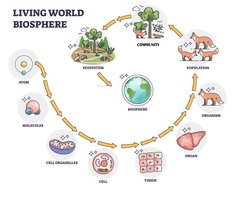
Biology examines life at various levels of detail, from molecules to the biosphere. These levels are organized hierarchically:
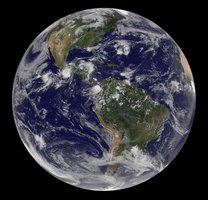
Biosphere: All life on Earth and the places where life exists.
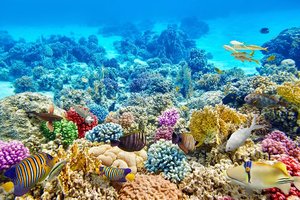
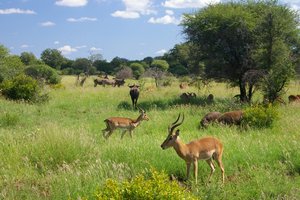
Ecosystem: All living and nonliving things in a particular area (e.g., grassland, desert, coral reef).
Community: All living organisms inhabiting a particular ecosystem.
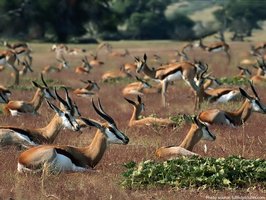
Population: All individuals of a species living within a specified area.
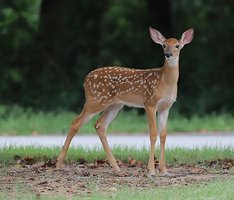
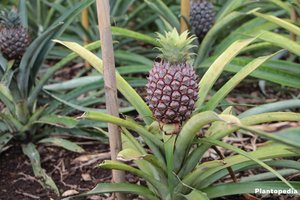
Organism: An individual living thing.
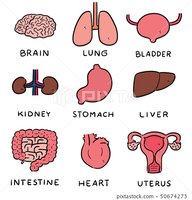
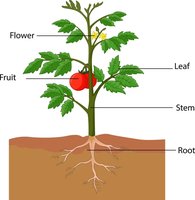
Organ: A body part made up of multiple tissues with specific functions (e.g., lung, heart, leaves, roots).
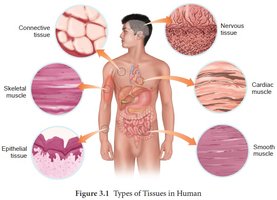
Tissue: A group of cells working together to perform a specific function (e.g., epidermis, skeletal muscle).
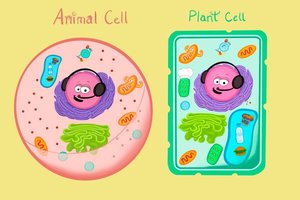
Cell: The structural and functional unit of life; can be unicellular or multicellular.
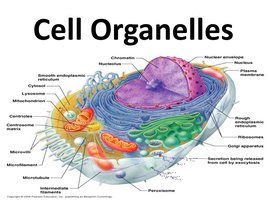
Organelle: Functional components within cells (e.g., chloroplast, mitochondria, nucleus).
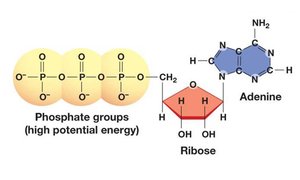
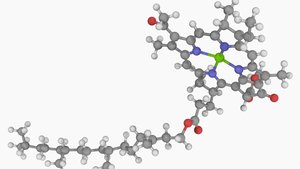
Molecule: Chemical structure consisting of two or more atoms; functions include structural support, transportation, and energy (e.g., chlorophyll, ATP).


Systems Biology and Reductionism
Systems biology studies how structural levels of life interact and influence one another as complexity increases. Reductionism simplifies complex systems to manageable components. Both approaches complement each other in understanding biological phenomena.
The Scientific Method
Science and Its Approach
Science is an approach to understanding the natural world. The scientific method is a systematic procedure used to search for explanations of nature.
Observations/questions & background research
Formulating hypotheses
Performing experiments
Collecting data and analysis
Conclusion & communication
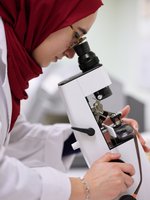
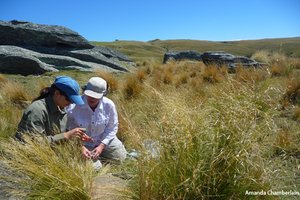
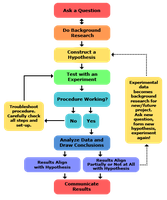
Hypothesis and Experimentation
A hypothesis is a proposed explanation for a set of observations that leads to testable predictions. Predictions are tested by making additional observations or performing experiments.
Experiment: A scientific test carried out under controlled conditions.
Data: Any recorded observation; can be qualitative (descriptions) or quantitative (numerical measurements).
Qualitative Data
Color
Smell
Appearance
Behavior
Interviews
Quantitative Data
Weight
Size
Length
Time
Temperature
Frequency
Hypothesis Testing and Theory Development
If an experiment shows that a hypothesis is incorrect, it can be modified and further experiments carried out. This cycle is repeated, continually refining the hypothesis. A hypothesis can never be proven true, only supported by evidence.
When a hypothesis is supported by several rounds of experimentation and by many scientists, it leads to the development of a theory. A scientific theory is a generally accepted explanation of why something happens, often a broad concept or principle.
Examples: Newton's theory of gravitation, cell theory, germ theory
Communication and Societal Impact
Science does not work in isolation. Results and new findings are communicated to the scientific community for review, feedback, and publication. The main goal is societal benefit, including technology development, policy informing, problem solving, and knowledge building.
Controlled Experiments
Experiments are designed to manipulate one component at a time. A controlled experiment compares a manipulated component to a standard.
Independent variable: The factor manipulated by the researcher.
Dependent variable: The variable measured to evaluate the outcome.
Controlled variable: The variable that remains constant.
Positive control: Group for which a change is expected.
Negative control: Group for which no change is expected.
Experimental and Control Groups
Controlled experiments compare an experimental group with a control group. The control group is exposed to the same procedure, but the independent variable is not changed (e.g., placebo pill in medical trials). The experimental group receives the treatment.
Interpreting Graphs
Bar and line graphs are used to represent data. The independent variable is graphed on the X-axis, and the dependent variable is graphed on the Y-axis. Line graphs are typically used to show changes over time.
Five Unifying Themes of Biology
Overview of Themes
Biology is unified by five major themes:
Evolution: Explains the unity and diversity of life.
Genetics-flow of information: How genetic information is transferred and expressed.
Structure and function are correlated: Biological structures are adapted to their functions.
Cell structure and function: Cells are the basic units of life.
Flow of Energy: Life depends on energy transformations (photosynthesis and cellular respiration).
Interactions within and between systems: Life depends on complex interactions.
Evolutionary Theory
Evolution is the scientific explanation for the unity and diversity of life. Similarities between fossil records and current organisms suggest a common ancestor. DNA evidence supports this process.
Evolution: Living species are descendants of ancestral species that were different from present-day ones.
Darwin’s Theory of Evolution: Species living today arose from a succession of ancestors that were different from them to better suit their environment (“descent with modification”).
Natural Selection: Individuals with certain inherited traits are more likely to survive and reproduce than those without those traits.
Competition: Organisms compete for survival, food, and to avoid predators. Those better able to survive reproduce and further the population.
Summary Table: Levels of Biological Organization
Level | Description | Example |
|---|---|---|
Biosphere | All life and places where life exists | Earth |
Ecosystem | Living and nonliving things in an area | Grassland, desert, coral reef |
Community | All living organisms in an ecosystem | Plants, animals, fungi, bacteria |
Population | Individuals of a species in an area | Mule deer in a meadow |
Organism | An individual living thing | Each plant, deer, fungus |
Organ | Body part with specific function | Lung, heart, leaves, roots |
Tissue | Group of cells with specific function | Epidermis, skeletal muscle |
Cell | Structural and functional unit of life | Plant cell, animal cell |
Organelle | Functional components in cells | Chloroplast, mitochondria |
Molecule | Chemical structure of atoms | Chlorophyll, ATP |
Additional info: Academic context was added to clarify definitions, examples, and the scientific method cycle.
