 Back
Introduction to Biology: Cells, Molecules, and the Scientific Method
Study Guide - Smart Notes
 Tailored notes based on your materials, expanded with key definitions, examples, and context.
Introduction to Biology
What is Biology?
Biology is the scientific study of life and living organisms. It encompasses a wide range of topics, from the molecular mechanisms within cells to the interactions of populations and ecosystems. The field is unified by several core themes, including the scientific method, evolution, and the structure and function of living systems.
Definition: Biology is the science of life, focusing on the structure, function, growth, origin, evolution, and distribution of living organisms.
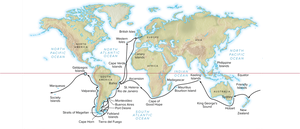
Historical Context: Charles Darwin's journey on the HMS Beagle led to the development of the theory of evolution by natural selection, which is foundational to modern biology.
Seven Characteristics of Life
All living organisms share a set of fundamental characteristics that distinguish them from non-living matter.
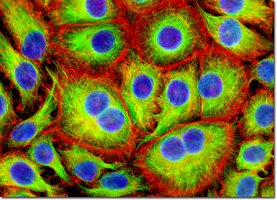
Cellular Organization: All life is composed of one or more membrane-bound cells.
Ordered Complexity: Living organisms exhibit hierarchical, ordered complexity at molecular and cellular levels.
Sensitivity: Organisms respond to environmental stimuli.
Growth, Development, and Reproduction: Governed by molecules of heredity (e.g., DNA).
Energy Utilization: Organisms take in energy and use it for work (metabolism).
Homeostasis/Regulation: Maintenance of stable internal conditions distinct from the external environment.
Evolutionary Adaptation: Populations evolve over time to adapt to their environments.
The Nature of Science
The Scientific Method
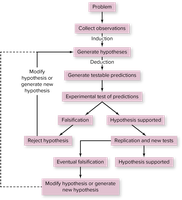
Science seeks to develop accurate understandings of the natural world through observation, reasoning, and experimentation. The scientific method is a systematic approach to inquiry that involves making observations, forming hypotheses, conducting experiments, and drawing conclusions.
Objectivity: Scientists strive for objectivity, but science is a collective endeavor with mechanisms for self-correction.
Descriptive Science: Accurate description is the foundation of scientific understanding.
Logic in Science: Deductive reasoning applies general principles to predict specific results, while inductive reasoning constructs general principles from specific observations.
Hypotheses and Controlled Experiments
Hypothesis-driven science involves making and testing predictions. A hypothesis is a suggested explanation for observed phenomena. Controlled experiments are designed to isolate variables and test hypotheses by comparing experimental and control groups.
Variable: A factor that influences a process, outcome, or observation.
Control Group: The group in which the variable of interest is kept constant.
Experimental Group: The group in which the variable is altered.
Example: The classic experiment testing the germ hypothesis versus spontaneous generation in nutrient broth flasks.
Reductionism and Emergent Properties
Reductionism is the approach of understanding complex systems by reducing them to their parts. However, living systems exhibit emergent properties that arise from the interactions of their components, which cannot always be predicted by studying parts in isolation.
Scientific Theories
In science, a theory is a well-supported explanation for a natural phenomenon, based on a body of evidence. This differs from the colloquial use of "theory" as a mere guess.
Scientific Theory: A body of interconnected concepts, supported by reasoning and evidence, that explains facts in a field of study.
Evolution: The Unifying Theory of Biology
Evolution and Natural Selection
Evolution is the genetic change in populations over time. Darwin's theory of evolution by natural selection explains how organisms change and diversify.
Natural Selection: Differential reproduction of genotypes due to environmental factors, leading to evolutionary change.
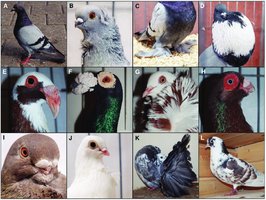
Artificial Selection: Genetic changes in populations due to selective breeding by humans.
Populations Evolve: Individuals do not evolve; populations do.
Mechanisms of Evolutionary Change
There are four main mechanisms of evolutionary change: natural selection, genetic drift, gene flow, and mutation. These mechanisms explain the diversity and adaptation of life on Earth.
Conceptual Framework for the Study of Biology
Life and Physical Laws
All living systems are subject to the same chemical and physical laws as non-living matter. Biology applies these laws to understand life processes.
Structure Determines Function
The structure of molecules, cells, tissues, and organs determines their function. Understanding structure allows biologists to infer function and vice versa.
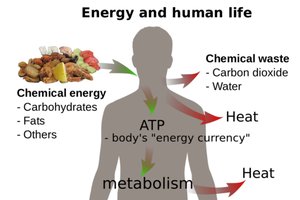
Energy and Matter Transformation
Living systems constantly transform energy and matter to maintain order and support life. Without energy input, systems would move toward disorder (entropy).
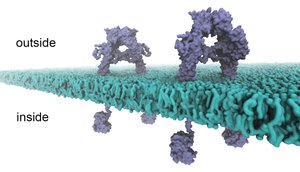
Information Transactions
Living systems depend on the storage, transmission, and use of information. DNA is the hereditary molecule that allows information to be passed from one generation to the next. Organisms also respond to their environment in real time.
Evolution Explains Unity and Diversity
All living organisms share a common ancestor, and evolutionary processes explain both the similarities (unity) and differences (diversity) among life forms. The genetic code and mechanisms of heredity are conserved across all known life.
Course Structure and Expectations
Course Materials and Requirements
Textbook: Campbell Biology, 13th Edition (Urry et al.)
Mastering Biology: Online tutorial platform required for assignments.
iClicker: Required for in-class participation.
Lab Materials: Lab coat, safety glasses/goggles, and a quadrille-ruled lab notebook.

Grading and Assignments
Lab: 300 points
iClicker Exercises: 100 points (participation-based)
Mastering Biology Exercises: 100 points (accuracy-based)
Group Activities: 125 points
Exams: Three exams, 125 points each
Total: 1000 points
Course Policies
Attendance: Required for all lectures and labs.
Communication: Formal, professional emails are expected when contacting instructors or TAs.
Absences and Extensions: Must be requested in advance with documentation.
Learning Objectives
Collaborate with peers to address scientific questions.
Formulate hypotheses and design experiments.
Analyze data and draw conclusions.
Calculate relevant biological values (e.g., solute concentration, probabilities).
Compare types of chemical bonds and properties of water.
Describe the structure and function of biological molecules and cells.
Illustrate and explain cellular processes (e.g., respiration, photosynthesis, mitosis, meiosis, gene expression).
Differentiate among prokaryotic cells, eukaryotic cells, and viruses.
Apply knowledge of membrane transport, energetics, and enzyme function.
Predict genetic outcomes and analyze molecular sequences.
Utilize bioinformatics and genomics tools.
