 Back
Introduction to Biology: Cells, Scientific Method, and Evolution
Study Guide - Smart Notes
 Tailored notes based on your materials, expanded with key definitions, examples, and context.
Introduction to Biology
What is Biology?
Biology is the scientific study of life, encompassing a wide range of topics from molecular mechanisms to ecological interactions. The field seeks to understand living organisms, their structure, function, growth, origin, evolution, and distribution.
Definition: Biology is the science of life and living organisms.
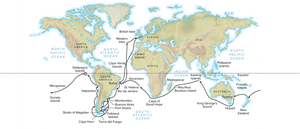
Historical Context: Charles Darwin's journey on the HMS Beagle led to the development of the theory of evolution by natural selection, which is foundational to modern biology.
Core Principle: Evolution underpins all biological sciences, explaining both the unity and diversity of life.
Example: All organisms alive today descend from a simple cellular ancestor that arose approximately 3.6 billion years ago.
Seven Characteristics of Life
All living organisms share seven fundamental characteristics that distinguish them from non-living matter.
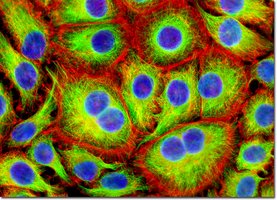
Cellular Organization: All life is composed of one or more membrane-bound cells.
Ordered Complexity: Organisms exhibit hierarchical, ordered complexity at molecular and cellular levels.
Sensitivity: Ability to respond to stimuli.
Growth, Development, & Reproduction: Governed by molecules of heredity (e.g., DNA).
Energy Utilization: Metabolism; organisms take in energy and use it for work.
Homeostasis/Regulation: Maintenance of stable internal conditions distinct from the external environment.
Evolutionary Adaptation: Interaction with environment influences survival, leading to population-level adaptation.
The Scientific Method in Biology
The Nature of Science
Science aims to develop increasingly accurate understandings of the world through observation and reasoning. It is a collective endeavor, subject to scrutiny and self-correction.
Objectivity: Scientists strive for objectivity, though complete objectivity is unattainable individually.
Descriptive Science: Accurate description is the first step in understanding biological phenomena.
Logic in Science
Deductive Reasoning: Applies general principles to predict specific results. Example: Inferring species from characteristics.
Inductive Reasoning: Uses specific observations to construct general scientific principles. Example: Observing traits to form hypotheses about inheritance.
Hypothesis-Driven Science
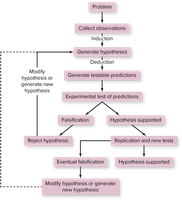
Hypothesis-driven science involves making and testing predictions based on suggested explanations (hypotheses).
Hypothesis: A suggested explanation for observed phenomena; a set of propositions that might be true.
Controlled Experiment: Scientists isolate variables to test hypotheses, keeping the variable of interest constant in a control group and altering it in the experimental group.
Example: Testing the source of contamination in nutrient broth by comparing sterilized broth exposed to air versus protected from air.
Reductionism and Emergent Properties
Reductionism is a philosophical approach that seeks to understand complex systems by reducing them to their working parts. However, living systems often exhibit emergent properties that cannot be predicted solely from their components.
Emergent Properties: New properties arise from the interaction of parts within a system.
Scientific Theories
Scientific Theory (scientist's view): A proposed explanation for a natural phenomenon, supported by interconnected concepts and experimental evidence.
Scientific Theory (public view): Often misunderstood as a guess or lack of knowledge.
Evolution: The Foundation of Biology
Evolutionary Theory
Evolution is the genetic change in populations over time. Darwin's theory of evolution by natural selection explains how organisms change and diversify.
Population vs. Individual: Individuals do not evolve; populations do.
Natural Selection: Differential reproduction of genotypes caused by environmental factors leads to evolutionary change.
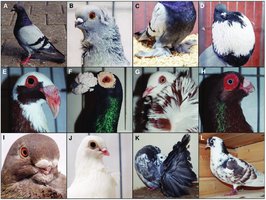
Artificial Selection: Change in genetic structure due to selective breeding by humans.
Conceptual Framework for Studying Biology
Life and Physical Laws
Biology applies familiar chemical and physical laws to living systems. There are no new laws unique to biology, only their consistent application.
Structure Determines Function
The proper functioning of molecules, cells, tissues, and organs depends on their structure. Function can often be inferred from structure and vice versa.
Energy and Matter Transformation
Living systems constantly transform energy and matter, from the cellular level to the biosphere. Without energy input, living systems would tend toward disorder (entropy).
Information Transaction
Living systems depend on information transaction both in the present and across generations. DNA is the molecule of heredity, enabling information transfer and response to environmental changes.
Unity and Diversity of Life
Evolution explains the unity and diversity of life. All organisms share fundamental characteristics, such as DNA, inherited from a common ancestor.
Course Information and Requirements
Course Materials
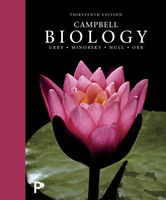
Textbook: Campbell Biology, 13th edition (Urry et al.)
Mastering Biology: Online tutorial platform required for assignments.
iClicker: Student remote for participation in class exercises.
Lab Equipment: Lab coat, safety glasses/goggles, quadrille-ruled lab notebook.

Assignments and Grading
Lab: 300 points
iClicker Exercises: 100 points (participation-based)
Mastering Biology Exercises: 100 points (accuracy-based)
Group Activities: 125 points
Exams: Three exams, 125 points each
Total: 1000 points
Course Policies
Attendance: Required for all lecture and lab meetings.
Absences: Must be requested in advance with documentation.
Extensions: Must be requested prior to deadlines with documentation.
Unexcused Absences: Result in zero points for missed work.
Learning Objectives for General Biology
Core Skills and Knowledge
Collaborate with peers to address scientific questions.
Formulate hypotheses and design experiments.
Analyze data and draw conclusions.
Calculate solute concentrations, probabilities, and other values.
Compare types of chemical bonds and explain electronegativity.
Recognize physical properties of water and their importance to life.
Describe structure and function of biological molecules.
Illustrate cellular processes (e.g., protein production, signal transduction, respiration, photosynthesis, mitosis, meiosis, DNA replication, transcription, translation, gene regulation).
Differentiate prokaryotic, eukaryotic cells, and viruses.
Apply understanding of membrane transport and diffusion.
Track energy transformations in living systems.
Diagram stages of mitosis and meiosis.
Predict genotypes and phenotypes based on inheritance.
Analyze DNA, mRNA, and protein sequences.
Utilize bioinformatics and genomics tools.
Summary Table: Seven Characteristics of Life
Characteristic | Description |
|---|---|
Cellular Organization | Composed of one or more membrane-bound cells |
Ordered Complexity | Hierarchical, ordered molecular and cellular structure |
Sensitivity | Ability to respond to stimuli |
Growth, Development, & Reproduction | Governed by molecules of heredity |
Energy Utilization | Metabolism; use of energy for work |
Homeostasis/Regulation | Maintenance of stable internal conditions |
Evolutionary Adaptation | Population-level adaptation to environment |
Additional info: These notes expand on the lecture outline and syllabus, providing academic context and examples for each topic. Images included are directly relevant to the explanation of cell structure, scientific method, Darwin's voyage, artificial selection, and course materials.
