 Back
Introduction to Biology: Characteristics, Classification, and Scientific Method
Study Guide - Smart Notes
 Tailored notes based on your materials, expanded with key definitions, examples, and context.
Introduction to Biology
Definition and Scope
Biology is the scientific study of life, encompassing the structure, function, growth, origin, evolution, and distribution of living organisms. Biologists use systematic methods to investigate the natural world and understand the principles governing living systems.
Characteristics of Living Organisms
Key Features of Life
Living organisms share several fundamental characteristics that distinguish them from non-living matter.
Organization: Organisms are highly organized, with cells as the basic unit of life. This organization extends from molecules to entire systems.
Acquire Materials and Energy: Organisms require external sources of materials and energy to maintain their structure and carry out life processes. Energy is defined as the capacity to do work.
Reproduction: Life arises from life. Organisms reproduce to ensure the continuation of their species. DNA contains hereditary information, and genes are units of information within DNA.
Respond to Stimuli: Organisms detect and respond to environmental changes, often moving toward or away from stimuli. This behavior is crucial for survival.
Homeostasis: Homeostasis refers to the maintenance of a relatively constant internal environment, such as stable body temperature in humans.
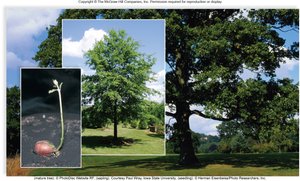
Growth and Development: Growth is an increase in size or cell number, while development encompasses all changes from conception to death.
Capacity to Adapt: Organisms evolve adaptations that enhance survival in changing environments. Natural selection leads to differential reproductive success, resulting in evolution—the change in frequency of traits in populations and species over time.
NASA's Definition of Life
NASA defines life as "A self-sustaining chemical system capable of Darwinian evolution." This emphasizes the importance of both self-maintenance and evolutionary capacity. 
Organization of Living Organisms
Levels of Biological Organization
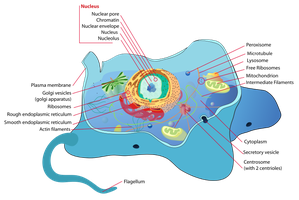
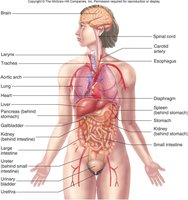
Biological organization ranges from molecules and cells to tissues, organs, organ systems, and entire organisms. 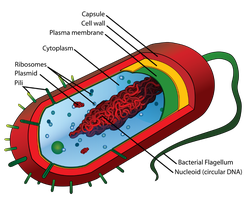
Energy and Material Acquisition
Importance of Energy
Organisms require energy to perform work, such as movement, growth, and reproduction. Energy is obtained from external sources, such as food or sunlight. 
Response to Stimuli
Behavioral Adaptations
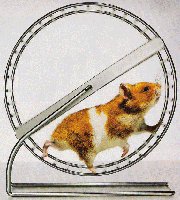
Organisms respond to environmental stimuli to avoid injury, acquire food, or find mates. Movement and behavior are essential for survival.
Homeostasis
Maintaining Internal Stability
Homeostasis is the process by which organisms regulate their internal environment to remain stable despite external changes.
Reproduction, Growth, and Development
Biological Continuity
Reproduction ensures the continuation of life. Growth and development involve increases in size and changes throughout an organism's life cycle.
Adaptation and Evolution
Natural Selection and Evolution
Adaptations are traits that improve an organism's fitness in its environment. Natural selection favors individuals with advantageous traits, leading to evolution over generations.
Viruses: Are They Alive?
Thought Question
Viruses challenge the definition of life. They possess genetic material and can evolve, but lack self-sustaining metabolism and cellular structure. 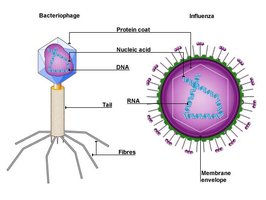
Basic Virus Life Cycle
Viruses infect host cells, replicate their genetic material, and produce new virus particles. 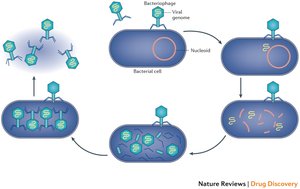
Classification of Living Organisms
Systematics and Taxonomy
Systematics is the scientific discipline of identifying and classifying organisms based on similarities and evolutionary relationships. Taxonomy assigns a binomial (two-part) name to each species: genus and species, both italicized (e.g., Homo sapiens).
Hierarchical Classification
Organisms are classified into increasingly specific categories:
Domain
Kingdom
Phylum
Class
Order
Family
Genus
Species
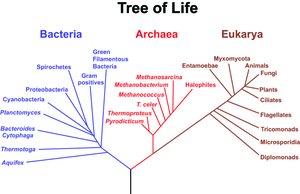
Domains of Life
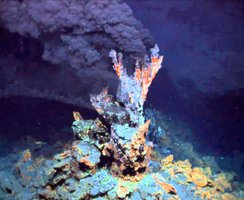
Domain Archaea: Unicellular prokaryotes living in extreme environments (e.g., high salinity, temperature, acidity).
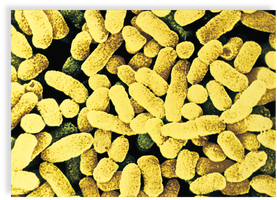
Domain Bacteria: Unicellular prokaryotes found everywhere; some cause disease, others are beneficial.
Domain Eukarya: Eukaryotic cells with a true nucleus; includes animals, plants, fungi, and protists.
Kingdoms of Eukarya
Eukaryotes are further divided into four kingdoms:
Animalia: Multicellular, motile, ingest food.
Plantae: Multicellular, photosynthetic.
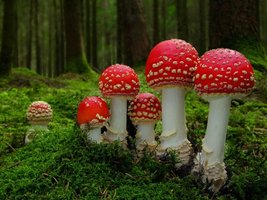
Fungi: Multicellular or unicellular, absorb nutrients.
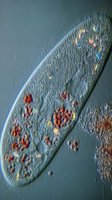
Protista: Mostly unicellular, diverse modes of nutrition.
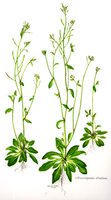

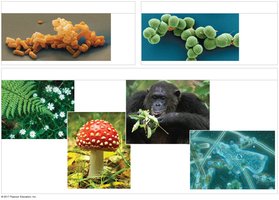
Categories of Classification: Example
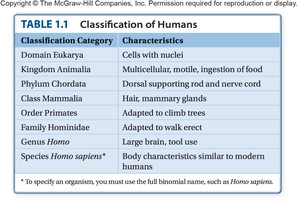
Classification Category | Characteristics |
|---|---|
Domain Eukarya | Cells with nuclei |
Kingdom Animalia | Multicellular, motile, ingestion of food |
Phylum Chordata | Dorsal supporting rod and nerve cord |
Class Mammalia | Hair, mammary glands |
Order Primates | Adapted to climb trees |
Family Hominidae | Adapted to walk erect |
Genus Homo | Large brain, tool use |
Species Homo sapiens | Body characteristics similar to modern humans |
Scientific Names
Scientific names are binomial, consisting of genus and species. Examples:
Homo sapiens
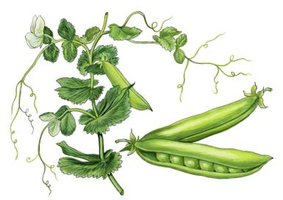
Pisum sativum
Felis domesticus

The Process of Science
Scientific Method
The scientific method is a systematic approach to investigating natural phenomena.
Observation: Using senses to gather information about the natural world. Inductive reasoning combines facts into generalizations.
Hypothesis: A testable, falsifiable statement explaining an observation.
Experiment/Further Observations: Deductive reasoning uses general premises to make specific predictions. Experiments are designed with controls and may use models.
Data: Results of experiments, which should be objective and observable. Data are often presented in tables or graphs and analyzed statistically.
Conclusion: Analysis of data to determine if the hypothesis is supported. May lead to new hypotheses.
Scientific Theory: A well-supported concept that unifies related hypotheses and is backed by extensive evidence.
Example of Scientific Method
Observation: All organisms are composed of cells.
Hypothesis: If organisms are composed of cells, then examination of an organism should reveal cells.
Experiment: Examine various organisms under a microscope.
Data: All observed organisms contain cells.
Conclusion: Supports the hypothesis.
Summary Table: Domains and Kingdoms
Domain | Cell Type | Kingdoms | Example |
|---|---|---|---|
Archaea | Prokaryotic | None | Extreme environments |
Bacteria | Prokaryotic | None | Escherichia coli |
Eukarya | Eukaryotic | Animalia, Plantae, Fungi, Protista | Humans, plants, fungi, protists |
Conclusion
Key Takeaways
Biology is the study of life, characterized by organization, energy use, reproduction, response to stimuli, homeostasis, growth, development, and adaptation.
Classification organizes life into domains and kingdoms based on evolutionary relationships.
The scientific method is essential for advancing biological knowledge.
