 Back
Introduction to Biology: Exploring Life and Its Organization
Study Guide - Smart Notes
 Tailored notes based on your materials, expanded with key definitions, examples, and context.
Biology: The Scientific Study of Life
Definition and Scope
Biology is the scientific study of life, encompassing a vast diversity of organisms and their interactions. Biologists use systematic and logical processes to investigate living systems, from single-celled organisms to complex multicellular life forms.
Biology seeks to understand the structure, function, growth, origin, evolution, and distribution of living organisms.
There is no single definition of life; instead, life is characterized by a set of observable properties.
Organisms display a wide range of forms and functions, from microscopic bacteria to large mammals.
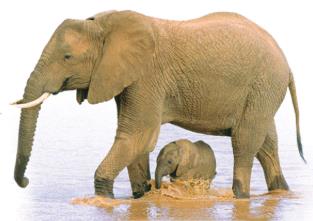
Properties of Life
Key Characteristics Shared by Living Things
All living organisms share several fundamental properties that distinguish them from non-living matter.
Order: Living things exhibit complex but ordered organization.
Reproduction: Organisms reproduce their own kind.
Growth and Development: Inherited information carried by genes controls the pattern of growth and development.
Response to Environment: Living things respond to environmental stimuli.
Energy Processing: Organisms take in energy and use it to power all their activities.
Regulation: Organisms regulate their internal environment to maintain a stable, constant condition (homeostasis).
Evolutionary Adaptation: Populations evolve over generations as individuals with traits best suited to their environments have greater reproductive success.
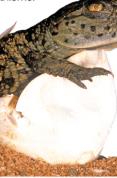
Defining Life: The Cellular Basis
Cells as the Fundamental Unit
Life is defined by the parts and processes of living things, with the cell as the basic unit of structure and function.
All living things are composed of one or more cells.
A cell regulates its internal environment, takes in and uses energy, and responds to its environment.
Cells arise from pre-existing cells through cell division.
Life can be unicellular (single-celled) or multicellular (many-celled).
Nomenclature and Taxonomy
Scientific Naming and Classification
Biologists use a standardized system for naming and classifying organisms to organize the diversity of life.
Nomenclature: The system of naming organisms. Each species is given a two-part Latin name (binomial nomenclature): the Genus (capitalized) and the species (lowercase), both italicized or underlined (e.g., Homo sapiens).
Taxonomy: The science of classifying organisms into hierarchical groups based on shared characteristics and evolutionary history.
About 1.8 million species have been named, but estimates suggest there may be 10–100 million species on Earth.
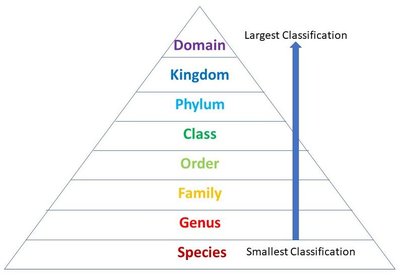
Major Taxonomic Ranks
Domain: Highest and most general rank.
Kingdom: Groups organisms with fundamental similarities.
Phylum: Major evolutionary lineages within kingdoms.
Class: Groups organisms with a more recent common ancestor.
Order: Groups together multiple families.
Family: Groups together multiple genera.
Genus: Closely related species.
Species: Most specific level; a single, unique organism type.
The Three Domains of Life
Overview of Domains
All life on Earth is classified into three domains: Bacteria, Archaea, and Eukarya. Each domain represents a major branch of evolutionary history.
Domain Bacteria: Microscopic, mostly single-celled organisms with simple cell structure. Found in diverse environments and can cause infections.
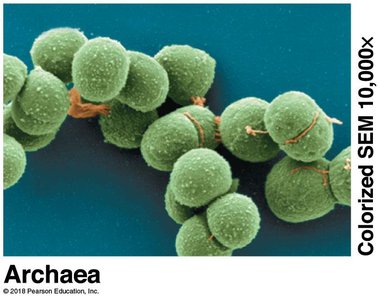
Domain Archaea: Microscopic, single-celled organisms similar in appearance to bacteria but genetically distinct. Often inhabit extreme environments and are not known to cause disease.
Domain Eukarya: Organisms with complex cells containing a nucleus and organelles. Includes protists, plants, fungi, and animals.
Domain Bacteria
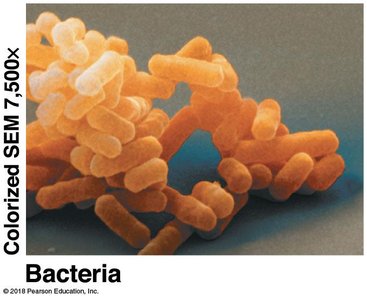
Most bacteria are single-celled and have a simple cell structure.
Common shapes: coccus (spherical), bacillus (rod-shaped), and spiral.
Size: typically 0.5–5 microns.
Some bacteria are beneficial (e.g., gut flora), while others cause disease.
Domain Archaea
Single-celled organisms with simple organization, superficially similar to bacteria.
Genetic analysis shows they are distinct from bacteria.
Often found in extreme environments (e.g., hot springs, salty lakes).
No known archaea cause disease in humans.
Domain Eukarya
All organisms with complex, membrane-bound cells.
Divided into four major kingdoms:
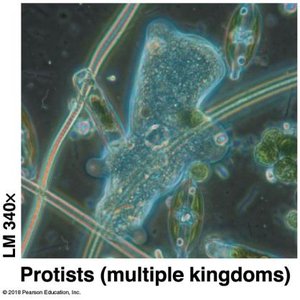
Protists: Mostly single-celled organisms (e.g., Amoeba).
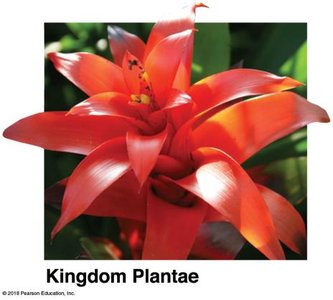
Plantae: Multicellular, photosynthetic organisms (plants).
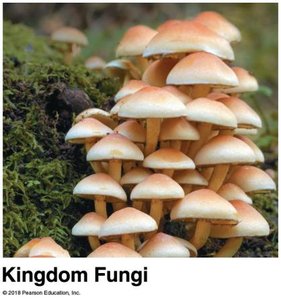
Fungi: Decompose organic material and absorb nutrients.
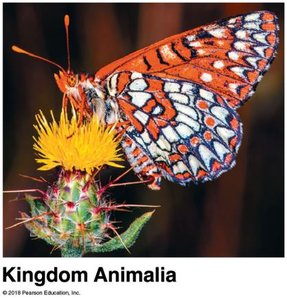
Animalia: Multicellular organisms that obtain food by ingestion.
Hierarchy of Biological Organization
Levels of Organization in Biology
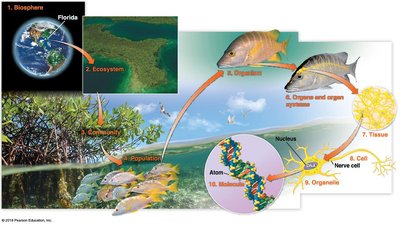
Biological systems are organized into a hierarchy, from the smallest chemical building blocks to the entire biosphere.
Biosphere: All life on Earth and the places where life exists.
Ecosystem: All living organisms in a particular area, plus the non-living components of their environment.
Community: All living organisms in an ecosystem.
Population: All individuals of a single species in a community.
Organism: An individual living thing.
Organs and Organ Systems: Body parts that perform specific functions.
Tissue: Groups of similar cells performing a specific function.
Cell: The fundamental unit of life.
Organelle: Functional structures within cells.
Molecule: Chemical structures consisting of two or more atoms.
Level | Description |
|---|---|
Biosphere | All life and environments on Earth |
Ecosystem | Living and non-living components in a region |
Community | All living organisms in an ecosystem |
Population | All individuals of one species in a community |
Organism | Individual living thing |
Organs/Organ Systems | Body parts with specific functions |
Tissue | Group of similar cells with a function |
Cell | Basic unit of life |
Organelle | Functional structure within a cell |
Molecule | Chemical structure of two or more atoms |
Additional info: The hierarchy of organization is fundamental to understanding how complex biological systems are structured and function, from molecules to the biosphere.
