 Back
Introduction to Biology: Properties of Life, Biomolecules, and the Scientific Method
Study Guide - Smart Notes
 Tailored notes based on your materials, expanded with key definitions, examples, and context.
Introduction to Biology
What is Life?
Biology is the scientific study of life. Scientists and philosophers have proposed several definitions of life, but all agree that living things share certain fundamental properties. Life is a self-sustained chemical system capable of undergoing Darwinian evolution, is based on organic chemistry, and distinguishes living beings from non-living matter.
Life is membrane delimited
Life is made up of cells
Life stores and follows instructions
Life stores and uses energy
Life is self-replicating
Life responds to the environment
Life evolves
The smallest unit that exhibits all these properties is called a cell.
Properties of Life
M CRIMES: The Seven Properties of Life
All living things share seven key properties, summarized by the acronym M CRIMES:
Membrane bound (M): All living things are separated from their environment by a membrane.
Cells (C): Life is made up of one or more cells, the basic unit of structure and function.
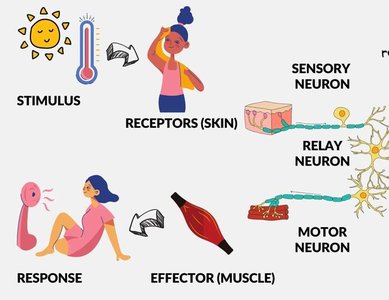
Response to stimuli (R): Living things can sense and respond to changes in their environment.
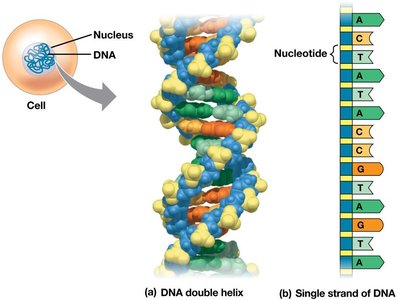
Information storage (I): Life stores genetic information, typically in the form of DNA.
Metabolism (M): Living things acquire and use energy to maintain order and carry out processes.
Evolution (E): Populations of living things change over generations through evolution.
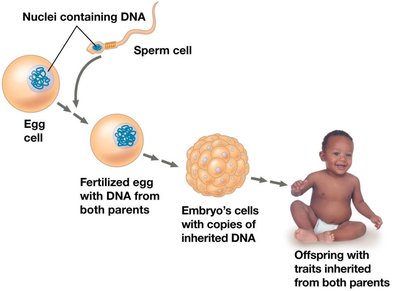
Self-replication (S): Life can reproduce itself, passing on genetic information to offspring.
Biomolecules: The Chemical Basis of Life
Main Classes of Biomolecules
Four major classes of biomolecules support the properties of life:
Lipids: Form biological membranes, store energy, and provide insulation.
Carbohydrates: Serve as energy sources and structural components.
Nucleic Acids: Store and transmit genetic information (DNA and RNA).
Proteins: Perform most cellular functions, including catalysis, structure, and signaling.
Property 1: Life is Membrane Delimited
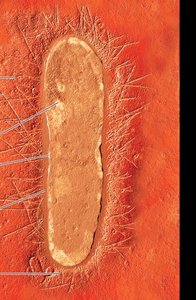
Lipids are essential for forming cell membranes, which compartmentalize the cell and separate it from the environment. Membranes also regulate the movement of substances in and out of the cell.
Property 2: Life Stores and Follows Information
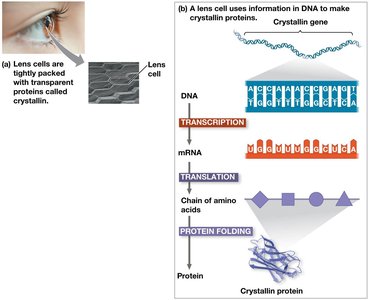
Nucleic acids (DNA and RNA) store and transmit genetic information, allowing cells to follow instructions for growth, development, and function.
Property 3: Life Stores and Uses Energy
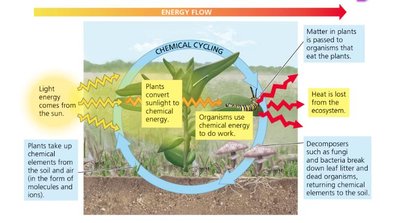
Living organisms obtain energy from sunlight (photosynthesis) or chemicals (chemosynthesis, cellular respiration). Carbohydrates, lipids, and proteins are key energy sources.
Carbohydrates: Quick energy source (e.g., glucose, starch).
Lipids: Long-term energy storage and insulation.
Proteins: Can be used for energy, but primarily serve other functions.

Property 4: Life Controls Its Functions and Responds to the Environment
Proteins act as enzymes, receptors, and signaling molecules, allowing cells to regulate internal processes and respond to external stimuli.
Property 5: Life is Self-Replicating
All biomolecules contribute to the process of self-replication, enabling organisms to reproduce and pass on genetic information to the next generation.
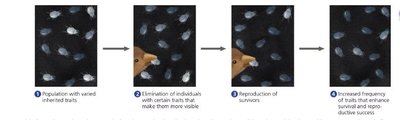
Property 6: Life Evolves
Evolution is the process by which populations of organisms change over generations. Adaptations arise as species accumulate differences from their ancestors, allowing them to survive in changing environments.
Types of Cells
Prokaryotic vs. Eukaryotic Cells
All living organisms are composed of cells, which can be classified as either prokaryotic or eukaryotic:
Feature | Prokaryotic Cells | Eukaryotic Cells |
|---|---|---|
Nucleus | No (DNA in cytoplasm) | Yes (DNA in nucleus) |
DNA Structure | Circular | Linear (chromosomes) |
Size | 0.1–5 microns | 1–100 microns |
Organelles | Few or none | Many membrane-bound organelles |
Examples | Bacteria, Archaea | Plants, Animals, Fungi, Protists |
The Scientific Method
Steps of the Scientific Method
The scientific method is a systematic approach to understanding the natural world. It involves:
Making observations: Gathering information about phenomena.
Asking questions: Using inductive reasoning to form questions.
Forming hypotheses: Proposing testable explanations.
Making predictions: Using deductive reasoning (If...then statements).
Testing with controls: Designing experiments to test hypotheses, including control groups.
Collecting and analyzing data: Presenting results, often graphically.
Repeating: Modifying, extending, or rejecting hypotheses based on results.
Experimental Design: Controls and Variables
Independent variable: The causal factor being tested (manipulated by the experimenter).
Dependent variable: The outcome measured in the experiment.
Control group: The group in which all variables are kept constant except the independent variable; used for comparison.
Proper experimental design ensures that only the variable of interest affects the outcome, increasing the reliability of results.
Data Presentation
Data in biology is often presented graphically to show relationships between variables. Common graph types include:
Scatter plots: Show the relationship between two quantitative variables.
Line graphs: Show trends over time or continuous data.
Bar graphs: Compare quantities across categories.
On a graph, the X-axis typically represents the independent variable, and the Y-axis represents the dependent variable.
Applying the Scientific Method: Example
Case Study: Mouse Coloration and Natural Selection
Observation: Beach mice have light fur that matches sandy environments, while inland mice have dark fur matching soil and vegetation.
Question: How did these coloration patterns evolve?
Hypothesis: Coloration evolved as an adaptation for camouflage, protecting mice from predators.
Prediction: If mice do not match their habitat, they will be preyed on more heavily.
Test: Researchers placed light and dark mouse models in both habitats and measured predation rates.
Conclusion: Data supported the hypothesis that matching coloration increases survival, illustrating natural selection in action.
Summary Table: Properties of Life and Supporting Biomolecules
Property of Life | Supporting Biomolecule(s) | Example |
|---|---|---|
Membrane delimited | Lipids | Cell membrane structure |
Information storage | Nucleic acids | DNA, RNA |
Energy use | Carbohydrates, lipids, proteins | Glucose metabolism, fat storage |
Self-replication | All biomolecules | Cell division, reproduction |
Response to environment | Proteins | Enzymes, receptors |
Evolution | Nucleic acids, proteins | Genetic variation, adaptation |
Study Tips for Success in Biology
Develop a study schedule and stick to it.
Form study groups and use active learning techniques (drawing, concept maps, flashcards).
Test yourself regularly to reinforce learning.
Attend class, complete assignments, and seek help when needed.
