 Back
Introduction to Biology: The Scientific Study of Life
Study Guide - Smart Notes
 Tailored notes based on your materials, expanded with key definitions, examples, and context.
Biology Today: Exploring Life
Biology and Society
Biology is the scientific study of life, encompassing the diversity and complexity of living organisms. Human curiosity about the natural world drives the exploration and understanding of biological principles, which are relevant to both individual lives and society as a whole.
The Process of Science
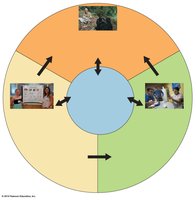
Scientific Inquiry: Exploration and Testing
Science is an approach to understanding the natural world based on inquiry, evidence, and explanations. Scientists focus on structures and processes that can be observed and measured, distinguishing science from other ways of knowing.
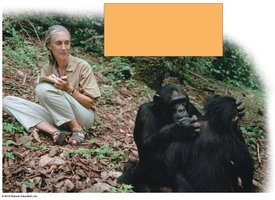
Exploration: Making observations, asking questions, and seeking information.
Data: Recorded observations that serve as evidence for scientific inquiry.
Testing: Forming hypotheses, making predictions, running experiments, gathering and interpreting data, and drawing conclusions.
Hypotheses and Experiments
A hypothesis is a proposed explanation for a set of observations. It must be testable and falsifiable. Experiments are scientific tests used to support or refute hypotheses. Controlled experiments compare groups that differ only in one variable.
Independent variable: The factor manipulated by researchers.
Dependent variable: The response or effect measured in the experiment.
Control group: Lacks the factor being tested.
Experimental group: Receives the factor being tested.
Scientific Communication and Outcomes
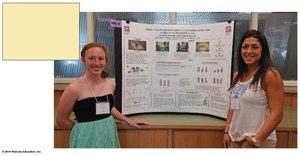
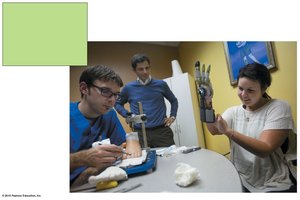
Scientists communicate through seminars, meetings, and publications. Peer review by impartial experts ensures quality and reliability. Outcomes of scientific research include building knowledge, solving problems, developing new technologies, and benefiting society.
Hypotheses, Theories, and Facts
A theory is a comprehensive, well-substantiated explanation supported by a large body of evidence. A fact is information considered objectively true based on current evidence. Science aims to explain phenomena, not just accumulate facts.
Controlled Experiments and Placebos
Controlled experiments often use placebos as ineffective treatments to serve as controls. Double-blind experiments, where neither participants nor experimenters know which group is which, are the gold standard for medical trials.

Evaluating Scientific Claims and Pseudoscience
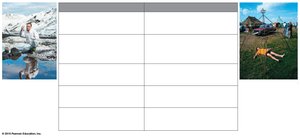
Pseudoscience is falsely presented as scientific. Indicators include reliance on anecdotal evidence, untestable claims, and rejection of external review. Reliable science adheres to established methods, is repeatable, and open to review.
Features of Science | Features of Pseudoscience |
|---|---|
Adheres to scientific method | Does not adhere to accepted processes |
Repeatable results | Results cannot be duplicated |
Testable claims | Unprovable or untestable claims |
Open to outside review | Rejection of external review |
Multiple lines of evidence | Overreliance on small data |

The Properties of Life
Characteristics of Living Things
Living organisms display several properties simultaneously, including order, cells, growth and development, energy processing, regulation, response to the environment, reproduction, and evolution.
Order: Organized structure.
Cells: Basic unit of life.
Growth and development: Increase in size and complexity.
Energy processing: Use of energy for work.
Regulation: Maintenance of internal conditions.
Response to environment: Reacting to stimuli.
Reproduction: Producing offspring.
Evolution: Adaptation and change over time.
Major Themes in Biology
The Relationship of Structure to Function
Structure and function are correlated at all levels of biological organization. For example, the branched structure of lungs increases surface area for gas exchange, and the indentations in red blood cells facilitate oxygen diffusion.
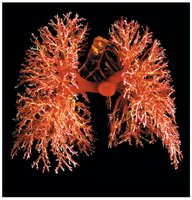
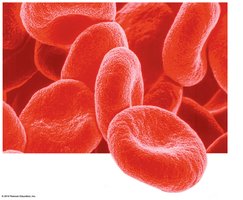
Information Flow
Biological systems rely on the flow of information, such as genetic information in DNA and hormonal signals. Genes are hereditary units of information, and the four molecular building blocks of DNA are A, G, C, and T.
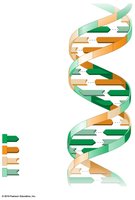

Pathways That Transform Energy and Matter
Life requires energy, primarily from the sun. Plants capture sunlight and convert it into chemical energy, which is used by organisms for work. Energy flows through ecosystems, entering as light and exiting as heat, while matter cycles within the ecosystem.
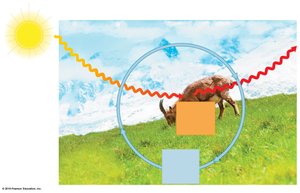
Interactions within Biological Systems
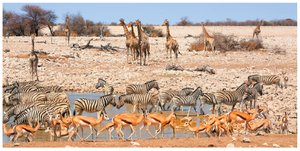
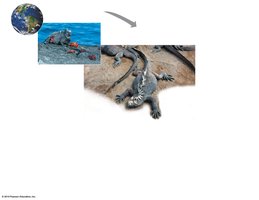
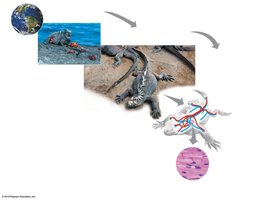
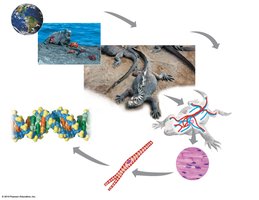
Biological systems are organized hierarchically, from molecules and cells to the biosphere. At each level, complexity increases and new properties emerge due to the arrangement and interaction of parts.
Evolution: The Core Theme of Biology
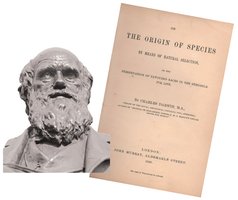
Evolution explains the unity and diversity of life. The theory of evolution by natural selection, first articulated by Charles Darwin, describes how species change over time through descent with modification and the selection of traits best suited to the environment.
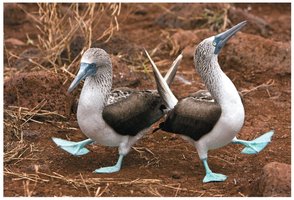
Natural Selection
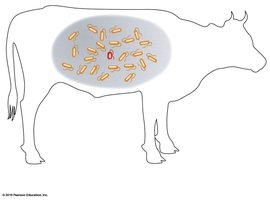
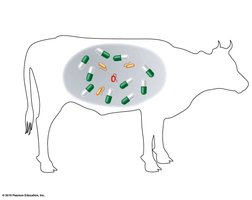
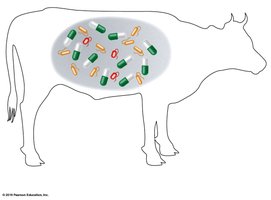
Individuals with advantageous traits are more likely to survive and reproduce.
Mutations occur randomly; natural selection edits these changes.
Evolutionary adaptations are inherited traits that enhance survival.
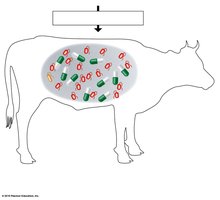
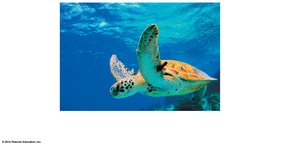
Applying Major Themes to the Green Sea Turtle
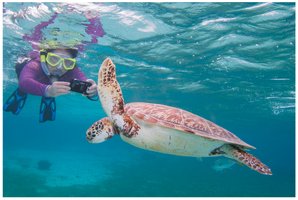
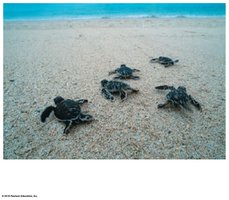
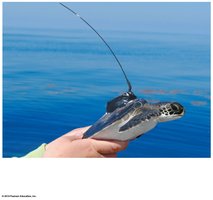
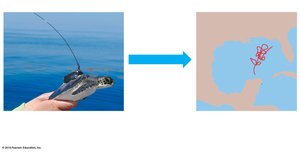
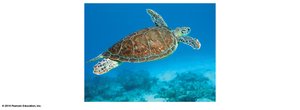
The study of green sea turtles illustrates the five unifying themes of biology: structure-function relationship, information flow, energy and matter pathways, interactions within biological systems, and evolution.
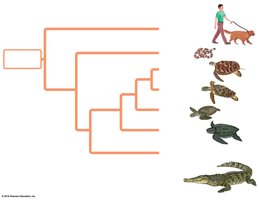
Evolutionary Relationships
Each species represents a twig on the tree of life. Comparing DNA sequences provides evidence of evolutionary relationships and helps generate evolutionary trees.
Summary Table: Features of Science vs. Pseudoscience
Science | Pseudoscience |
|---|---|
Adheres to scientific method | Does not adhere to accepted processes |
Repeatable results | Results cannot be duplicated |
Testable claims | Unprovable or untestable claims |
Open to outside review | Rejection of external review |
Multiple lines of evidence | Overreliance on small data |
Key Equations
While this chapter does not present specific equations, it introduces the concept of variables in experiments:
Independent variable: The factor manipulated by the experimenter.
Dependent variable: The measured effect or outcome.
Example equation for experimental design:
Conclusion
This introduction to biology provides a foundation for understanding the scientific study of life, the properties that define living organisms, and the major themes that unify biological knowledge. The process of science, controlled experiments, and the theory of evolution are central to the study of biology.
