 Back
Introduction to Biology: The Study of Life, Levels of Organization, and the Process of Science
Study Guide - Smart Notes
 Tailored notes based on your materials, expanded with key definitions, examples, and context.
Introduction to Biology
What is Biology?
Biology is the scientific study of life and living organisms. It encompasses a wide range of topics, from the molecular mechanisms inside cells to the interactions of organisms within ecosystems. The field is unified by several core themes, including the structure and function of cells, the flow of genetic information, and the diversity of life.
Major Areas of Biological Study
Biochemistry & Molecular Biology: Focuses on the chemical processes and substances that occur within living organisms.
Cell & Developmental Biology: Examines the structure, function, and growth of cells and how organisms develop from a single cell.
Genetics, Genomics, & Development: Studies heredity, gene function, and the regulation of genetic information.
Levels of Biological Organization
From Atoms to the Biosphere
Life is organized into a hierarchy of structural levels, each building on the level below it. Understanding these levels helps biologists study life from the smallest molecules to the entire planet.
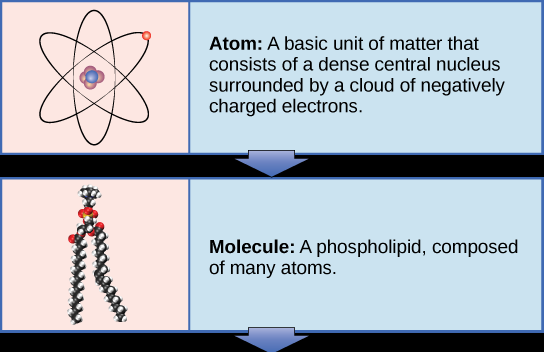
Atom: The basic unit of matter, consisting of a nucleus surrounded by electrons.
Molecule: A chemical structure composed of two or more atoms bonded together (e.g., phospholipids).
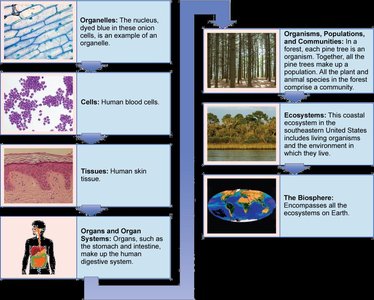
Organelle: Specialized structures within cells (e.g., nucleus in onion cells).
Cell: The basic unit of life (e.g., human blood cells).
Tissue: Groups of similar cells performing a specific function (e.g., human skin tissue).
Organ and Organ System: Structures composed of tissues that perform specific functions (e.g., stomach, digestive system).
Organism, Population, Community: Individual living things, groups of the same species, and all living things in an area.
Ecosystem: All living things in a particular area, along with nonliving components.
Biosphere: The sum of all Earth's ecosystems.
Properties of Life
Characteristics Shared by All Living Things
All living organisms share a set of fundamental characteristics that distinguish them from non-living matter.
Order: Living things are highly organized, with cells as the basic unit of life.
Response to Stimuli: Organisms can respond to environmental changes.
Reproduction: Living things can produce new individuals.
Adaptation: Populations evolve over time to become better suited to their environments.
Growth and Development: Organisms grow and develop according to specific instructions coded in their DNA.
Regulation/Homeostasis: Organisms maintain stable internal conditions.
Energy Processing: Living things obtain and use energy for growth and maintenance.
Evolution: Populations of organisms change over generations through processes such as natural selection and mutation.
The Diversity of Life
Classification and Domains of Life
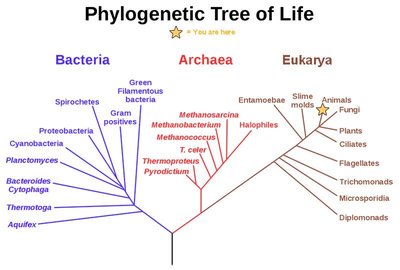
The diversity of life on Earth is immense, with millions of species identified and many more yet to be discovered. Organisms are classified into three domains based on cellular structure and genetics:
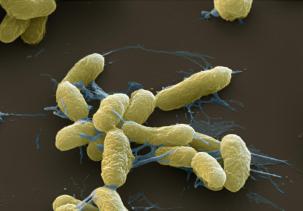
Bacteria: Prokaryotic cells, mostly unicellular, found in many environments.
Archaea: Prokaryotic cells, mostly unicellular, often found in extreme environments (e.g., hot springs, salty lakes).
Eukarya: Eukaryotic cells, can be unicellular or multicellular, includes plants, animals, fungi, and protists.
Examples of Life's Diversity
Life exists in a wide variety of forms, from microscopic bacteria to large multicellular organisms such as plants and animals. This diversity is the result of evolutionary processes acting over billions of years.
The Process of Science
Scientific Method and Experimental Design
Science is a systematic way of learning about the natural world through observation and experimentation. The process involves several key steps:
Observation: Gathering information about phenomena.
Hypothesis: A testable statement that explains observations and can be supported or refuted by experimentation.
Experiment: Testing the hypothesis using controlled conditions. This involves:
Control group: Receives no treatment or a standard treatment for comparison.
Experimental group: Receives the treatment being tested.
Independent variable: The factor that is changed or manipulated.
Dependent variable: The factor that is measured or observed.
Standardized variables: Factors kept constant to ensure a fair test.
Sample size and replicates: Ensuring results are reliable and not due to chance.
Analysis: Interpreting data to draw conclusions.
Conclusion: Determining whether the hypothesis is supported or refuted.
Hypotheses vs. Theories
Hypothesis: A narrow, testable explanation for a specific observation. Example: "If I irrigate my house plant with salty water, it will not die."
Theory: A broad, well-supported explanation for a wide range of phenomena. Example: "Cell theory – all living organisms are composed of one or more cells."
The Role of Doubt in Science
Science is always open to revision. A single experiment can disprove a hypothesis or theory, but no amount of experimentation can prove it with absolute certainty. This principle encourages ongoing inquiry and skepticism.
Summary Table: Levels of Biological Organization
Level | Description | Example |
|---|---|---|
Atom | Basic unit of matter | Carbon atom |
Molecule | Group of atoms bonded together | Phospholipid |
Organelle | Specialized structure within a cell | Nucleus |
Cell | Basic unit of life | Blood cell |
Tissue | Group of similar cells | Skin tissue |
Organ/Organ System | Structure composed of tissues/Group of organs | Stomach/Digestive system |
Organism | Individual living thing | Human |
Population | Group of same species | Forest of pine trees |
Community | All living things in an area | Plants and animals in a forest |
Ecosystem | Community plus nonliving environment | Coastal ecosystem |
Biosphere | All ecosystems on Earth | Earth |
