 Back
Introduction to Biology: Themes and Concepts
Study Guide - Smart Notes
 Tailored notes based on your materials, expanded with key definitions, examples, and context.
Introduction to Biology
What is Biology?
Biology is the scientific study of life. Biologists seek to understand the characteristics and processes that define living organisms. Life is recognized by a set of properties that all living things share.
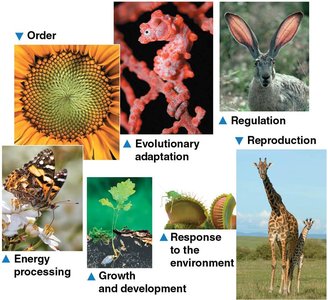
Order: Living things exhibit complex but ordered organization.
Evolutionary adaptation: Organisms adapt to their environment over generations through the process of evolution.
Regulation: Living things regulate their internal environment to maintain a stable, constant condition (homeostasis).
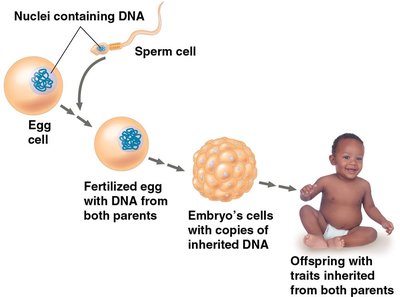
Reproduction: Organisms reproduce, passing their genetic information to offspring.
Energy processing: Living things obtain and use energy to power their activities.
Growth and development: Organisms grow and develop according to instructions coded in their genes.
Response to the environment: Living things respond to environmental stimuli.
Unifying Themes in Biology
The study of life reveals several unifying themes that help organize biological knowledge. These themes include organization, information, energy and matter, interactions, and evolution.
Theme 1: Organization – New Properties Emerge at Successive Levels
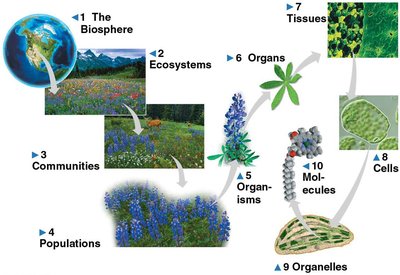
Life can be studied at different levels, from molecules to the entire biosphere. Each level of biological organization reveals emergent properties that are not present at lower levels. The approach of reductionism simplifies complex systems into manageable components, but understanding the whole system often requires integrating these components.
Biological hierarchy: Biosphere → Ecosystems → Communities → Populations → Organisms → Organs → Tissues → Cells → Organelles → Molecules
Structure and function: The structure of a biological component provides insight into its function, and vice versa.
The Cell: The Basic Unit of Life
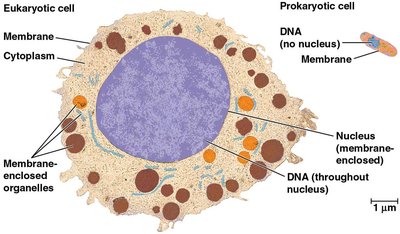
The cell is the smallest unit of organization that can perform all activities required for life. All living organisms are composed of cells, which are enclosed by membranes that regulate the passage of materials. There are two main types of cells:
Prokaryotic cells: Simpler, usually smaller, lack a nucleus and membrane-enclosed organelles (e.g., bacteria and archaea).
Eukaryotic cells: Larger, contain a nucleus and membrane-enclosed organelles (e.g., plants, animals, fungi, protists).
Theme 2: Life’s Processes Involve the Expression and Transmission of Genetic Information
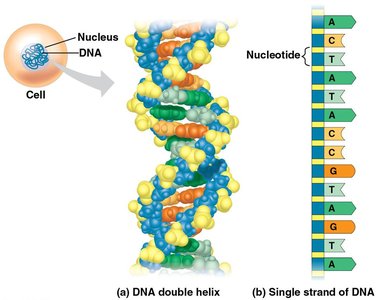
Genetic information is stored in the form of DNA (deoxyribonucleic acid) within chromosomes. Each chromosome contains one long DNA molecule with many genes, which encode the instructions for building cellular molecules. The process of gene expression involves converting genetic information into functional products, usually proteins.
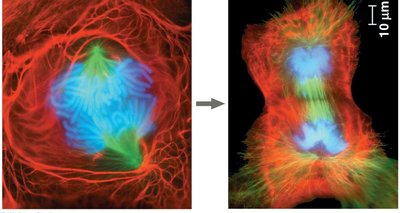
DNA replication: When cells divide, they copy their DNA and distribute it to daughter cells.
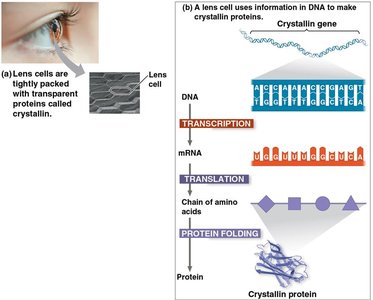
Gene expression: DNA is transcribed into RNA, which is then translated into protein.
Theme 3: Life Requires the Transfer and Transformation of Energy and Matter
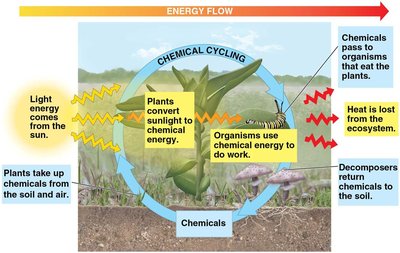
All living organisms require energy to carry out life’s activities. Energy flows through ecosystems, primarily entering as sunlight and exiting as heat, while chemicals are recycled within the ecosystem. Producers (such as plants) convert solar energy into chemical energy, which is then used by consumers (animals, fungi, etc.).
Energy flow: Sunlight → Producers → Consumers → Heat loss
Chemical cycling: Chemicals are taken up by producers, passed to consumers, and returned to the environment by decomposers.
Theme 4: Interactions Are Important in Biological Systems
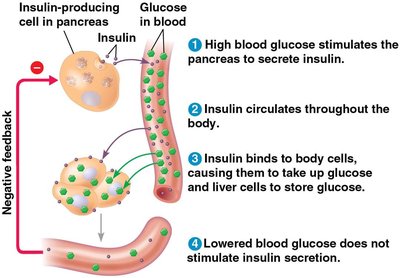
Biological systems depend on interactions between their components, from molecules to ecosystems. Many processes are regulated by feedback mechanisms, which can be negative (reducing the initial stimulus) or positive (amplifying the response).
Negative feedback: The response reduces the original stimulus (e.g., regulation of blood glucose by insulin).
Positive feedback: The response increases the original stimulus (less common in biology).
Theme 5: Evolution – The Core Theme of Biology
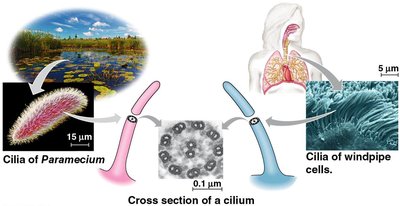
Evolution explains both the unity and diversity of life. All living organisms are modified descendants of common ancestors. The process of evolution is supported by extensive evidence from fossils, comparative anatomy, and molecular biology.
Unity of life: All organisms share a universal genetic code (DNA) and similar cellular structures.
Diversity of life: Adaptations to different environments have led to the diversity of species.
Charles Darwin and the Theory of Natural Selection
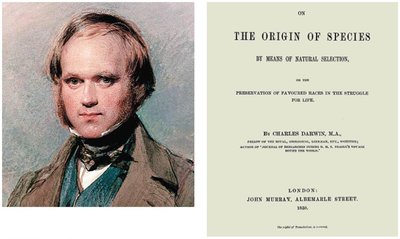
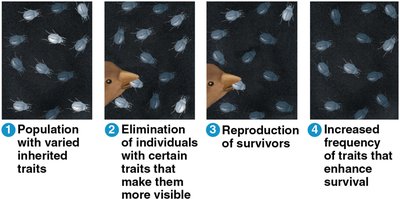
Charles Darwin proposed that species evolve through a process called natural selection. Individuals with traits best suited to their environment are more likely to survive and reproduce, passing those traits to the next generation. Over time, this leads to adaptation and the evolution of species.
Variation: Individuals in a population vary in their traits, many of which are heritable.
Competition: More offspring are produced than can survive, leading to competition for resources.
Adaptation: Traits that enhance survival and reproduction become more common in the population.
Summary Table: Key Themes in Biology
Theme | Description | Example |
|---|---|---|
Organization | Emergent properties at each level of biological hierarchy | Cells, tissues, organs |
Information | Expression and transmission of genetic information | DNA replication, gene expression |
Energy and Matter | Transfer and transformation of energy and cycling of matter | Photosynthesis, cellular respiration |
Interactions | Regulation and feedback in biological systems | Negative feedback in blood glucose regulation |
Evolution | Unity and diversity of life explained by descent with modification | Natural selection, adaptation |
