 Back
Introduction to Biology: Themes, Diversity, and the Scientific Method
Study Guide - Smart Notes
 Tailored notes based on your materials, expanded with key definitions, examples, and context.
Biology and Its Themes
What is Biology?
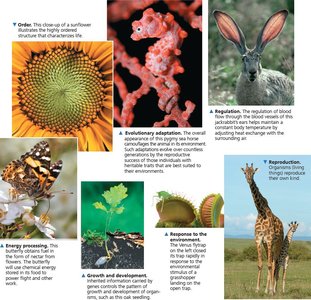
Biology is the scientific study of life. Biologists seek to understand what defines life and how living organisms function, interact, and evolve. An organism is any individual form of life, from bacteria to plants and animals.
Life is recognized by a set of characteristics and processes that living things perform, such as growth, reproduction, response to stimuli, and metabolism.

Unifying Themes of Biology
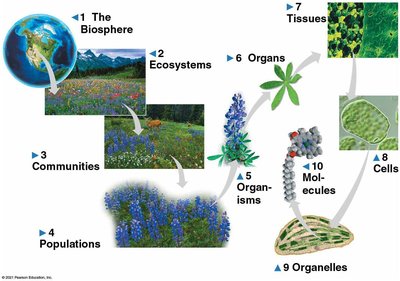
Organization: Levels of Biological Organization
Biological systems are organized into a hierarchy, with each level exhibiting new properties not present at lower levels. This concept is known as emergent properties.
Reductionism: Breaking down complex systems into simpler components for study.
Emergent Properties: New characteristics that arise at each level of organization.
Systems Biology: The study of interactions among the parts of biological systems.
Structure and Function
At every level of the biological hierarchy, there is a correlation between structure and function. Understanding the structure of a biological component provides insight into its function, and vice versa.
The Cell: The Basic Unit of Life
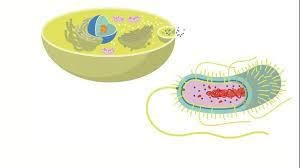
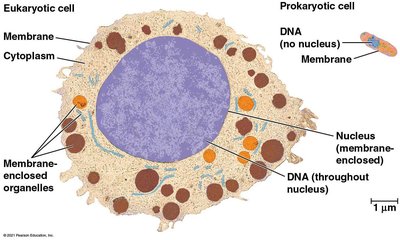
The cell is the smallest unit of organization that can perform all activities required for life. All organisms are composed of cells, which are classified as either prokaryotic or eukaryotic.
Cell Theory: All living things are composed of cells, and all cells arise from pre-existing cells.
Membrane: All cells are bounded by a selective barrier called the plasma membrane.
Heritable Information: DNA and the Continuity of Life
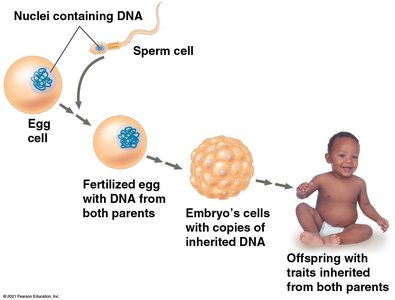
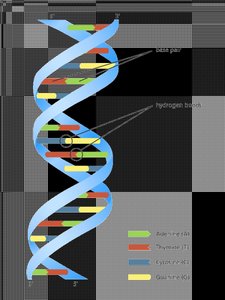
The continuity of life is based on the transmission of heritable information in the form of DNA (deoxyribonucleic acid). Chromosomes contain DNA, which encodes genes—the units of inheritance.
Genes: Segments of DNA that encode instructions for building proteins.
Gene Expression: The process by which information from a gene is used to synthesize a functional product, usually a protein.
Genomics and Proteomics
Genomics is the study of whole sets of genes (genomes) in one or more species. Proteomics is the study of the entire set of proteins (proteome) expressed by a cell, tissue, or organism.
Energy Transfer and Transformation
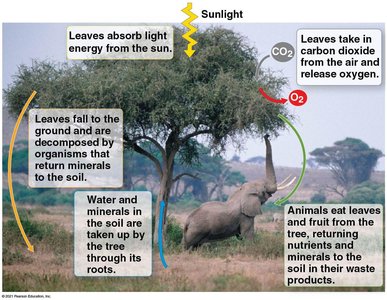
Life requires the transfer and transformation of energy and matter. Organisms obtain energy from their environment and use it to perform work, with energy flowing through ecosystems and chemicals cycling within them.
Producers: Organisms (like plants) that generate chemical energy from sunlight.
Consumers: Organisms that feed on other organisms or their remains.
Interactions: Feedback Regulation and Ecosystem Dynamics
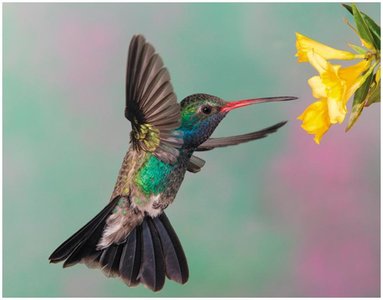
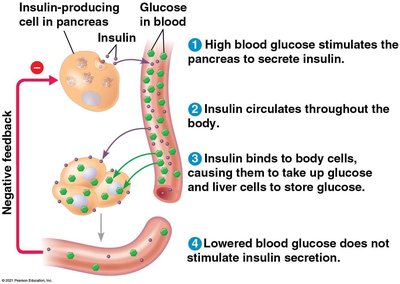
Biological systems are regulated by feedback mechanisms that maintain homeostasis. Interactions occur at all levels, from molecules within cells to organisms within ecosystems.
Negative Feedback: The response reduces the initial stimulus (e.g., regulation of blood glucose by insulin).
Positive Feedback: The end product speeds up its own production.
Diversity of Life and Classification
Classifying Life
Biologists have identified and named approximately 1.8 million species, with estimates of total species ranging from 10 million to over 100 million. Each species is given a two-part scientific name (binomial nomenclature): the genus and the species.
Example: Homo sapiens is the scientific name for humans.
The Scientific Method
Steps of the Scientific Method
Science is an approach to understanding the natural world through observation, hypothesis formation, experimentation, and analysis.
Observation: Gathering information about the natural world, often leading to questions.
Hypothesis: A testable and falsifiable explanation for an observation.
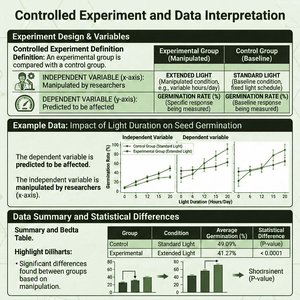
Experimentation: Gathering data through controlled experiments, distinguishing between independent and dependent variables.
Analysis: Examining data, drawing conclusions, and determining statistical significance.
Reporting Results: Publishing findings for peer review and further testing.


Theories in Science
A scientific theory is a broad, testable explanation for a wide range of observations, supported by a large body of evidence. Theories generate new hypotheses and are more comprehensive than individual hypotheses.
Broader Scope: Theories explain a wide variety of phenomena.
Generates New Hypotheses: Theories lead to new, testable predictions.
Massive Evidence Support: Theories are supported by extensive evidence.
