 Back
Introduction to Biology: Themes, Organization, and Scientific Inquiry
Study Guide - Smart Notes
 Tailored notes based on your materials, expanded with key definitions, examples, and context.
Biology: The Scientific Study of Life
What is Life?
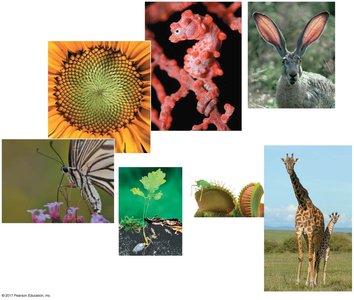
Biology is defined as the scientific study of life. Life is recognized by a set of characteristics that living things exhibit. These characteristics include order, regulation, evolutionary adaptation, reproduction, energy processing, response to the environment, and growth and development.
Order: Living organisms exhibit complex but ordered organization.
Regulation: Organisms can regulate their internal environment to maintain a stable, constant condition (homeostasis).
Evolutionary Adaptation: Populations of organisms evolve over generations through adaptations that enhance survival and reproduction.
Reproduction: Organisms reproduce their own kind.
Energy Processing: Organisms obtain and use energy to power activities and chemical reactions.
Response to the Environment: Organisms respond to environmental stimuli.
Growth and Development: Organisms grow and develop according to instructions coded in their genes.
Emergent Properties and the Biological Hierarchy
Emergent Properties
Emergent properties are new characteristics that arise at each level of biological organization, resulting from the arrangement and interactions of parts as complexity increases. These properties are not present at the preceding level.
Example: A functioning bicycle emerges only when all necessary parts are connected in the correct way.
Levels of Biological Organization
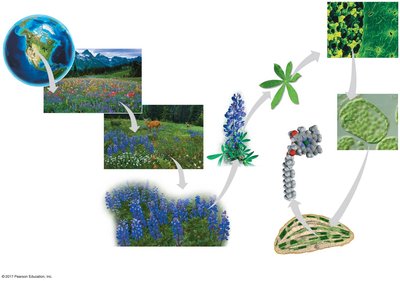
Biological systems are organized into a hierarchy, from the biosphere to molecules. Each level builds on the properties of the previous one.
Biosphere → Ecosystems → Communities → Populations → Organisms → Organs → Tissues → Cells → Organelles → Molecules
Reductionism and Systems Biology
Reductionism: The approach of reducing complex systems to simpler components for study (e.g., studying DNA structure to understand inheritance).
Systems Biology: The study of interactions among the parts of a biological system, often using models to understand the behavior of the whole system.
Interactions with the Environment
Organismal and Environmental Interactions
All organisms interact with their environment, which includes both living (biotic) and nonliving (abiotic) factors. These interactions can affect both the organism and the environment.
Energy Transfer and Transformation
Energy Flow in Ecosystems
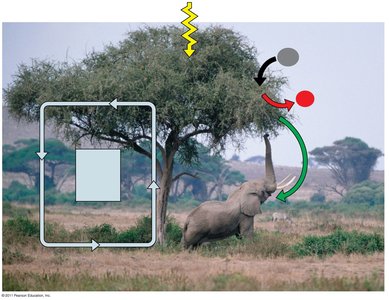
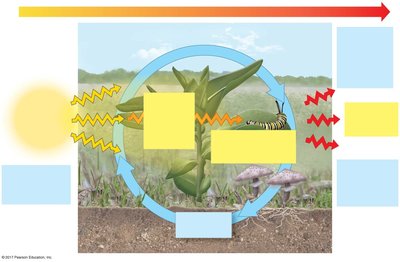
Living organisms require energy to carry out life processes. Energy flows through ecosystems, usually entering as sunlight, being converted by producers (plants) into chemical energy, and then transferred through consumers and decomposers. Energy is eventually lost as heat.
Producers: Organisms (like plants) that convert light energy to chemical energy.
Consumers: Organisms that obtain energy by eating other organisms.
Decomposers: Organisms that break down dead material, returning nutrients to the environment.
Structure and Function in Biology
Correlation of Structure and Function
At all levels of biological organization, structure and function are closely related. The form of a biological structure often enables it to perform its specific function.
Example: The thin, flat shape of a leaf maximizes light capture for photosynthesis; the structure of a bird’s wing is adapted for flight.

The Cell: Basic Unit of Life
Cell Theory
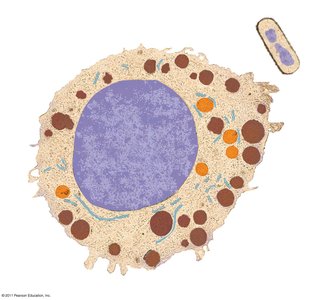
The cell is the fundamental unit of structure and function in living organisms. All cells are enclosed by a membrane and use DNA as their genetic information.
Prokaryotic Cells: Lack a nucleus and membrane-bound organelles (e.g., bacteria).
Eukaryotic Cells: Have a nucleus and membrane-bound organelles (e.g., plants, animals, fungi, protists).
Heritable Information and DNA
Genetic Information and Gene Expression
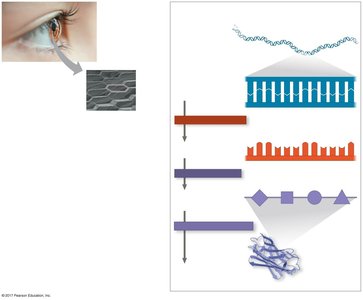
DNA (deoxyribonucleic acid) contains genes, which are units of inheritance. Gene expression is the process by which information from a gene is used to synthesize a functional product, such as a protein.
Transcription: DNA is transcribed into messenger RNA (mRNA).
Translation: mRNA is translated into a chain of amino acids, forming a protein.
Regulation of Biological Systems
Feedback Mechanisms
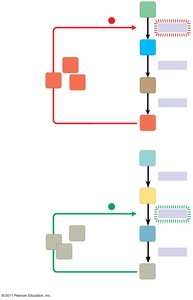
Biological systems are regulated by feedback mechanisms that maintain stability or amplify processes.
Negative Feedback: The accumulation of an end product slows or stops the process that produces it.
Positive Feedback: The end product speeds up its own production.
Evolution: The Core Theme of Biology
Unity and Diversity of Life
Evolution explains both the unity and diversity of life. All living organisms share a common ancestry, but adaptations to different environments have led to the diversity of life forms.
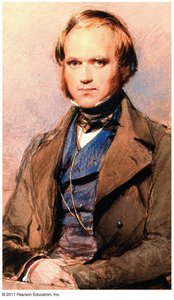
Charles Darwin: Proposed the theory of evolution by natural selection.
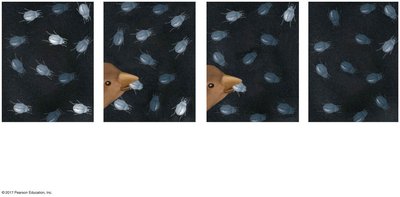
Natural Selection: Individuals with traits that enhance survival and reproduction are more likely to pass those traits to the next generation.
Classification of Life
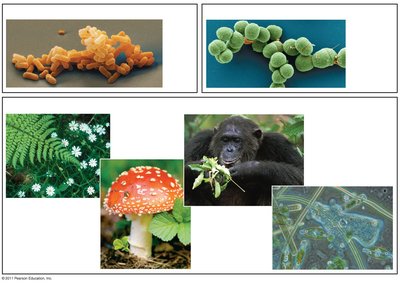
Life is classified into three domains: Bacteria, Archaea, and Eukarya. Eukarya includes kingdoms Plantae, Fungi, and Animalia, as well as protists.
Unity in Diversity
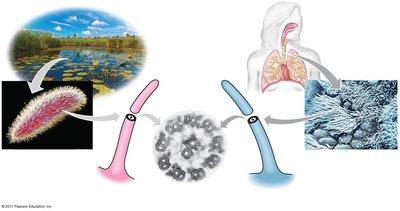
Despite diversity, all living things share fundamental characteristics, such as the structure of cilia in both Paramecium and human windpipe cells.
The Process of Scientific Inquiry
The Scientific Method
The scientific method is a systematic approach to understanding the natural world. It involves making observations, forming hypotheses, making predictions, conducting experiments, and analyzing data.
Observation: Gathering information about phenomena.
Hypothesis: A testable and falsifiable explanation for an observation.
Experiment: A controlled test to support or refute a hypothesis.
Data: Can be qualitative (descriptive) or quantitative (measured).
Experimental Controls and Repeatability
A controlled experiment compares an experimental group with a control group, differing by only one variable. Scientific results must be repeatable to be valid.
Inductive and Deductive Reasoning
Inductive Reasoning: Drawing general conclusions from specific observations (e.g., hypothesis formation).
Deductive Reasoning: Making specific predictions from general premises (e.g., hypothesis testing).
Limits of Science
Scientific hypotheses must be testable and falsifiable.
Supernatural and religious explanations are outside the scope of science.
Theories in Science
A theory is broader in scope than a hypothesis, is general enough to generate new hypotheses, and is supported by a large body of evidence.
Science and Technology
The goal of science is to understand natural phenomena; the goal of technology is to apply scientific knowledge for practical purposes.
Science and technology are interdependent: discoveries in science often lead to new technologies, and technological advances can lead to new scientific discoveries.
