 Back
Introduction to Biology: Themes, Organization, and Scientific Inquiry
Study Guide - Smart Notes
 Tailored notes based on your materials, expanded with key definitions, examples, and context.
Introduction to Biology
What is Biology?
Biology is the scientific study of life and living organisms. It encompasses a wide range of topics, from the molecular mechanisms within cells to the interactions between organisms and their environments. Biologists seek to understand the structure, function, growth, origin, evolution, and distribution of living things.
Scientific Processes: Biology relies on observation, experimentation, and evidence-based reasoning to answer questions about the natural world.
Living vs. Nonliving: Living organisms exhibit characteristics such as organization, metabolism, growth, adaptation, response to stimuli, and reproduction, distinguishing them from nonliving matter.
Limitations of Science: Science cannot answer questions about supernatural phenomena or subjective values; it is limited to natural explanations based on observable evidence.
Basic Themes in Biology
Hierarchy of Biological Organization
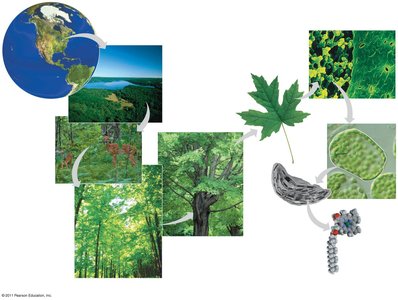
Life is organized into a hierarchy of structural levels, each with emergent properties that arise from the interactions and arrangements of their parts. This hierarchy ranges from the smallest chemical building blocks to the entire biosphere.
Levels of Organization: Atoms → Molecules → Organelles → Cells → Tissues → Organs → Organ Systems → Organisms → Populations → Communities → Ecosystems → Biosphere
Emergent Properties: New properties arise at each level that are not present at the preceding level, due to the arrangement and interactions of components.
The Cell: Basic Unit of Life
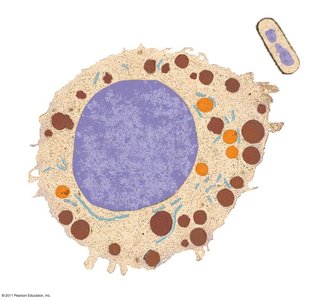
The cell is the fundamental unit of structure and function in living organisms. All cells are enclosed by a membrane and use DNA as their genetic material.
Prokaryotic Cells: Lack a nucleus and membrane-bound organelles (e.g., bacteria, archaea).
Eukaryotic Cells: Have a nucleus and membrane-bound organelles (e.g., plants, animals, fungi, protists).
Emergent Properties and Reductionism
Emergent properties result from the arrangement and interaction of parts within a system. Reductionism is the approach of reducing complex systems to simpler components for study, but understanding the whole often requires considering interactions at higher levels.
Structure and Function
At all levels of biological organization, structure and function are closely correlated. The form of a biological structure often enables its function.
Example: The structure of bird wings enables flight; the hollow bones reduce weight while maintaining strength.

Information: DNA and Heredity
Genetic Information and Continuity of Life
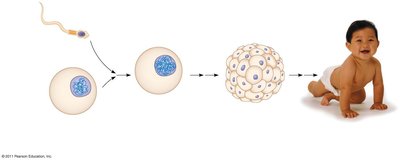
Genetic information is stored in DNA, which is organized into chromosomes. The continuity of life is based on the faithful transmission of hereditary information through cell division and reproduction.
DNA: Deoxyribonucleic acid, the molecule that carries genetic instructions for all living things.
Reproduction: The process by which organisms produce offspring, ensuring the transfer of genetic information.
Energy and Matter
Energy Transfer and Transformation
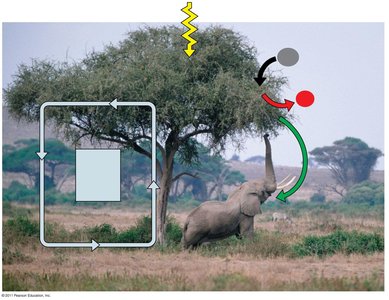
All living organisms require energy to perform work, such as movement, growth, and reproduction. Energy flows through ecosystems, while matter cycles between living and nonliving components.
Producers: Organisms (like plants) that convert solar energy into chemical energy via photosynthesis.
Consumers: Organisms that obtain energy by eating other organisms.
Decomposers: Organisms that break down dead matter, returning nutrients to the environment.
Interactions
Organisms and Their Environment
Organisms interact with each other and with their physical environment. These interactions can affect the survival and reproduction of individuals and the dynamics of populations and communities.
Examples: Predation, competition, symbiosis, and response to environmental changes.

Feedback Mechanisms
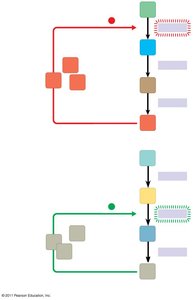
Biological systems are regulated by feedback mechanisms that maintain homeostasis. Negative feedback reduces the initial stimulus, while positive feedback amplifies it.
Negative Feedback: Maintains stability (e.g., regulation of blood glucose by insulin).
Positive Feedback: Drives processes to completion (e.g., blood clotting).
Evolution: Unity and Diversity of Life
Evolution as a Unifying Theme
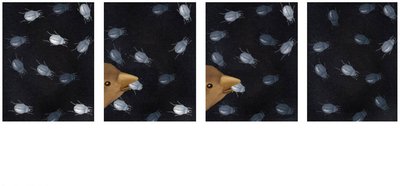
Evolution explains both the unity and diversity of life. Organisms share common features due to descent from common ancestors, but differences arise from adaptations to different environments.
Natural Selection: The process by which heritable traits that enhance survival and reproduction become more common in a population over generations.
Classification of Life
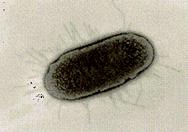
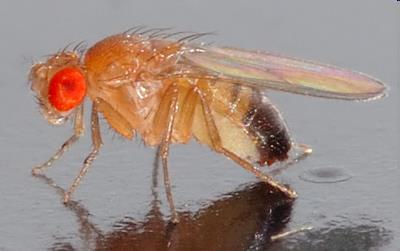
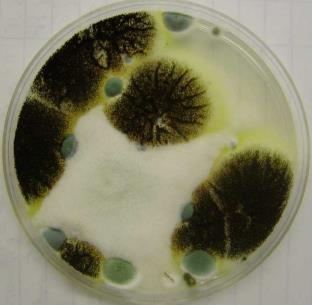
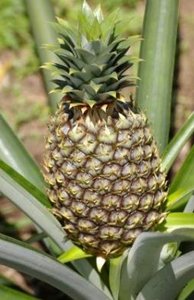
Organisms are classified based on shared characteristics. The traditional Linnaean system includes five kingdoms, but modern classification recognizes three domains: Bacteria, Archaea, and Eukarya.
Domain | Kingdoms | Cell Type |
|---|---|---|
Bacteria | — | Prokaryotic |
Archaea | — | Prokaryotic |
Eukarya | Plantae, Animalia, Fungi, Protista | Eukaryotic |


Experimental Study of Biology
Discovery Science vs. Hypothesis-Driven Science
Biologists use two main approaches to study life:
Discovery Science: Involves observation and analysis of data to describe natural phenomena.
Hypothesis-Driven Science: Involves formulating and testing hypotheses through controlled experiments.
Hypotheses and Predictions
A hypothesis is a testable and falsifiable explanation for a set of observations. Predictions are specific outcomes expected if the hypothesis is correct, often stated as "If...then..." statements.
Designing Controlled Experiments
Controlled experiments test the effect of a single variable by comparing an experimental group with a control group. Data collected can be qualitative (descriptive) or quantitative (measured).
Theories in Science
A theory is a broad explanation supported by a large body of evidence. Theories are more comprehensive than hypotheses and can generate new hypotheses.
Key Points to Know
Unifying themes in biology include organization, information, energy and matter, interactions, and evolution.
Life emerges from complex organization and interactions at multiple levels.
Holism considers the whole system, while reductionism breaks it into parts.
Form fits function: biological structures are adapted to their functions.
Five kingdoms of life: Monera, Protista, Fungi, Plantae, Animalia; modern classification uses three domains.
Charles Darwin's theory of natural selection is central to understanding evolution.
Discovery science describes nature; hypothesis-based science explains it through testing.
Hypotheses must be testable and falsifiable; experiments must be controlled.
