 Back
Introduction to Biology: Unifying Themes and Biological Organization
Study Guide - Smart Notes
 Tailored notes based on your materials, expanded with key definitions, examples, and context.
Introduction to Biology
Definition and Scope
Biology is the scientific study of life and living organisms. It encompasses a wide range of topics, from the molecular mechanisms within cells to the interactions between organisms and their environments. The field seeks to understand the structure, function, growth, origin, evolution, and distribution of living things.
Life is characterized by properties such as order, reproduction, growth and development, energy processing, response to the environment, regulation, and evolutionary adaptation.
Biologists ask questions such as: What is life? What evidence distinguishes living from non-living things?
Unifying Themes of Biology
Major Themes
Several unifying themes help organize biological knowledge and provide a framework for understanding the diversity and complexity of life.
Organization: Life is structured in a hierarchical manner, from atoms to the biosphere.
Information: Genetic information is stored in DNA and governs the structure and function of living things.
Energy and Matter: Living organisms acquire, use, and transfer energy and matter to sustain life.
Interactions: Organisms interact with each other and their environments, affecting survival and evolution.
Evolution: The process by which populations of organisms change over generations, explaining both the unity and diversity of life.
Biological Organization
Levels of Hierarchy
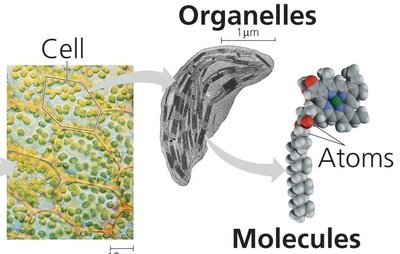
Biological systems are organized into a hierarchy of structural levels, each building on the levels below. This organization allows for emergent properties—new characteristics that arise at each level.
Atoms: The smallest units of matter.
Molecules: Chemical structures consisting of two or more atoms.
Organelles: Specialized structures within cells.
Cells: The basic unit of structure and function in living organisms.
Tissues: Groups of similar cells performing a specific function.
Organs: Structures composed of multiple tissues working together.
Organ Systems: Groups of organs that perform major body functions.
Organisms: Individual living entities.
Populations: Groups of individuals of the same species in a given area.
Communities: All the different populations in a specific area.
Ecosystems: Communities plus their physical environment.
Biosphere: All ecosystems on Earth.

Emergent Properties and Reductionism
Emergent properties arise at each level of organization that are not present at the preceding level. Reductionism is the approach of reducing complex systems to simpler components for study, while systems biology focuses on the interactions within biological systems.
Cells: The Basic Unit of Life
Cell Theory
The cell is the fundamental unit of structure and function in all living organisms. Cell theory states that all living things are composed of cells, and all cells arise from pre-existing cells.
Types of Cells
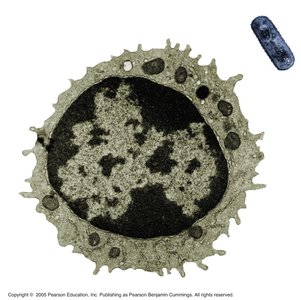
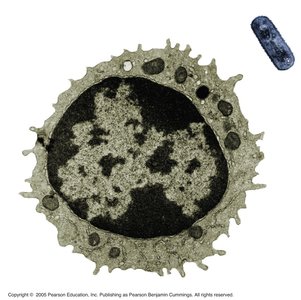
There are two basic types of cells: prokaryotic and eukaryotic. These types differ in structure, complexity, and the presence of internal compartments.
Prokaryotic Cells: Smaller, lack a nucleus, and do not have membrane-bound organelles. Examples include bacteria and archaea.
Eukaryotic Cells: Larger, contain a true nucleus, and possess internal compartmentalization (organelles). Examples include plants, animals, fungi, and protists.
Domains of Life
The Three Domains
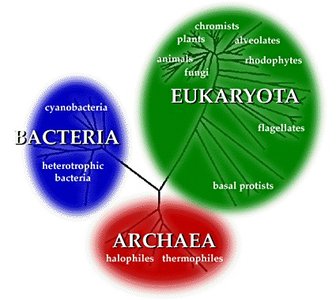
All life is classified into three domains based on cellular organization and genetic relationships:
Bacteria: Prokaryotic, diverse group of single-celled organisms.
Archaea: Prokaryotic, often found in extreme environments, genetically distinct from bacteria.
Eukarya: Eukaryotic, includes protists, plants, fungi, and animals.
Domain Eukaryota
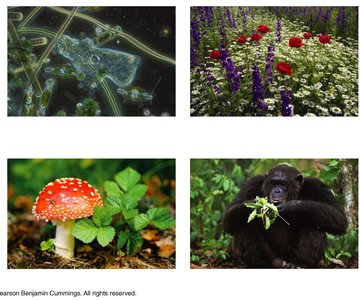
The domain Eukaryota includes four major groups: protists, plants, fungi, and animals. These groups are distinguished by their modes of nutrition, structure, and life cycles.
Domain Bacteria and Domain Archaea
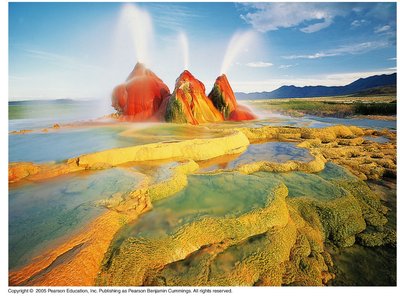
Bacteria and Archaea are both prokaryotic but differ significantly in their genetic makeup and environmental adaptations. Archaea are known for surviving in extreme environments such as hot springs and salt lakes.
Classification and Taxonomy
Hierarchical Classification
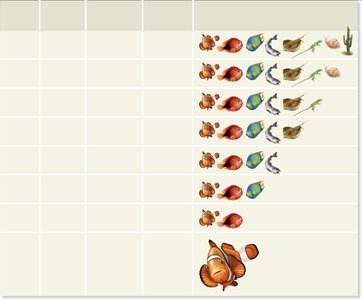
Biological classification arranges species into a hierarchy of increasingly specific groups. This system reflects evolutionary relationships and helps organize the diversity of life.
Taxonomic Group | Clown Anemonefish Is Found In | Approximate Time When Common Ancestor Arose | Approximate Number of Modern Species |
|---|---|---|---|
Domain | Eukarya | 2,000 mya | > 5,000,000 |
Kingdom | Animalia | 600 mya | > 1,000,000 |
Phylum | Chordata | 525 mya | 50,000 |
Class | Actinopterygii | 420 mya | 30,000 |
Order | Perciformes | 80 mya | 7,000 |
Family | Pomacentridae | ~40 mya | 360 |
Genus | Amphiprion | ~9 mya | 28 |
Species | ocellaris | >3 mya | 1 |
Binomial Nomenclature
Each species is assigned a unique scientific name using binomial nomenclature. The genus name is capitalized, the species descriptor is not, and both are italicized. For example, Amphiprion ocellaris is the scientific name for the ocellaris clownfish.
Unity and Diversity: Classification reflects both the unity of life (shared characteristics) and the diversity of species.
Example: The clownfish is classified as follows: Domain Eukarya, Kingdom Animalia, Phylum Chordata, Class Actinopterygii, Order Perciformes, Family Pomacentridae, Genus Amphiprion, Species ocellaris.
