 Back
Introduction to Biology: Unifying Themes, Cells, Evolution, and the Scientific Method
Study Guide - Smart Notes
 Tailored notes based on your materials, expanded with key definitions, examples, and context.
Concept 1.1: The Study of Life Reveals Unifying Themes
Unifying Themes in Biology
Biology is the scientific study of life, and several unifying themes help organize our understanding of living systems. These themes provide a framework for studying the complexity of life, from molecules to ecosystems.
Organization: Life is structured in a hierarchical manner, from atoms to the biosphere.
Information: Genetic information is stored and transmitted primarily through DNA.
Energy and Matter: Living organisms obtain, convert, and use energy and matter to sustain life.
Interactions: Organisms interact with each other and their environment, maintaining homeostasis and responding to stimuli.
Evolution: Evolution explains both the unity and diversity of life.
Emergent Properties and Biological Organization
Emergent properties arise from the arrangement and interaction of parts within a system. These properties are not present at lower levels but emerge at higher levels of complexity.
Reductionism: Studying isolated components of a system to understand the whole.
Systems Biology: Analyzing interactions among parts of a biological system to understand emergent properties.
Structure and Function: At every level, the structure of a biological component is closely related to its function.
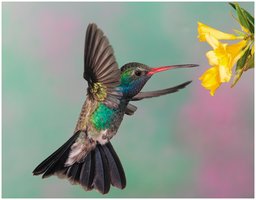
Levels of Biological Organization
Life is organized into a hierarchy of levels, each with emergent properties:
Atoms: Basic chemical units (e.g., nitrogen, carbon, hydrogen, oxygen).
Molecules: Combinations of atoms (e.g., amino acids).
Organelles: Specialized structures within cells (e.g., membrane with channel protein).
Cells: Basic unit of life (e.g., eukaryotic cell).
Tissues: Groups of similar cells (not listed in the example).
Organisms: Individual living entities (e.g., lichen = fungi + algae).
Populations: Groups of the same species (e.g., reindeer moss).
Communities: Different populations living together (e.g., moose, caribou, musk oxen, reindeer).
Ecosystems: Communities and their physical environment (e.g., Arctic tundra in Scandinavia).
The Cell: The Basic Unit of Structure and Function
The cell is the smallest unit capable of performing all activities required for life. The cell theory states that all living organisms are composed of cells. Cells are enclosed by membranes that regulate the passage of materials.
Prokaryotic Cells: Simpler, smaller, lack a nucleus and membrane-bound organelles (e.g., bacteria, archaea).
Eukaryotic Cells: Larger, contain a nucleus and membrane-bound organelles (e.g., plants, animals, fungi, protists).
Genetic Information and Gene Expression
Within cells, chromosomes contain DNA, the hereditary material. Genes are segments of DNA that encode instructions for building proteins, which carry out cellular functions.
Gene Expression: The process by which information from a gene is used to synthesize a functional product (usually a protein).
Central Dogma: DNA is transcribed into RNA, which is then translated into protein.
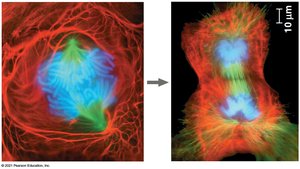
Genomics and Proteomics
Modern biology uses large-scale approaches to study genes (genomics) and proteins (proteomics).
Genome: The complete set of genetic material in an organism.
Proteome: The entire set of proteins expressed by a cell, tissue, or organism.
Bioinformatics: The use of computational tools to analyze large biological datasets.
Energy and Matter in Biological Systems
Life requires the transfer and transformation of energy and matter. Producers (e.g., plants) convert solar energy into chemical energy, which is then transferred to consumers (e.g., animals) through food webs.
Producers: Organisms that produce their own food (e.g., plants via photosynthesis).
Consumers: Organisms that obtain energy by eating other organisms or their remains.
Interactions and Feedback Regulation
Biological systems rely on interactions among their components. Many processes are regulated by feedback mechanisms.
Negative Feedback: The response reduces the initial stimulus (e.g., regulation of blood glucose).
Positive Feedback: The response amplifies the initial stimulus (less common in biology).
Concept 1.2: Evolution Accounts for the Unity and Diversity of Life
Evolution as a Core Theme
Evolution is the central concept that explains both the unity and diversity of life. All living organisms are modified descendants of common ancestors.
Unity: Shared characteristics due to common ancestry.
Diversity: Adaptations to different environments lead to the variety of life forms.
Classification of Life
Organisms are classified into three domains:
Bacteria: Prokaryotic, unicellular organisms.
Archaea: Prokaryotic, often found in extreme environments.
Eukarya: Eukaryotic organisms, including plants, fungi, animals, and protists.
Charles Darwin and Natural Selection
Charles Darwin proposed that natural selection is the mechanism of evolution. His observations and reasoning led to the theory that individuals with advantageous traits are more likely to survive and reproduce, leading to the accumulation of those traits in populations over time.
Descent with Modification: Species change over generations, giving rise to new species.
Natural Selection: Differential survival and reproduction based on inherited traits.
Concept 1.3: The Scientific Method in Biology
Scientific Inquiry and Hypotheses
Science is a process of inquiry involving observation, hypothesis formation, and experimentation. A hypothesis is a testable explanation for an observation.
Observation: Gathering information about the natural world.
Hypothesis: A tentative explanation that can be tested.
Experiment: A controlled test to evaluate a hypothesis.
Variables and Controls
Experiments involve manipulating variables to test hypotheses. The independent variable is manipulated, while the dependent variable is measured. Control groups are used for comparison.
Independent Variable: The factor that is changed by the researcher.
Dependent Variable: The factor that is measured in response.
Control Group: The group that does not receive the experimental treatment.
Example: Camouflage in Mice
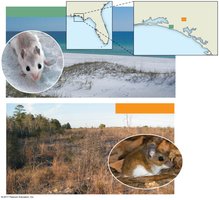
Researchers tested whether mouse coloration affects predation rates in different habitats. They used model mice painted to match or contrast with their environment and measured predation rates.
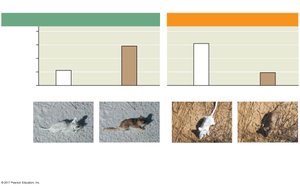
Hypothesis: Mice that match their habitat are less likely to be preyed upon.
Results: Camouflaged models were attacked less frequently than non-camouflaged models, supporting the hypothesis.
Theories in Science
A scientific theory is broader than a hypothesis, supported by a large body of evidence, and can generate new hypotheses.
Theory: A comprehensive explanation of some aspect of nature that is supported by a vast body of evidence.
Summary Table: Levels of Biological Organization
Level | Example |
|---|---|
Atom | Nitrogen, Carbon, Hydrogen, Oxygen |
Molecule | Amino Acid |
Organelle | Membrane with channel protein |
Cell | Eukaryotic cell |
Organism | Lichen (fungi + algae) |
Population | Reindeer moss |
Community | Moose, caribou, musk oxen, reindeer |
Ecosystem | Arctic tundra in Scandinavia |
Additional info: Organizing biological systems in this way helps us understand the complexity of life, trace the flow of energy and matter, and appreciate the interconnectedness of living and nonliving components.
