 Back
Introduction to Biology: Unifying Themes, Characteristics of Life, and Scientific Inquiry
Study Guide - Smart Notes
 Tailored notes based on your materials, expanded with key definitions, examples, and context.
Introduction to Biology
What is Biology?
Biology is the scientific study of life, encompassing a vast scope from molecules to ecosystems. The discipline is unified by several key themes that help explain the complexity and diversity of living organisms.
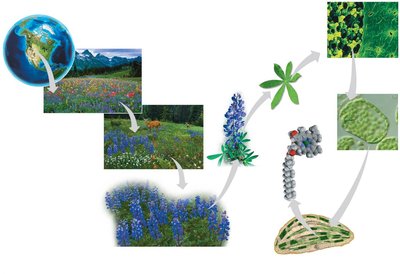
Organization: Life is structured in hierarchical levels, from atoms and molecules to cells, tissues, organs, organisms, populations, communities, ecosystems, and the biosphere.
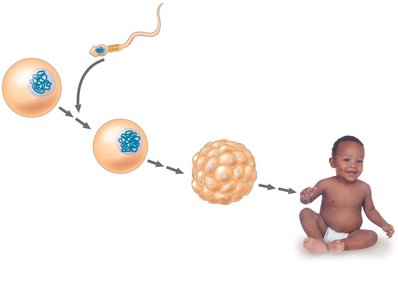
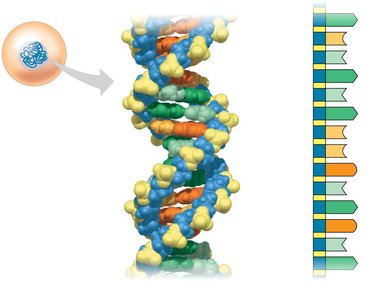
Information: Genetic information is stored in DNA and transmitted across generations.
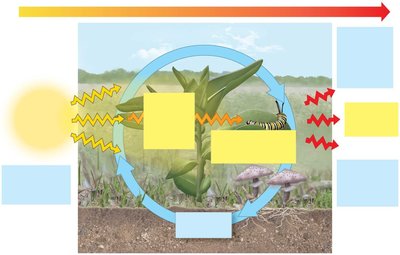
Energy and Matter: Life requires the transformation and transfer of energy and matter.
Interactions: Organisms interact with each other and their environment.
Evolution: Evolution explains the unity and diversity of life.
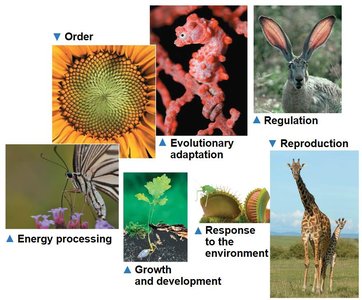
Characteristics of Life
Defining Features of Living Organisms
All living organisms share a set of fundamental characteristics that distinguish them from non-living matter.
Nutrition: The intake and processing of nutrients required for growth and energy. Classes of nutrients include carbohydrates, proteins, lipids, vitamins, minerals, and water.
Excretion: Removal of metabolic waste products, such as CO2 (exhalation), sweat (perspiration), urine (kidney/bladder), and feces (defecation).
Growth: Increase in cell number (mitosis) or cell mass (unicellular organisms).
Reproduction: Production of new individuals, either asexually or sexually.
Exchange of Gases: Inhaling oxygen for cellular respiration and releasing CO2.
Movement: Movement can be external (muscles and bones) or internal (circulation of blood and transport of materials).
Irritability (Responsiveness): Ability to respond to environmental stimuli.
Homeostasis: Maintenance of a stable internal environment (optimal concentration of gases, nutrients, water, temperature, pressure, pH).
Homeostasis
Regulation of Internal Environment
Homeostasis is the process by which organisms maintain a stable internal environment despite external changes. It involves feedback mechanisms that regulate variables such as temperature and blood sugar.
Negative Feedback: A process that counteracts changes, returning the system to its set point.
Positive Feedback: A process that amplifies changes, moving the system away from its set point.
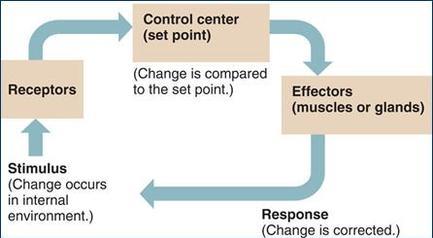
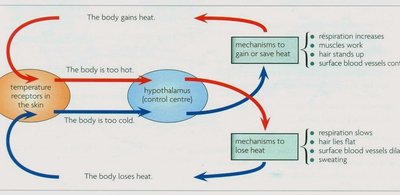
Temperature Regulation
Body temperature is regulated by the hypothalamus, which receives input from temperature receptors and activates mechanisms to gain or lose heat.
If the body is too hot: mechanisms such as sweating and vasodilation are activated.
If the body is too cold: mechanisms such as shivering and vasoconstriction are activated.
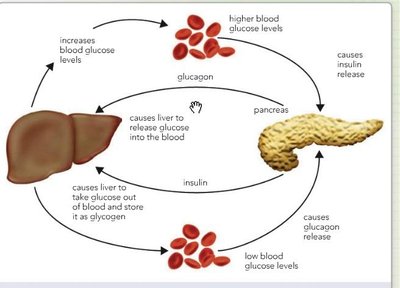
Blood Sugar Regulation
Blood glucose levels are regulated by the hormones insulin and glucagon, produced by the pancreas. Insulin lowers blood glucose by promoting uptake into cells, while glucagon raises blood glucose by stimulating release from the liver.
Levels of Biological Organization
Hierarchical Structure of Life
Biological organization is structured in a hierarchy, with each level building upon the previous one. This allows for emergent properties that arise from the interaction of components.
Chemical Level: Atoms and molecules (e.g., DNA).
Cellular Level: Cells are the basic unit of life.
Tissue Level: Groups of similar cells performing a function.
Organ Level: Structures composed of tissues working together.
System Level: Groups of organs performing complex functions.
Organismal Level: The complete living individual.
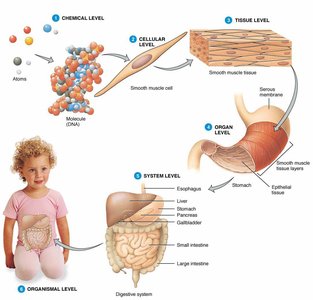
Emergent Properties
Emergent properties are new characteristics that arise at each level of organization due to the arrangement and interaction of parts. For example, a functioning organ system emerges only when all necessary organs work together.
The Cell: Basic Unit of Life
Cell Structure and Function
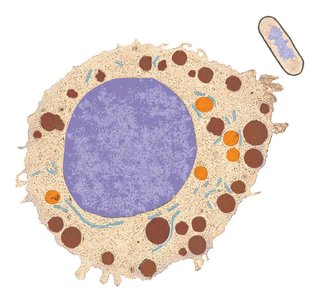
The cell is the smallest unit capable of performing all life activities. Cells are classified as prokaryotic (no nucleus, simpler structure) or eukaryotic (membrane-bound organelles, nucleus).
Prokaryotic Cells: Found in Bacteria and Archaea; lack a nucleus.
Eukaryotic Cells: Found in Eukarya; have a nucleus and organelles.
Genetic Information and Gene Expression
DNA: The Genetic Material
DNA (deoxyribonucleic acid) is the molecule that stores genetic information. Genes are segments of DNA that code for proteins, which determine traits.
Chromosomes: Structures containing DNA and genes.
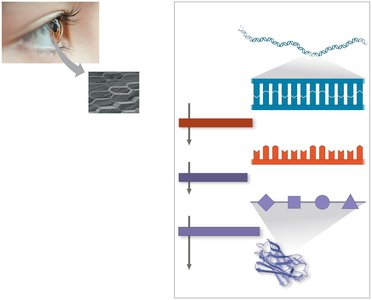
Gene Expression: The process by which information in DNA is used to produce proteins.
Genomics and Proteomics
Genomics is the study of entire sets of genes, while proteomics is the study of all proteins expressed by a cell, tissue, or organism.
Energy and Matter in Biological Systems
Energy Flow and Chemical Cycling
Life depends on the transfer and transformation of energy and matter. Energy from the sun is captured by producers (plants) and passed to consumers (animals). Matter cycles through ecosystems via decomposers.
Producers: Organisms that convert sunlight to chemical energy.
Consumers: Organisms that feed on other organisms.
Decomposers: Organisms that break down dead material, returning nutrients to the environment.
Interactions in Biological Systems
Importance of Interactions
Biological systems rely on interactions between their components, whether at the molecular, cellular, organismal, or ecosystem level. These interactions ensure the integration and functioning of all parts.

Classification and Diversity of Life
The Three Domains of Life
All living organisms are classified into three domains: Bacteria, Archaea, and Eukarya. Eukarya includes protists, plants, fungi, and animals.
Bacteria: Prokaryotic, unicellular organisms.
Archaea: Prokaryotic, often found in extreme environments.
Eukarya: Eukaryotic, includes multicellular and unicellular organisms.

The Scientific Method
Forming and Testing Hypotheses
The scientific method is a systematic approach to inquiry, involving observation, hypothesis formation, prediction, experimentation, and analysis.
Inductive Reasoning: Drawing general conclusions from specific observations.
Deductive Reasoning: Making specific predictions based on general premises.
Hypothesis: A testable explanation for an observation.
Experiment: A controlled test of a hypothesis.

Variables and Controls
Experiments involve independent variables (manipulated) and dependent variables (measured). Control groups are used for comparison.
Case Study: Mouse Coat Coloration
Scientific Inquiry in Action
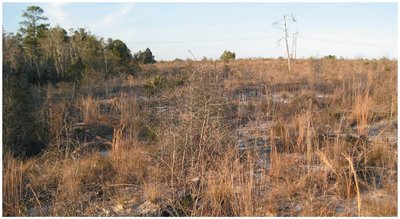
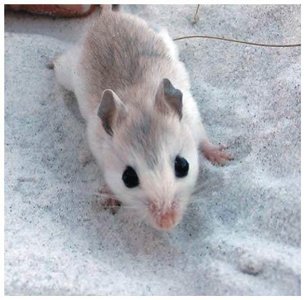
Researchers investigated the adaptive significance of coat coloration in mice living in different habitats. They hypothesized that coloration evolved to protect mice from predators.
Models of mice were placed in beach and inland habitats.
Predation rates were recorded to test the hypothesis.


Unity and Diversity of Life
Universal Features and Evolution
Despite the diversity of life, unity is evident in features such as the universal genetic code (DNA) and cell structure. Evolution explains both the unity and diversity observed in living organisms.
Summary Table: Levels of Biological Organization
Level | Description |
|---|---|
Atom | Smallest unit of matter |
Molecule | Group of atoms bonded together |
Cell | Basic unit of life |
Tissue | Group of similar cells |
Organ | Structure composed of tissues |
Organ System | Group of organs working together |
Organism | Individual living being |
Population | Group of organisms of same species |
Community | Different populations living together |
Ecosystem | Community plus physical environment |
Biosphere | All ecosystems on Earth |
Summary Table: Characteristics of Life
Characteristic | Description |
|---|---|
Nutrition | Intake and processing of nutrients |
Excretion | Removal of metabolic wastes |
Growth | Increase in cell number or mass |
Reproduction | Production of new individuals |
Exchange of Gases | Respiration and gas exchange |
Movement | Internal and external movement |
Irritability | Response to stimuli |
Homeostasis | Maintenance of internal stability |
Additional info: These notes expand on brief points from the original materials, providing academic context and examples for each concept. Images included are directly relevant to the explanations and reinforce key concepts in biology.
