 Back
Introduction to Biology: Unifying Themes, Scientific Method, and Evolution
Study Guide - Smart Notes
 Tailored notes based on your materials, expanded with key definitions, examples, and context.
Introduction to Biology
The Study of Life and Its Unifying Themes
Biology is the scientific study of life, encompassing a wide range of topics from the molecular basis of life to the interactions of organisms within ecosystems. Five unifying themes help organize biological knowledge:
Organization: Life is structured in a hierarchical manner, from atoms to the biosphere.
Information: Genetic information is stored and transmitted primarily through DNA.
Energy and Matter: Life requires the transfer and transformation of energy and matter.
Interactions: Living systems interact at all levels, from molecules to ecosystems.
Evolution: Evolution explains both the unity and diversity of life.
Organization: Levels of Biological Organization
Emergent Properties and Biological Hierarchy
Emergent properties arise from the arrangement and interaction of parts within a system. These properties are not present at lower levels but emerge at higher levels of complexity. For example, a functioning bicycle only works when all parts are correctly assembled. Biologists use both reductionism (studying isolated components) and systems biology (analyzing interactions among parts) to understand life.
Hierarchy of Life: Atoms → Molecules → Organelles → Cells → Tissues → Organs → Organisms → Populations → Communities → Ecosystems → Biosphere
Structure and Function: At every level, the structure of a biological component provides insight into its function.
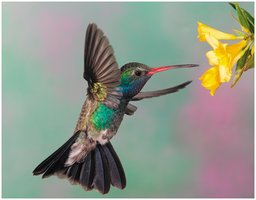
The Cell: Basic Unit of Life
The cell is the smallest unit capable of performing all activities required for life. According to cell theory, all living organisms are composed of cells. Cells are classified as either prokaryotic (lacking a nucleus and membrane-bound organelles) or eukaryotic (having a nucleus and organelles).
Prokaryotic Cells: Simpler, smaller, no nucleus (e.g., bacteria, archaea).
Eukaryotic Cells: Larger, complex, contain nucleus and organelles (e.g., plants, animals, fungi, protists).
Information: Genetic Material and Gene Expression
DNA and Genetic Information
Within cells, chromosomes contain DNA, the molecule that stores genetic information. Genes, segments of DNA, encode instructions for building proteins and other molecules essential for life. The process of gene expression involves transcription (DNA to RNA) and translation (RNA to protein).
Gene: Unit of inheritance; encodes information for protein synthesis.
Gene Expression: The process by which information from a gene is used to synthesize a functional product (usually a protein).
Genome: The complete set of genetic material in an organism.
Genomics: Study of whole sets of genes and their interactions.
Proteomics: Study of the entire set of proteins (proteome) expressed by a cell, tissue, or organism.
Bioinformatics: Use of computational tools to analyze large biological data sets.
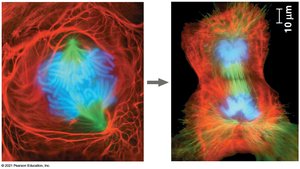
Energy and Matter: Life’s Requirements
Energy Transfer and Transformation
All living organisms require energy to carry out life processes. Plants and other photosynthetic organisms (producers) convert solar energy into chemical energy, which is then transferred to consumers (organisms that eat other organisms or their remains). Energy flow and matter cycling are fundamental to ecosystem function.
Producers: Organisms that produce their own food (e.g., plants).
Consumers: Organisms that obtain energy by consuming other organisms.
Interactions: Regulation and Feedback
Biological Interactions and Feedback Regulation
Interactions among molecules, cells, tissues, and organisms are essential for maintaining homeostasis and proper function. Many biological processes are regulated by feedback mechanisms. Negative feedback reduces the initial stimulus, helping maintain stability.
Feedback Regulation: The output of a process regulates that process.
Negative Feedback: The response diminishes the original stimulus (e.g., regulation of blood glucose).
Evolution: Unity and Diversity of Life
Evolution as a Core Theme
Evolution explains both the similarities (unity) and differences (diversity) among living organisms. All species are descended from common ancestors, and natural selection is the primary mechanism driving evolutionary change. Each species is given a two-part scientific name (genus and species), such as Homo sapiens.
Three Domains of Life: Bacteria, Archaea (both prokaryotic), and Eukarya (eukaryotic).
Domain Eukarya Subgroups: Plants, Fungi, Animals, Protists.
Charles Darwin and Natural Selection
Charles Darwin’s theory of natural selection explains how populations evolve over time. Individuals with advantageous traits are more likely to survive and reproduce, leading to the accumulation of those traits in the population. Evolutionary relationships are often depicted as tree-like diagrams.
Natural Selection: Differential survival and reproduction of individuals due to differences in phenotype.
Descent with Modification: Species change over generations, giving rise to new species.
The Scientific Method in Biology
Forming and Testing Hypotheses
Science is a process of inquiry involving observation, hypothesis formation, and experimentation. A hypothesis is a testable explanation for an observation. Experiments are designed to test hypotheses under controlled conditions, using independent (manipulated) and dependent (measured) variables.
Observation: Gathering information about the natural world.
Hypothesis: A testable explanation based on observations.
Experiment: A controlled test to evaluate a hypothesis.
Variables: Independent (manipulated) and dependent (measured).
Control Group: The group not exposed to the experimental treatment; used for comparison.
Example: Camouflage and Predation in Mice
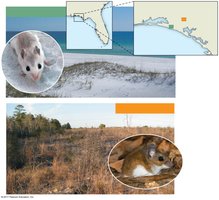
Researchers tested the hypothesis that mouse coloration evolved as an adaptation to avoid predation. They placed model mice with different colorations in matching and non-matching habitats and measured predation rates. The results supported the hypothesis: camouflaged mice were preyed upon less often in their native habitat.
Habitat | Camouflaged (Control) | Non-camouflaged (Experimental) |
|---|---|---|
Beach | Low predation | High predation |
Inland | Low predation | High predation |
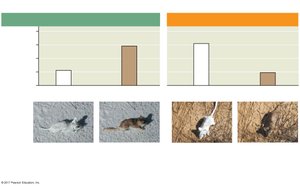
Variables: Independent variables included soil color and moonlight; the dependent variable was the number of mice caught. The experiment demonstrated the importance of camouflage in survival and provided evidence for natural selection.
Theories in Science
In science, a theory is a broad explanation supported by a large body of evidence. Theories generate new hypotheses and are more comprehensive than individual hypotheses.
Summary Table: Levels of Biological Organization (Example)
Level | Example |
|---|---|
Atoms | Nitrogen, carbon, hydrogen, oxygen |
Molecule | Amino acid |
Organelle | Membrane with a channel protein |
Cell | Eukaryotic cell |
Organism | Lichen (fungi + algae) |
Population | Reindeer moss (a group of lichens) |
Community | Moose, caribou, musk oxen, reindeer |
Ecosystem | Arctic tundra in Scandinavia |
Three things learned by organizing in this manner:
It clarifies the complexity and interdependence of biological systems.
It helps identify emergent properties at each level.
It provides a framework for studying structure and function in biology.
