 Back
Introduction to Cell Biology: Foundational Concepts and Course Overview
Study Guide - Smart Notes
 Tailored notes based on your materials, expanded with key definitions, examples, and context.
Course Overview and Structure
Course Goals and Outcomes
This course aims to provide students with a foundational understanding of cell biology, develop critical scientific thinking, and connect biological concepts to practical applications in human health and scientific research.
Foundational Understanding: Grasp key concepts, terms, and phenomena in cell biology.
Critical Thinking: Analyze and interpret scientific data and principles.
Application: Relate classroom concepts to real-world biological and health scenarios.
Course Structure
Lectures emphasize collaboration, communication, and interaction.
Attendance, quizzes, homework, and participation contribute to the final grade.
Support includes office hours, tutoring, and Peer-Assisted Learning (PAL) sessions.
Modules Covered
Module I: Biochemistry and Biomolecules
Module II: Cell Structure and Function
Module III: Cellular Thermodynamics and Enzyme Function
Module IV: Metabolic Pathways
Module V: Chromosomes and Chromosomal Inheritance
Module VI: Central Dogma
Module VII: Gene Regulation
Assessment and Grading
Quizzes: 15%
Homework Sets: 5%
Exams: 70%
Attendance and Participation: 10%
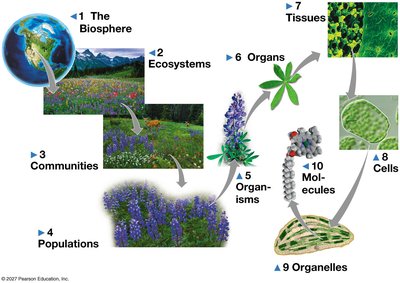
Biological Hierarchies
Levels of Biological Organization
Biology studies life at multiple levels, from molecules to the biosphere. Understanding these hierarchies helps contextualize cellular processes within larger systems.
Biosphere: All life and environments on Earth.
Ecosystems: Communities and their physical environments.
Communities: Interacting populations of different species.
Populations: Groups of individuals of the same species.
Organisms: Individual living entities.
Organs and Tissues: Specialized structures and groups of cells.
Cells: Basic unit of life.
Organelles: Specialized subunits within cells.
Molecules: Chemical components of cells.
The Cell Theory
Principles of Cell Theory
Cell theory is a fundamental concept in biology, describing the properties and significance of cells.
All organisms are composed of one or more cells.
The cell is the structural unit of life for all organisms.
Cells arise only by division from preexisting cells.
Defining Life and Cells
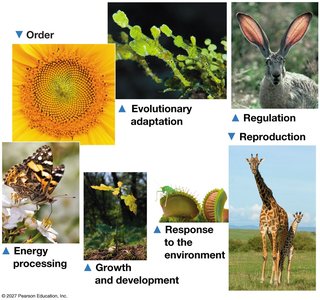
What is Life?
Life can be defined genetically and thermodynamically:
Genetic Definition: An integral unit capable of reproduction, inheritance, adaptation, and response to the environment.
Thermodynamic Definition: A localized region that increases in order (decreases in entropy) driven by energy flow.
What is a Cell?
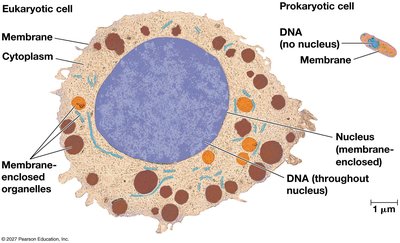
A cell is the smallest unit of life, capable of performing all life functions. Cells can be classified as prokaryotic or eukaryotic based on their internal structure.
Eukaryotes: "True nucleus"; cells with membrane-enclosed organelles.
Prokaryotes: "Before nucleus"; cells lacking membrane-enclosed organelles.
Organelles and Cell Structure
Organelles
Organelles are membrane-enclosed structures within eukaryotic cells, each performing specialized functions essential for cell survival and activity.
Nucleus: Contains genetic material (DNA).
Mitochondria: Site of cellular respiration and energy production.
Endoplasmic Reticulum: Protein and lipid synthesis.
Golgi Apparatus: Protein modification and sorting.
Macromolecules and Cellular Functions
Macromolecules
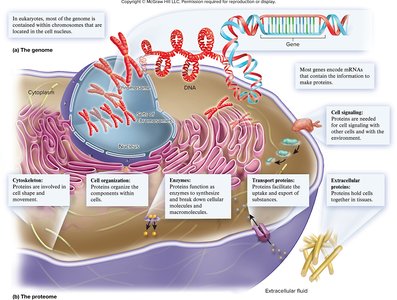
Cells contain four major types of macromolecules: carbohydrates, lipids, proteins, and nucleic acids. These molecules are essential for structure, function, and information storage.
Carbohydrates: Energy storage and structural support.
Lipids: Membrane structure and energy storage.
Proteins: Enzymatic activity, structure, transport, and signaling.
Nucleic Acids: Information storage and transmission (DNA, RNA).
Genetic Inheritance and Chromosomes
DNA and Chromosomes
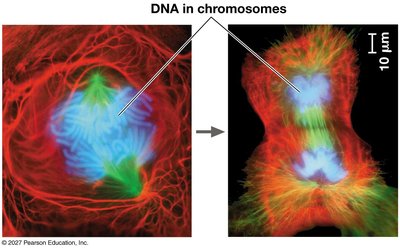
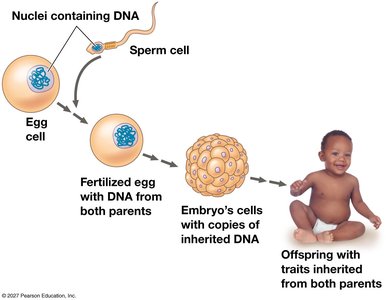
Genetic inheritance is fundamental to cell and organismal life. DNA is packaged into chromosomes, each containing many genes that direct development and function.
Chromosomes: Structures containing DNA and associated proteins.
Genes: Segments of DNA encoding functional products.
Inheritance: Transmission of genetic information from parent to offspring.
Unity and Diversity of Life
Cellular Architecture and Evolution
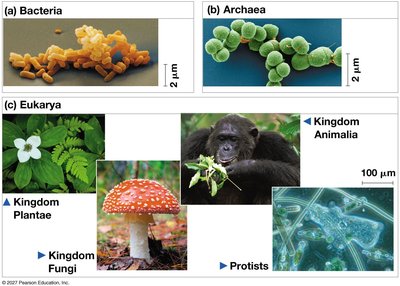
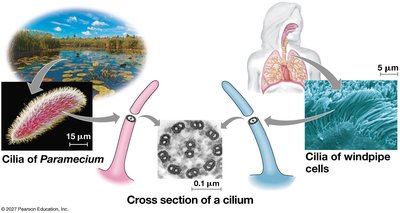
Despite the diversity of life, there is unity in cellular architecture, such as the structure of cilia in eukaryotes. This reflects evolutionary conservation and adaptation.
Cilia: Hair-like structures involved in movement and sensory functions.
Evolutionary Conservation: Similar structures found across diverse organisms.
Additional Academic Context
Central Dogma: Describes the flow of genetic information from DNA to RNA to protein.
Cell Metabolism: Includes all chemical reactions within cells, such as energy production and biosynthesis.
Membrane Transport: Mechanisms by which substances move across cell membranes, including diffusion, osmosis, and active transport.
Additional info: The course syllabus and schedule indicate coverage of topics such as biochemistry, cell structure, metabolism, genetics, and gene regulation, all of which are core to General Biology.
