 Back
Introduction to Cells: Structure and Function
Study Guide - Smart Notes
 Tailored notes based on your materials, expanded with key definitions, examples, and context.
Cell Structure and Function
Overview of Cellular Organization
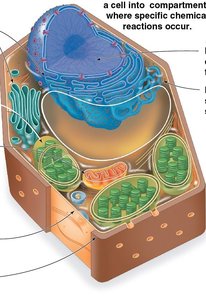
Cells are the fundamental units of life, internally organized into regions that perform specific functions. Eukaryotic cells contain membrane-bound organelles, each specialized for distinct biological processes. - Cellular compartmentalization allows for efficient biochemical reactions. - Organelles include the nucleus, endoplasmic reticulum, Golgi apparatus, lysosomes, vacuoles, mitochondria, chloroplasts, and cytoskeleton. 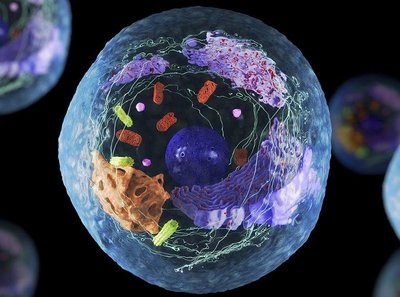
Endomembrane System
The endomembrane system is a group of organelles that work together to synthesize, modify, and transport proteins, lipids, and carbohydrates. - Nucleus: Stores genetic information and coordinates gene expression. - Endoplasmic Reticulum (ER): Rough ER (with ribosomes) synthesizes proteins; Smooth ER (without ribosomes) synthesizes lipids and detoxifies chemicals. - Golgi Apparatus: Modifies, sorts, and packages proteins and lipids for transport. - Lysosomes: Digestive organelles that break down macromolecules and recycle cellular components. - Vacuoles: Storage and maintenance compartments, especially prominent in plant cells. - Plasma Membrane: Regulates interactions with the environment. 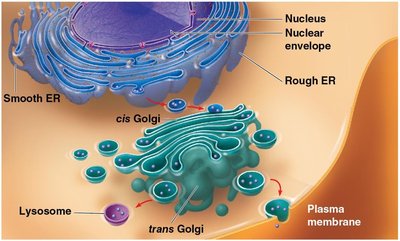
Organelle | Main Function |
|---|---|
Nucleus | Stores DNA, controls gene expression |
Rough ER | Protein synthesis |
Smooth ER | Lipid synthesis, detoxification |
Golgi Apparatus | Modification and packaging of macromolecules |
Lysosome | Digestion and recycling |
Vacuole | Storage, structural support (plants) |
Plasma Membrane | Selective barrier, cell communication |
Endoplasmic Reticulum
The ER is a biosynthetic factory with two distinct regions: - Smooth ER: Synthesizes lipids, detoxifies drugs, stores calcium ions. - Rough ER: Studded with ribosomes, synthesizes proteins, produces glycoproteins, distributes transport vesicles. 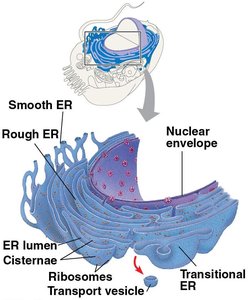
Golgi Apparatus
The Golgi apparatus consists of flattened sacs (cisternae) and functions as the cell's shipping and receiving center. - Cis face: Receives vesicles from the ER. - Trans face: Ships modified products to their destinations. 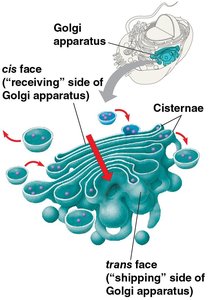
Lysosomes
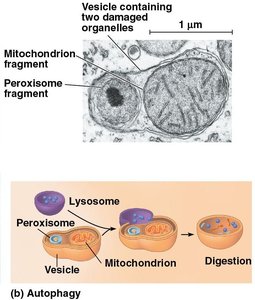
Lysosomes are digestive compartments containing hydrolytic enzymes. - Phagocytosis: Cells engulf particles, forming food vacuoles that fuse with lysosomes for digestion. - Autophagy: Lysosomes recycle the cell's own organelles and macromolecules. 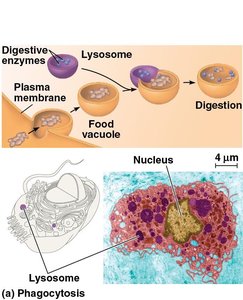
Vacuoles
Vacuoles serve as maintenance compartments. - Food vacuoles: Formed by phagocytosis. - Contractile vacuoles: Pump excess water out of cells (in protists). - Central vacuole: Found in mature plant cells, contains sap and supports cell growth. 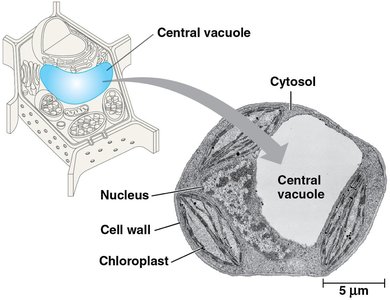
Mitochondria and Chloroplasts: Energy Converters
Mitochondria and chloroplasts are organelles responsible for energy conversion. - Mitochondria: Site of cellular respiration, generating ATP using oxygen. - Chloroplasts: Site of photosynthesis in plants and algae. 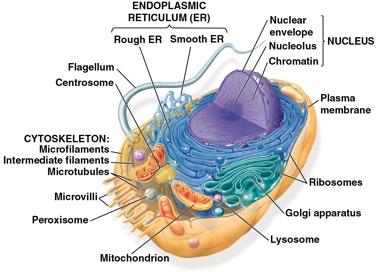
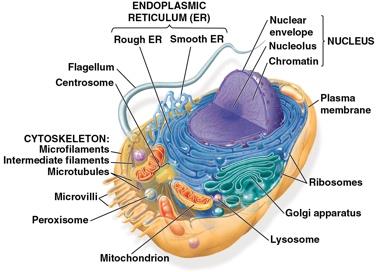
Mitochondria Structure
- Outer membrane and inner membrane (folded into cristae) increase surface area for ATP synthesis. - Matrix: Contains enzymes for cellular respiration.
Chloroplast Structure
- Thylakoids: Membranous sacs stacked as grana. - Stroma: Internal fluid. - Plastids: Group of plant organelles including chloroplasts.
Evolutionary Origins: Endosymbiont Theory
Mitochondria and chloroplasts share similarities with bacteria, supporting the endosymbiont theory. - Both are enveloped by a double membrane. - Contain free ribosomes and circular DNA. - Grow and reproduce independently within cells. 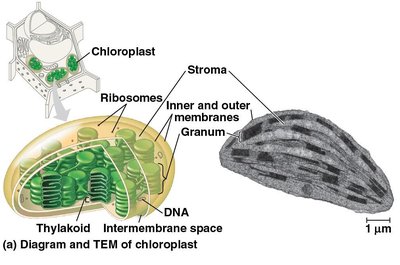
The Cytoskeleton: Support and Motility
The cytoskeleton is a network of fibers that supports cell shape, organizes organelles, and enables movement. - Microtubules: Thickest, shape the cell, guide organelle movement, separate chromosomes during cell division. - Microfilaments: Thinnest, involved in cell movement and shape. - Intermediate filaments: Provide structural stability. 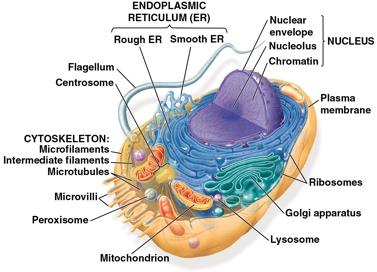
Microtubule Functions
- Shaping the cell - Guiding movement of organelles - Separating chromosomes during cell division 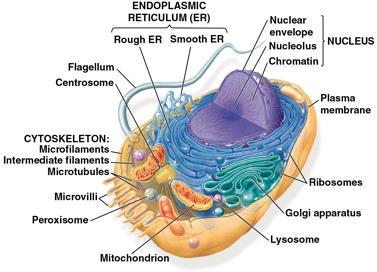
Motor Proteins and Cell Motility
Motor proteins interact with cytoskeletal fibers to move vesicles and organelles within the cell. 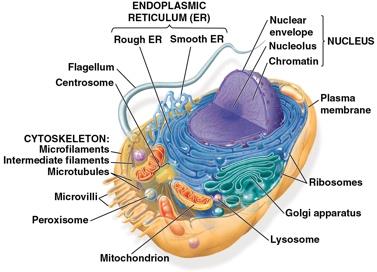
Extracellular Matrix (ECM)
The ECM surrounds animal cells and influences their behavior and gene activity. - Regulates cell behavior - Influences gene activity in the nucleus
Integration of Cell Components
Cellular functions require coordination among organelles and structures. For example, macrophages use the cytoskeleton, lysosomes, and plasma membrane to destroy bacteria.
Summary Table: Major Eukaryotic Cell Organelles
Organelle | Function |
|---|---|
Nucleus | Genetic information storage |
Rough ER | Protein synthesis |
Smooth ER | Lipid synthesis, detoxification |
Golgi Apparatus | Modification, sorting, packaging |
Lysosome | Digestion, recycling |
Vacuole | Storage, structural support |
Mitochondrion | ATP production |
Chloroplast | Photosynthesis |
Cytoskeleton | Support, motility |
Key Terms
- Organelle: Specialized structure within a cell. - Endomembrane system: Group of organelles involved in synthesis and transport. - Phagocytosis: Cellular process of engulfing particles. - Autophagy: Recycling of cellular components. - ATP: Adenosine triphosphate, energy currency of the cell. - Endosymbiont theory: Theory explaining the origin of mitochondria and chloroplasts.
Equations
Cellular Respiration (simplified): Photosynthesis (simplified):
Example
- Macrophage function: A macrophage uses its cytoskeleton to move, lysosomes to digest bacteria, and the plasma membrane to engulf pathogens. Additional info: Supplemental instruction and homework assignments are recommended for deeper understanding of cell structure and function, with a focus on chemistry.
