 Back
Lecture 4 Slides: Introduction to Cells: Structure, Function, and Organization
Study Guide - Smart Notes
 Tailored notes based on your materials, expanded with key definitions, examples, and context.
Introduction to Cells
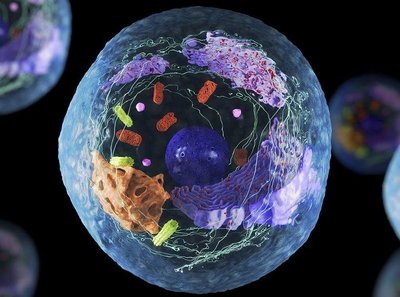
Overview of Cellular Organization
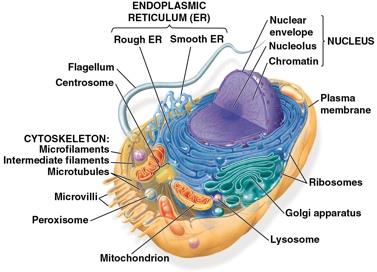
Cells are the fundamental units of life, internally organized into specialized regions that perform distinct functions. This compartmentalization allows for the efficient execution of complex biochemical processes necessary for life.
Plasma membrane: Regulates interactions with the environment, controlling the movement of substances in and out of the cell.
Nucleus and ribosomes: Store and transmit genetic information, directing cellular activities through gene expression.
Endomembrane system: Synthesizes and modifies proteins, lipids, and carbohydrates.
Cell Components
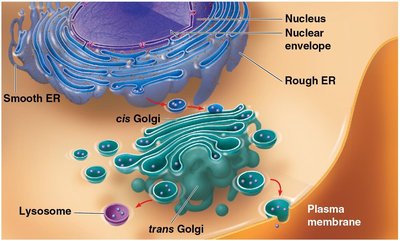
The Endomembrane System
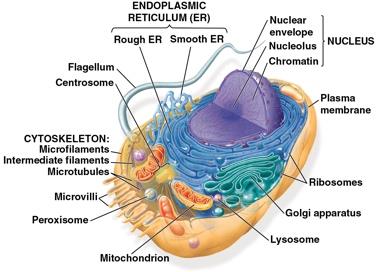
The endomembrane system is a network of membranes within eukaryotic cells that regulates protein traffic and performs metabolic functions. It includes the nucleus, endoplasmic reticulum (ER), Golgi apparatus, lysosomes, vacuoles, and the plasma membrane.
Nucleus + nuclear envelope: Contains the cell's genetic material (DNA) and is surrounded by a double membrane.
Endoplasmic reticulum (ER): Divided into smooth and rough regions, responsible for lipid synthesis, detoxification, and protein production.
Golgi apparatus: Modifies, sorts, and packages proteins and lipids for secretion or delivery to other organelles.
Lysosomes: Digestive organelles that break down macromolecules and recycle cellular components.
Vacuoles: Storage and maintenance compartments, especially prominent in plant cells.
Plasma membrane: The boundary that separates the cell from its environment.
Endoplasmic Reticulum (ER)
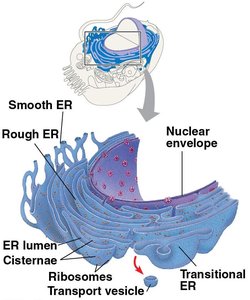
The ER is a biosynthetic factory with two distinct regions:
Smooth ER: Lacks ribosomes; synthesizes lipids, detoxifies drugs and poisons, and stores calcium ions.
Rough ER: Studded with ribosomes; synthesizes proteins (especially glycoproteins), produces membranes, and distributes transport vesicles.
Golgi Apparatus
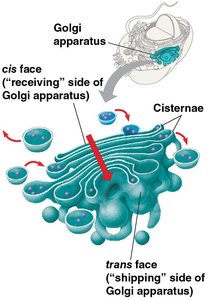
The Golgi apparatus is the cell's shipping and receiving center, consisting of flattened membranous sacs called cisternae.
Modifies products of the ER.
Manufactures certain macromolecules.
Sorts and packages materials into transport vesicles.
Lysosomes
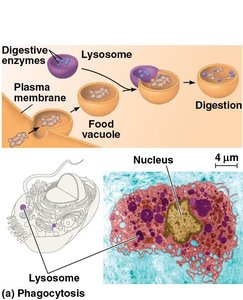
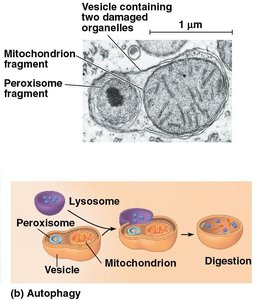
Lysosomes are digestive compartments containing hydrolytic enzymes. They break down ingested substances, cell macromolecules, and damaged organelles for recycling.
Phagocytosis: The process by which a cell engulfs another cell, forming a food vacuole that fuses with a lysosome for digestion.
Autophagy: The process by which lysosomes recycle the cell’s own organelles and macromolecules.
Vacuoles
Vacuoles are large vesicles derived from the ER and Golgi apparatus. Their functions vary by cell type:
Food vacuoles: Formed by phagocytosis in animal cells.
Contractile vacuoles: Found in many freshwater protists; pump excess water out of cells.
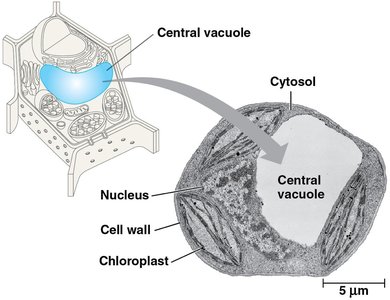
Central vacuole: Found in mature plant cells; contains cell sap and plays a major role in plant growth.
Energy and Metabolism
Mitochondria and Chloroplasts
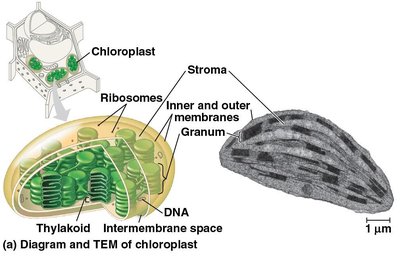
Mitochondria and chloroplasts are the energy converters of the cell. Mitochondria are the sites of cellular respiration, generating ATP, while chloroplasts (in plants and algae) are the sites of photosynthesis.
Mitochondria: Have a smooth outer membrane and a highly folded inner membrane (cristae) that increases surface area for ATP synthesis. The mitochondrial matrix contains enzymes, DNA, and ribosomes.
Chloroplasts: Contain thylakoids (stacked into grana) and stroma (internal fluid). They are part of a group of organelles called plastids.
Evolutionary Origins: Endosymbiont Theory
The endosymbiont theory proposes that mitochondria and chloroplasts originated as prokaryotic cells engulfed by an ancestral eukaryotic cell. Evidence includes:
Double membranes
Own circular DNA and ribosomes
Ability to grow and reproduce independently within the cell
Cell Support and Motility
The Cytoskeleton
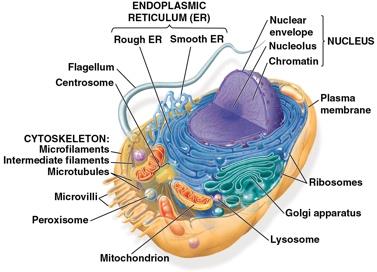
The cytoskeleton is a network of fibers that provides structural support, maintains cell shape, and facilitates cell movement and intracellular transport.
Microtubules: Thickest fibers; shape the cell, guide organelle movement, and separate chromosomes during cell division.
Microfilaments: Thinnest fibers; involved in cell movement and muscle contraction.
Intermediate filaments: Provide mechanical support for the cell.
Motor Proteins and Intracellular Transport
Motor proteins interact with the cytoskeleton to move vesicles and organelles within the cell. This process requires ATP and is essential for cellular organization and function.
Vesicles travel along microtubule tracks using motor proteins.
Examples include the movement of neurotransmitter vesicles in neurons and pigment granules in animal cells.
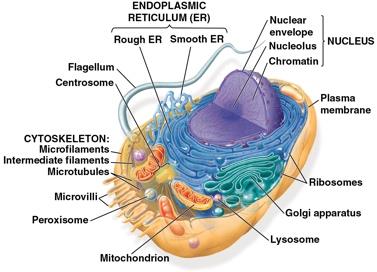
Summary Table: Major Eukaryotic Cell Organelles and Their Functions
Organelle | Main Function |
|---|---|
Nucleus | Stores genetic information; controls gene expression |
Ribosomes | Protein synthesis |
Endoplasmic Reticulum (Rough) | Protein synthesis and modification |
Endoplasmic Reticulum (Smooth) | Lipid synthesis, detoxification, calcium storage |
Golgi Apparatus | Modification, sorting, and packaging of proteins and lipids |
Lysosomes | Digestion of macromolecules, autophagy |
Vacuoles | Storage, waste disposal, water balance, cell growth |
Mitochondria | ATP production via cellular respiration |
Chloroplasts | Photosynthesis (plants and algae) |
Cytoskeleton | Structural support, cell movement, intracellular transport |
Conclusion
A cell is greater than the sum of its parts. The coordinated function of all organelles and structures is essential for cellular life, as seen in processes like phagocytosis, energy conversion, and intracellular transport. Understanding cell structure and function is foundational to all of biology.
