 Back
Introduction to Dairy Science: Dairy Cattle, Production, and Management
Study Guide - Smart Notes
 Tailored notes based on your materials, expanded with key definitions, examples, and context.
Overview of Dairy Science
Importance of Dairy Production
Dairy production is a significant agricultural enterprise, providing essential nutrients through milk and dairy products. It involves the management of dairy cattle for optimal health, productivity, and sustainability.
Economic Impact: Dairy is a top agricultural earner in many states, including Tennessee, contributing approximately $150 million annually.
Labor and Commitment: Dairy farming requires year-round, daily attention to animal welfare and farm operations.
National Scope: Over 37,400 U.S. dairy farms supply milk, cheese, yogurt, and other products domestically and internationally.
Family Ownership: About 97% of U.S. dairy farms are family-owned and operated.
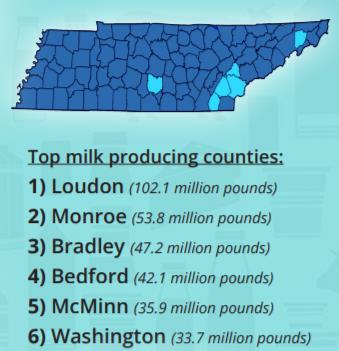
Geographic Distribution and Production
Major Dairy States: California, Wisconsin, New York, Pennsylvania, and Idaho are the top five dairy-producing states.
Herd Size: The average U.S. dairy herd consists of 187 cows, with most farms having fewer than 200 cows.
Global Consumption: Milk consumption varies worldwide, reflecting dietary habits and agricultural practices.
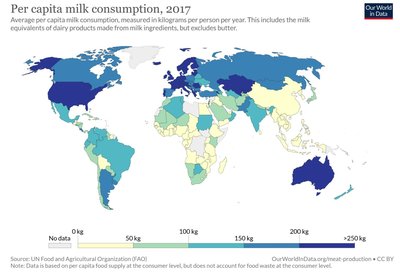
Dairy Cattle Breeds
Major Dairy Breeds
Several breeds of dairy cattle are raised for their unique milk production characteristics, adaptability, and physical traits.
Breed | Origin | Size | Color | Milk Traits |
|---|---|---|---|---|
Holstein | The Netherlands | Large (~1,500 lbs) | Black & White or Red & White | Highest milk yield |
Jersey | Isle of Jersey | Small (800–1,200 lbs) | Light gray to dark brown | High fat/protein milk |
Guernsey | Isle of Guernsey | Medium (~1,000 lbs) | Fawn or red & white | Golden milk, high beta-carotene |
Brown Swiss | Switzerland | Large (1,300–1,400 lbs) | Light brown/gray | Docile, strong legs |
Ayrshire | Scotland | Medium (900–1,300 lbs) | Red & white | Excellent udder conformation |
Milking Shorthorn | England | Large (1,410–1,500 lbs) | Red, white, or roan | Dual-purpose (dairy/beef) |
Red and White | US/Canada | Large (~1,400 lbs) | Red & white | Genetic diversity |

Breed Characteristics and Applications
Holstein: Dominates U.S. dairy herds due to high milk yield.
Jersey: Preferred for high butterfat content, ideal for cheese and ice cream.
Guernsey: Known for golden-colored milk rich in beta-carotene.
Brown Swiss: Valued for strength and longevity.
Ayrshire: Recognized for udder quality and adaptability.
Milking Shorthorn: Versatile for both milk and beef production.
Red and White: Newest breed, with genetic input from several breeds.
Dairy Farm Management and Housing
Focus of Dairy Farmers
Dairy farmers prioritize animal welfare, productivity, and environmental stewardship to ensure sustainable operations.
Animal Comfort: Clean, comfortable housing and access to food and water are essential.
Reproductive Management: Efficient breeding practices support herd productivity.
Environmental Stewardship: Responsible waste management and resource use protect the environment.
Types of Dairy Housing
Housing systems are designed to optimize cow health, hygiene, and productivity. Common systems include:
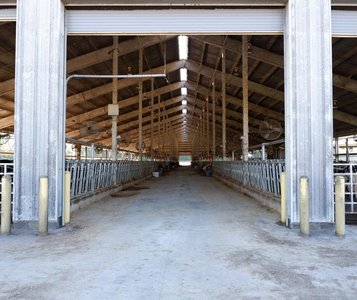
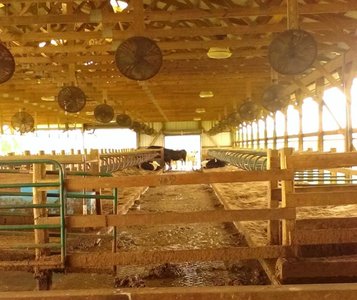
Freestall Barns: Cows can move freely and rest in individual stalls.
Tiestall Barns: Cows are tethered in individual stalls, common in colder regions.
Open Barns: Provide shelter with open sides for ventilation.
Dry Lots and Pasture: Outdoor systems where cows graze or are kept in open areas.
Dairy Cow Anatomy and Physiology
The Udder and Mammary Gland
The udder is the primary organ for milk production in dairy cows. Its structure and health are critical for efficient milk yield.
Key Structures: Lateral and median suspensory ligaments, teat sphincter, teat cistern, gland cistern, and alveoli.
Milk Production: Alveoli produce milk, which is expelled by myoepithelial cells under the influence of oxytocin.
Udder Health: Cleanliness and proper milking procedures prevent mastitis and ensure milk quality.
Digestive Physiology: Ruminant vs. Non-Ruminant
Classification of Farm Animals
Farm animals are classified based on their digestive systems, which influences their diet and management.
Non-Ruminants: Possess a single-chambered stomach (monogastric). Examples: swine, poultry, and horses (hindgut fermenters).
Ruminants: Have a four-compartment stomach: rumen, reticulum, omasum, and abomasum. Examples: cattle, sheep, goats.
Ruminant Digestive Compartments
Rumen: Large fermentation vat hosting bacteria and protozoa that break down cellulose and hemicellulose.
Reticulum: Honeycomb structure that traps foreign objects; risk of hardware disease.
Omasum: Many folds for water absorption.
Abomasum: True stomach where enzymatic digestion occurs.
Feeding Dairy Cows
Total Mixed Ration (TMR): A balanced mixture of forages, grains, vitamins, and minerals.
Water: Most critical nutrient; cows require 30–50 gallons per day.
Ruminal Fermentation and Nutrient Production
Ruminants rely on microbial fermentation to digest fibrous plant material and produce essential nutrients.
Volatile Fatty Acids (VFAs): Main energy source for ruminants, including acetic, propionic, and butyric acids.
Microbial Protein and B-Vitamins: Synthesized by rumen microbes and absorbed by the animal.
Symbiosis: Cattle provide a stable environment for microbes, which in turn digest forages into usable nutrients.
Rumination (Chewing the Cud)
Rumination is the process by which cows regurgitate, rechew, and reswallow their food to aid in digestion and nutrient absorption.
Purpose: Reduces particle size and increases surface area for microbial action.
Summary Table: Ruminant vs. Non-Ruminant Digestive Systems
Feature | Ruminant | Non-Ruminant |
|---|---|---|
Stomach Structure | Four compartments (rumen, reticulum, omasum, abomasum) | Single-chambered (monogastric) |
Diet | Forage-based | Grain-based (except horses: forage-based) |
Examples | Cattle, sheep, goats | Swine, poultry, horses |
Fermentation Site | Rumen (foregut) | Cecum (hindgut, in horses) |
Additional Resources
UT Dairy: utdairy.utk.edu
UT Dairy Club and social media
Contact: Dr. Liz Eckelkamp and Dr. Lew Strickland, University of Tennessee
