 Back
BackIntroduction to Ecology and the Biosphere: Study Notes
Study Guide - Smart Notes
 Tailored notes based on your materials, expanded with key definitions, examples, and context.
Introduction to Ecology and the Biosphere
Overview of Ecology
Ecology is the scientific study of the interactions between organisms and the living (biotic) and nonliving (abiotic) components of their environment. These interactions determine the distribution and abundance of organisms on Earth. Ecological research spans multiple levels, from individual organisms to the entire biosphere.
Scope of Ecological Research
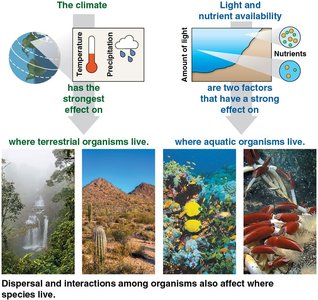
Organismal Ecology: Focuses on how an organism’s structure, physiology, and behavior help it meet environmental challenges.
Population Ecology: Studies groups of individuals of the same species living in an area, analyzing factors that affect population size and changes over time.
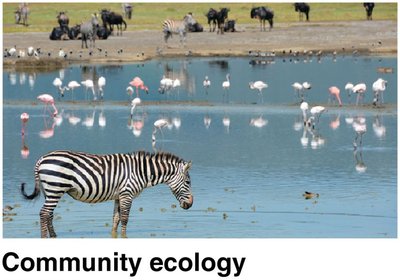
Community Ecology: Examines interactions between species (interspecific interactions) and their effects on community structure and organization.
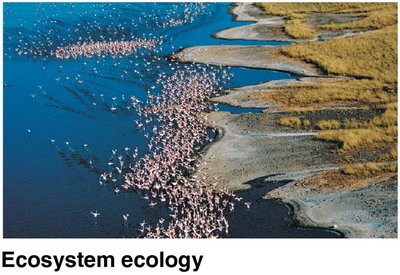
Ecosystem Ecology: Emphasizes energy flow and chemical cycling between organisms and their environment within a community and its physical context.
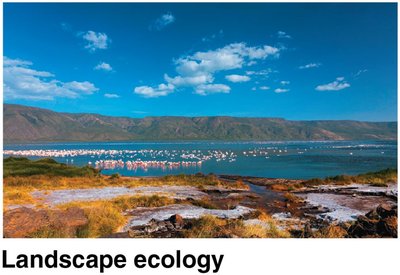
Landscape Ecology: Investigates the exchanges of energy, materials, and organisms across multiple connected ecosystems (landscapes or seascapes).
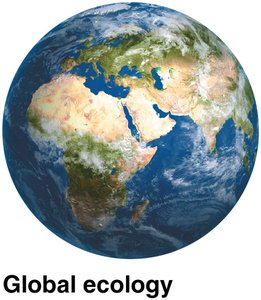
Global Ecology: Studies the biosphere, focusing on how the exchange of energy and materials influences the function and distribution of organisms globally.
Examples of Ecological Levels
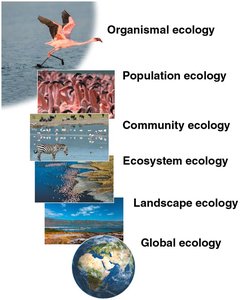
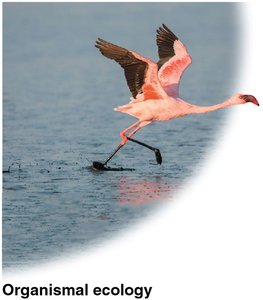
Organismal Ecology: How a flamingo’s physiology allows it to survive in saline lakes.
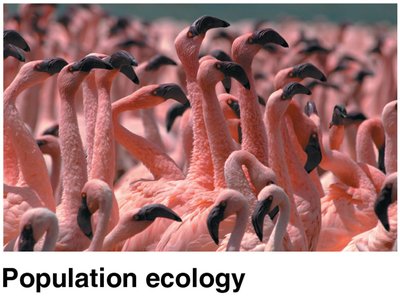
Population Ecology: Factors influencing flamingo population size.
Community Ecology: Interactions between zebras, flamingos, and other species at a watering hole.
Ecosystem Ecology: Energy flow in a wetland ecosystem.
Landscape Ecology: Movement of flamingos between lakes in a region.
Global Ecology: Impact of climate change on migratory bird patterns worldwide.
Climate and the Biosphere
Global Climate Patterns
Climate refers to the long-term prevailing weather conditions in an area and is the most significant influence on the distribution of terrestrial organisms. The four major physical components of climate are temperature, precipitation, sunlight, and wind.
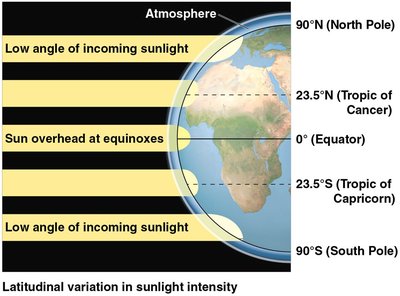
Sunlight Intensity: The angle at which sunlight strikes Earth affects the amount of heat and light per unit area. Sunlight is most direct at the equator and less so at higher latitudes.
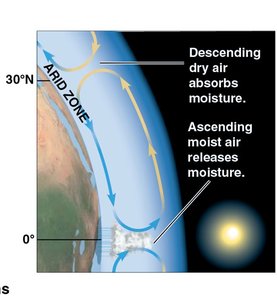
Global Air Circulation: Patterns of air movement and precipitation are driven by the warming of air at the equator, which rises and releases moisture, creating wet tropics and dry zones at 30° latitude.
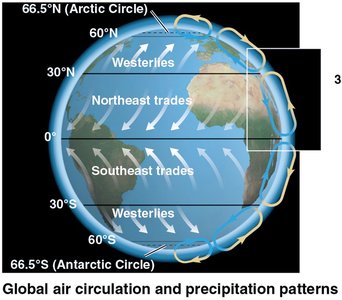
Wind Patterns: Air flowing close to Earth’s surface creates predictable wind patterns, such as trade winds and westerlies.
Regional and Local Climate
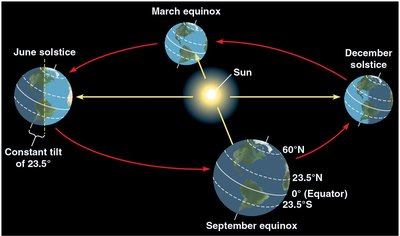
Seasonality: Caused by the tilt of Earth’s axis and its orbit around the sun, leading to seasonal changes in temperature and day length, especially at middle to high latitudes.
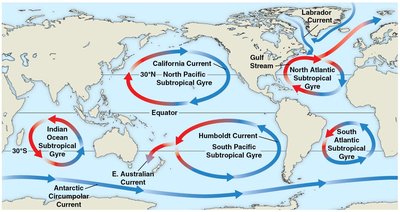
Bodies of Water: Large bodies of water moderate the climate of nearby land due to water’s high specific heat. Ocean currents transport heat, influencing coastal climates.
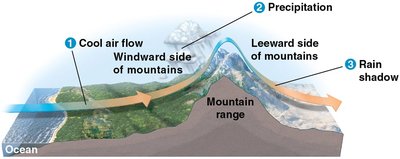
Mountains: Affect air flow, precipitation, and sunlight exposure, creating rain shadows and influencing local climates.
Biomes
Terrestrial Biomes
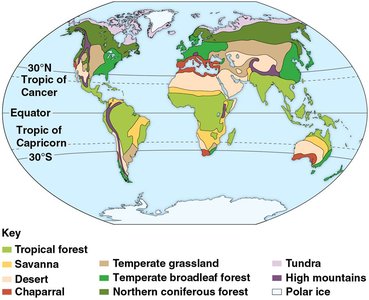
Biomes are major life zones characterized by vegetation type (terrestrial) or physical environment (aquatic). Climate is a major factor determining the locations of terrestrial biomes, as it strongly influences plant distribution.
General Features of Terrestrial Biomes
Named for major physical or climatic features and predominant vegetation.
Ecotone: Area of intergradation between biomes.
Vertical layering of vegetation provides diverse habitats for animals.
Species composition varies from one location to another.
Examples of Major Terrestrial Biomes
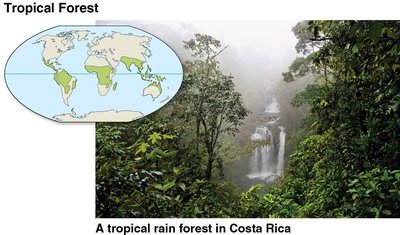
Tropical Forest: High rainfall, high temperature, vertically layered, highest animal diversity.
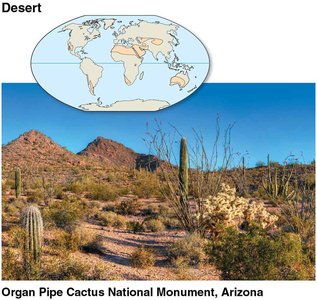
Desert: Low, variable precipitation; temperature varies seasonally and daily; plants and animals adapted for water conservation.
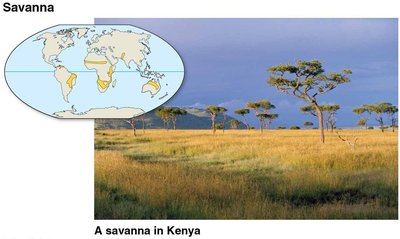
Savanna: Seasonal precipitation, warm year-round, fire- and drought-adapted plants, large herbivores.
Aquatic Biomes
Characteristics of Aquatic Biomes
Aquatic biomes are defined by their physical and chemical environment. Oceans cover about 75% of Earth’s surface and have a major impact on the biosphere, influencing rainfall, oxygen production, and climate.
Zonation in Aquatic Biomes
Thermocline: A temperature boundary that separates warm upper water from cold deeper water.
Turnover: Seasonal mixing of water layers in lakes, redistributing oxygen and nutrients.
Depth and Light Penetration: Communities vary with depth, light, distance from shore, and location relative to the bottom.
Photic Zone: Shallow, well-lit region where most photosynthesis occurs.
Aphotic Zone: Deeper, darker region with little life.
Factors Influencing Species Distribution
Biotic and Abiotic Factors
The distribution of species is limited by both biotic (living) and abiotic (nonliving) factors. Temperature, water, oxygen, salinity, sunlight, and soil are key abiotic factors, while interactions with other species (such as predation, competition, and disease) are important biotic factors.
Dispersal: The movement of individuals or gametes away from their area of origin, contributing to global distribution.
Abiotic Factors: Environmental variables such as temperature, water, oxygen, salinity, sunlight, and soil that affect where organisms can live.
Biotic Factors: Interactions with other organisms that can limit survival and reproduction.
Abiotic Factors in Detail
Temperature: Most organisms function best within a specific temperature range; climate change can shift species distributions.
Water and Oxygen: Water availability and oxygen concentration are critical, especially in aquatic environments.
Salinity: Salt concentration affects water balance; few organisms tolerate high salinity.
Sunlight: Essential for photosynthesis; limited by depth in aquatic systems and by shading in forests.
