Back
BackIntroduction to Ecology: Levels of Organization, Energy Flow, and Evolutionary Interactions
Study Guide - Smart Notes
 Tailored notes based on your materials, expanded with key definitions, examples, and context.
Introduction to Ecology
Definition and Scope of Ecology
Ecology is the branch of biology that studies the interactions between organisms and their environment, encompassing both biotic (living) and abiotic (nonliving) factors. It focuses on the higher levels of biological organization, from organisms to the biosphere, and investigates the distribution and abundance of organisms in space and time.
Ecology: The study of interactions between organisms and their environment.
Environmental Science: An interdisciplinary field integrating ecological, geological, physical, meteorological, sociological, and economic perspectives, focusing on human interactions with the environment.
Environmentalism: A set of political and ethical perspectives aimed at protecting natural systems and resources from negative human impacts.
Key Themes in Ecology: Transfer and transformation of energy and matter; interactions in biological systems.
Levels of Biological Organization in Ecology
Hierarchy of Organization
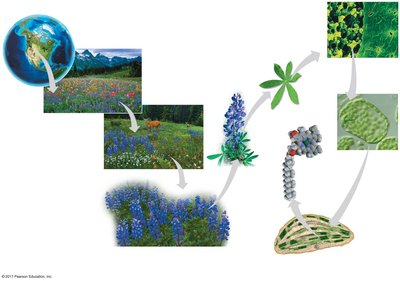
Ecology examines biological systems at multiple levels, each with increasing complexity. These levels include:
Biosphere: The global sum of all ecosystems.
Landscape: Mosaics of connected ecosystems.
Ecosystem: Communities of organisms and their physical environment.
Community: Groups of populations of different species in an area.
Population: Groups of individuals of the same species in an area.
Organism: Individual living entities.
Organ/System/Cellular/Molecular Levels: Lower levels of organization, important for understanding physiological and biochemical processes.
Additional info: Landscape ecology is unique in its focus on spatial patterns and the effects of landforms, land use, and habitat connectivity.
Energy Flow and Chemical Cycling in Ecosystems
Transfer and Transformation of Energy and Matter
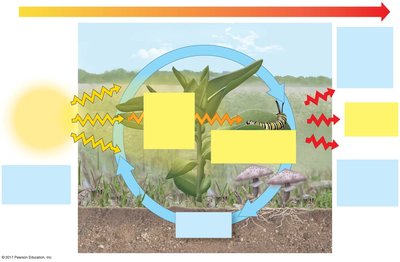
Life depends on the input of energy from the sun and the transformation of energy from one form to another. Energy flows through ecosystems, while chemicals cycle within them.
Producers (e.g., plants) convert solar energy into chemical energy via photosynthesis.
Consumers (e.g., animals) obtain energy by eating producers or other consumers.
Decomposers (e.g., fungi, bacteria) break down dead organisms, returning nutrients to the soil.
Energy is lost as heat at each trophic level, but chemicals are recycled.

Interactions in Ecological Systems
Importance of Interactions
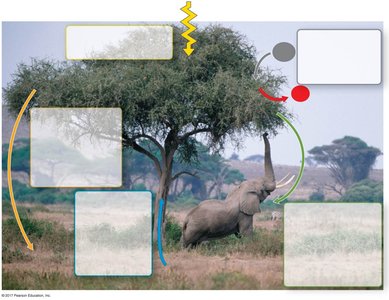
Interactions between components of biological systems ensure the integration and functioning of ecosystems. Organisms both affect and are affected by their environment, leading to complex feedback loops.
Examples include predation, competition, mutualism, and nutrient cycling.
Human activities increasingly influence ecological interactions, especially at the ecosystem and landscape levels.
Determinants of Species Distribution and Abundance
Factors Affecting Distribution
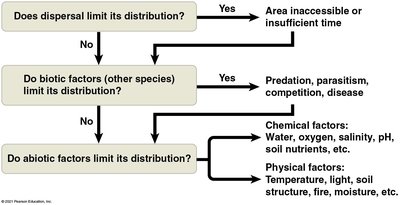
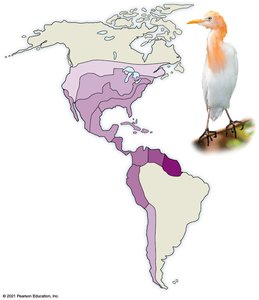
The distribution and abundance of organisms are governed by a combination of abiotic and biotic factors, as well as dispersal limitations.
Dispersal Limitation: Whether a species can reach a particular area.
Biotic Factors: Interactions with other species (e.g., predation, competition, disease).
Abiotic Factors: Physical and chemical environmental variables (e.g., temperature, water, light, soil nutrients).
Biomes and Climate
Major Terrestrial Biomes
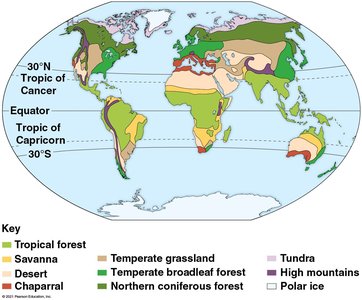
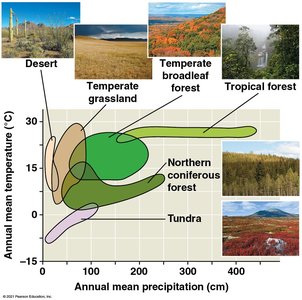
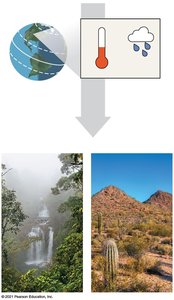
Biomes are large ecological regions defined by their climate, vegetation, and characteristic organisms. Climate, especially temperature and precipitation, is the primary determinant of biome distribution.
Examples of Biomes: Tropical forest, desert, savanna, temperate grassland, temperate broadleaf forest, northern coniferous forest, tundra, polar ice.
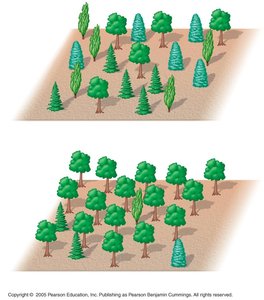
Biomes differ in biodiversity, species richness, and relative abundance.
Biodiversity in Biomes
Biodiversity includes both species richness (number of species) and relative abundance (proportion of each species). Diversity indices, such as the Shannon index, are used to quantify biodiversity.
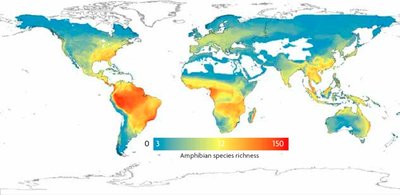
Species richness and diversity are typically higher in the tropics (latitudinal gradient).
Ecology and Evolution
Evolutionary Ecology
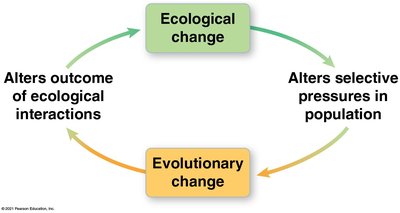
Ecology and evolution are closely linked. Environmental factors (both abiotic and biotic) drive natural selection, leading to adaptations that increase an organism's fitness in a particular environment.
Adaptation: A trait that increases an organism's fitness in a specific environment.
Examples include adaptations for reproduction, survival (avoiding predation), and resource acquisition.
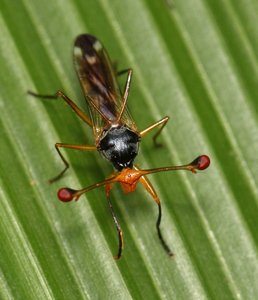
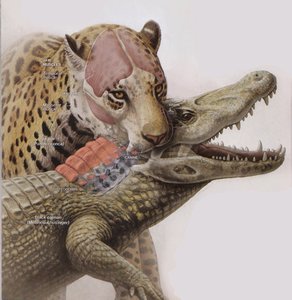
Evolutionary arms races can occur, where interacting species reciprocally drive each other's adaptations.


Mutualisms and Local Adaptation
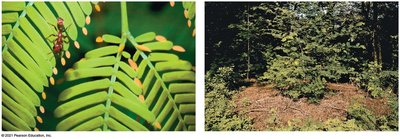
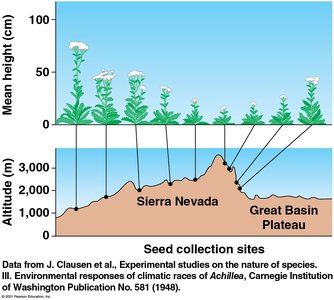
Mutualistic interactions, such as those between acacia trees and ants, can be adaptive. Local adaptation occurs when populations evolve traits that confer higher fitness in their local environment.
Common garden experiments can demonstrate local adaptation by growing individuals from different populations in the same environment.
Convergent Evolution
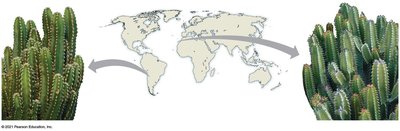
Similar environmental conditions can drive convergent evolution, where unrelated organisms independently evolve similar traits. For example, cacti in the New World and euphorbs in the Old World have evolved similar forms to survive in arid environments.