 Back
Introduction to Ecology: Scales, Factors, and Biomes
Study Guide - Smart Notes
 Tailored notes based on your materials, expanded with key definitions, examples, and context.
Introduction to Ecology
Definition and Scope
Ecology is the scientific study of interactions between organisms and their environment, focusing on the distribution and abundance of organisms. Ecologists seek to understand where organisms are found, how many there are, and why these patterns exist.
Abiotic factors: Nonliving components such as climate, topography, depth, salinity, pH, and nutrient levels.
Biotic factors: Interactions among living organisms, including intraspecific (within species) and interspecific (between species) interactions.
Ecological Scales
Levels of Ecological Study
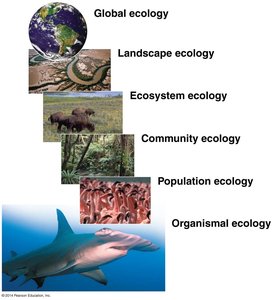
Ecology can be studied at multiple hierarchical scales, each focusing on different aspects of biological organization:
Organismal Ecology: Examines how individual organisms adapt physiologically and behaviorally to their environment.
Population Ecology: Focuses on groups of interbreeding individuals (populations), studying factors affecting population growth, density, and size.
Community Ecology: Investigates how populations of different species interact and form functional communities.
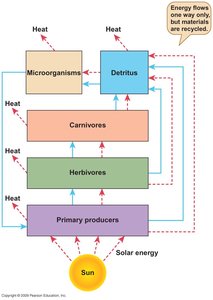
Ecosystem Ecology: Studies the flow of energy and cycling of elements among organisms and their environment.
Landscape and Global Ecology: Examines ecological processes across broad spatial scales and their effects on global patterns.
Examples of Ecological Scales
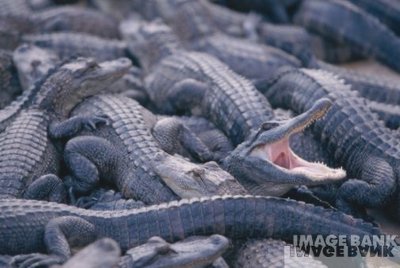
Physiological Ecology: How alligators regulate body temperature.
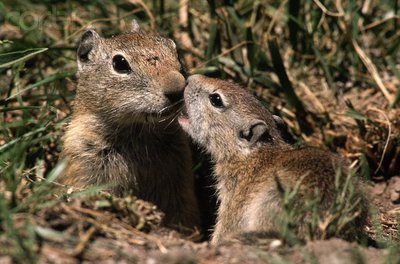
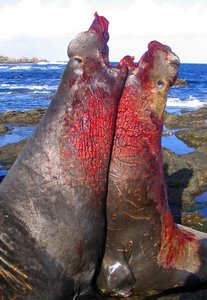
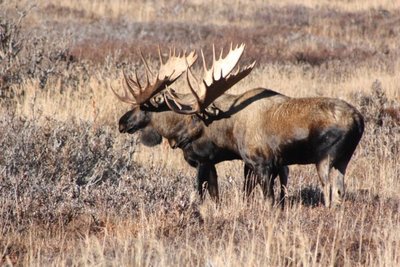
Behavioral Ecology: Social interactions among ground squirrels.
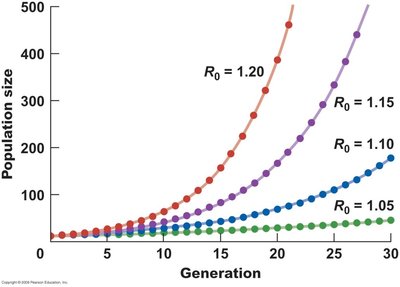
Population Ecology: Modeling population growth rates in different species.
Community Ecology: Interactions among species in a grassland.
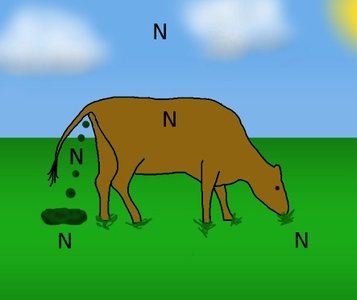
Ecosystem Ecology: Nutrient cycling in a pasture ecosystem.
Abiotic and Biotic Factors Affecting Distribution and Abundance
Abiotic Factors
Abiotic factors are nonliving environmental variables that influence where organisms can survive and reproduce. Key abiotic factors include:
Temperature: Affects metabolic rates, enzyme activity, and physiological processes. Organisms experience stress outside their optimal temperature range.
Water Availability: Essential for all life; influences plant and animal distribution, especially in terrestrial ecosystems.
Oxygen Levels: Important in aquatic systems; low oxygen can limit species presence.
Light Levels: Critical for photosynthesis in plants and algae; light penetration limits aquatic productivity.
Salinity: Influences osmoregulation in aquatic organisms; halophytes tolerate high salt in terrestrial systems.
pH: Most organisms thrive within a narrow pH range; extreme pH can inhibit growth and metabolic processes.
Rocks, Soils, and Nutrient Levels: Affect plant growth and, consequently, animal distribution.
Biotic Factors
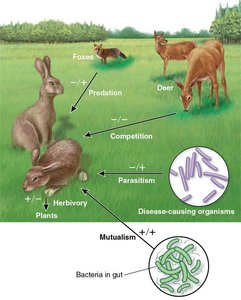
Biotic factors involve interactions among living organisms, such as:
Competition: For resources like food, space, or mates.
Predation: One organism consumes another.
Mutualism, Parasitism, and Disease: Various forms of symbiosis and their effects on populations.
Temperature and Water: Key Abiotic Factors
Temperature
Temperature is a primary determinant of species distribution. It affects cellular respiration, enzymatic activity, and physiological limits. Organisms are classified by how they regulate body temperature:
Ectotherms: Obtain heat from the environment (e.g., reptiles, amphibians).
Endotherms: Generate heat metabolically, allowing survival in a wider range of temperatures (e.g., mammals, birds).
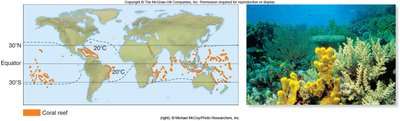
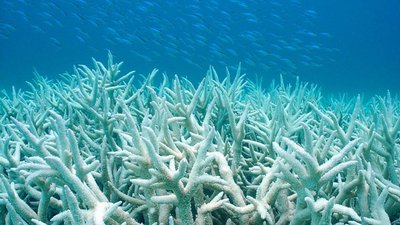
Extreme temperatures can cause stress or mortality, such as coral bleaching at high temperatures.
Water Availability
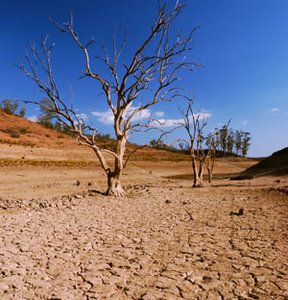
Water is essential for physiological processes. Its availability determines the types of plants and animals that can thrive in an area. For example, swamp plants require flooding, while desert plants are adapted to dry conditions.
Climate and Biomes
Climate Patterns
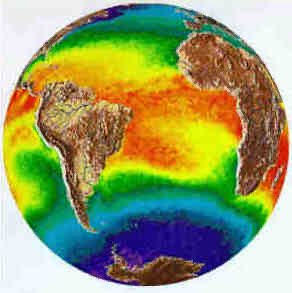
Climate refers to the prevailing weather patterns in a region over long periods. It is primarily determined by temperature and precipitation, which in turn are influenced by latitude, elevation, and global air circulation patterns.
Hadley Cells: Large-scale atmospheric convection cells that move warm air from the equator toward higher latitudes, influencing rainfall patterns.
Rain Shadow Effect: Mountains block moist air, causing dry conditions on the leeward side.
Terrestrial and Aquatic Biomes
Biomes are major ecological communities classified by predominant vegetation and climate (terrestrial) or by physical environment (aquatic). Terrestrial biomes are primarily determined by mean annual temperature and precipitation, while aquatic biomes are classified by light penetration, depth, and proximity to land.
Species Distribution, Ranges, and Barriers
Species Range and Distribution
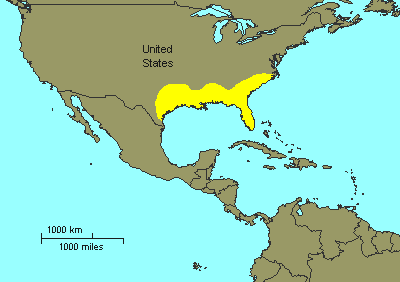
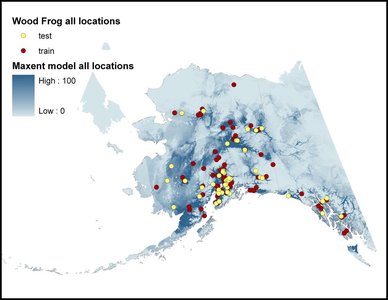
Species range refers to the geographic area where a species is found. Species distribution describes the spatial arrangement of individuals within that range. Both are shaped by abiotic and biotic factors, as well as historical and evolutionary processes.
Barriers to Dispersal: Physical obstacles (e.g., mountains, oceans, continents) can limit the spread of species.
Continental Drift: Movement of continents over geological time affects species dispersal and biogeographic patterns.
Key Terms and Definitions
Ecology: Study of interactions between organisms and their environment.
Climate: Long-term patterns of temperature and precipitation in a region.
Biome: Major ecological community type, classified by climate and dominant vegetation.
Abiotic: Nonliving environmental factors.
Biotic: Living components of the environment.
Ectotherm: Organism that relies on external heat sources.
Endotherm: Organism that generates heat metabolically.
Species Range: Geographic area where a species is found.
Species Distribution: Spatial arrangement of individuals within a range.
Hadley Cell: Large-scale atmospheric convection cell in each hemisphere.
Summary Table: Major Abiotic Factors Affecting Organisms
Factor | Effect | Example |
|---|---|---|
Temperature | Metabolic rates, enzyme activity, survival | Coral bleaching at high temperatures |
Water Availability | Distribution of plants and animals | Desert vs. swamp plants |
Oxygen Levels | Respiration in aquatic systems | Fish kills in low-oxygen lakes |
Light | Photosynthesis, vision | Algae at different water depths |
Salinity | Osmoregulation | Halophytes in salt marshes |
pH | Enzyme function, nutrient availability | Acid rain affecting forests |
Nutrients | Growth and productivity | Fertilizer effects on crops |
Additional Info
Global warming is shifting species ranges, sometimes faster than species can adapt or migrate.
Climatic zones and biomes are dynamic and can change with long-term shifts in temperature and precipitation.
