 Back
Ch 38: Introduction to Ecology: Scales, Methods, and Interactions
Study Guide - Smart Notes
 Tailored notes based on your materials, expanded with key definitions, examples, and context.
Introduction to Ecology
Ecology is the scientific study of interactions among organisms and their environment. These interactions can be classified as biotic (between living organisms) or abiotic (between organisms and nonliving environmental factors). Ecology forms the foundation for understanding environmental science, which applies ecological principles to address real-world problems.
Scales of Ecology
Organismal Ecology
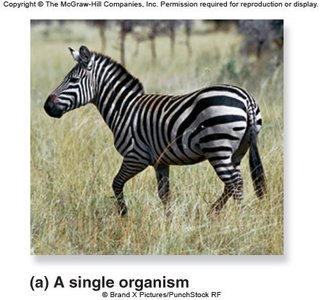
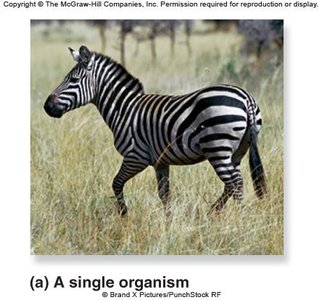
Organismal ecology examines how individual organisms adapt to their environment through physiological and behavioral means. This field is divided into two main subdisciplines:
Physiological Ecology: Investigates how organisms are physically and chemically adapted to their environment, including mechanisms of regulation, camouflage, and digestion. Adaptations can be both long-term (evolutionary) and short-term (acclimation).
Behavioral Ecology: Studies how the actions or inactions of an organism contribute to its survival and reproductive success. This includes the costs (e.g., energy expenditure, exposure to danger) and benefits (e.g., resource acquisition, avoidance of greater danger, physiological optimization) of behaviors.
Population Ecology
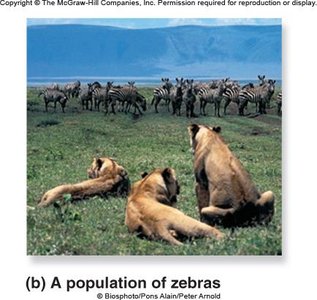
Population ecology focuses on groups of interbreeding individuals, known as populations. The main goal is to understand the factors that affect population growth, density, and size. Population ecologists also study species interactions such as predation, competition, commensalism, and parasitism.
Relative Abundance: The proportion of each species in a population.
Species Interactions: Includes predation (one organism eats another), competition (organisms vie for the same resource), commensalism (one benefits, the other is unaffected), and parasitism (one benefits at the expense of another).
Community Ecology
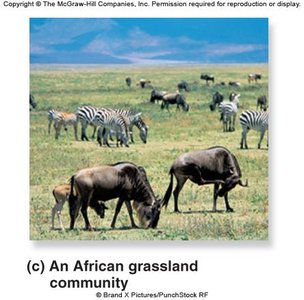
Community ecology studies how populations of different species interact and form functional communities. It seeks to explain why some areas are species-rich while others are species-poor and investigates ecological succession—the process by which species composition and community structure change over time, especially after disturbances.
Species Richness: The number of different species in a community.
Succession: The sequential change in species composition in a community following a disturbance.
Ecosystem Ecology
Ecosystem ecology examines the flow of energy and the cycling of chemical elements among organisms within a community and between organisms and their environment. It introduces the concept of trophic levels (positions in a food chain) and food webs (interconnected food chains).
Trophic Levels: The hierarchical levels in an ecosystem, comprising producers, consumers, and decomposers.
Food Webs: Complex networks of feeding relationships among species in a community.
Ecological Methods
Observational Studies
Observational studies involve collecting data on existing or dynamic conditions in nature without manipulation. These studies are essential for identifying patterns and generating hypotheses.
Experimental Studies
Experimental studies involve manipulating one or more factors to test specific hypotheses. This approach allows ecologists to determine cause-and-effect relationships.
Example: Locust Population Outbreaks
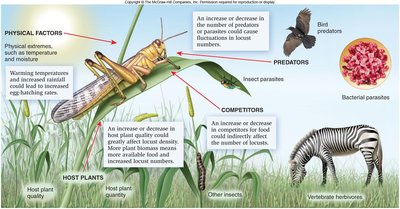
To understand what causes outbreaks of locusts, ecologists construct a web of interactions affecting locust population size, including:
Abiotic Factors: Temperature, rainfall, wind, soil pH
Natural Enemies: Predators (e.g., birds), insect parasites, bacterial parasites
Competitors: Other insects, larger vertebrate grazers
Host Plants: Quality and quantity of food plants
Hypothesis Testing in Ecology
Ecological research often follows the scientific method, which includes:
Observations
Hypothesis formation
Experimentation
Data analysis
Acceptance or rejection of the hypothesis
Summary Table: Scales of Ecology
Level | Focus | Example |
|---|---|---|
Organismal | Adaptations of individuals | How a zebra avoids predators |
Population | Groups of interbreeding individuals | Population growth of zebras |
Community | Interactions among species | Predator-prey dynamics in grasslands |
Ecosystem | Energy flow and nutrient cycling | Carbon cycling in a savanna |
