Back
Introduction to Evolution, Classification, and Scientific Inquiry
Study Guide - Smart Notes
 Tailored notes based on your materials, expanded with key definitions, examples, and context.
Evolution and Classification
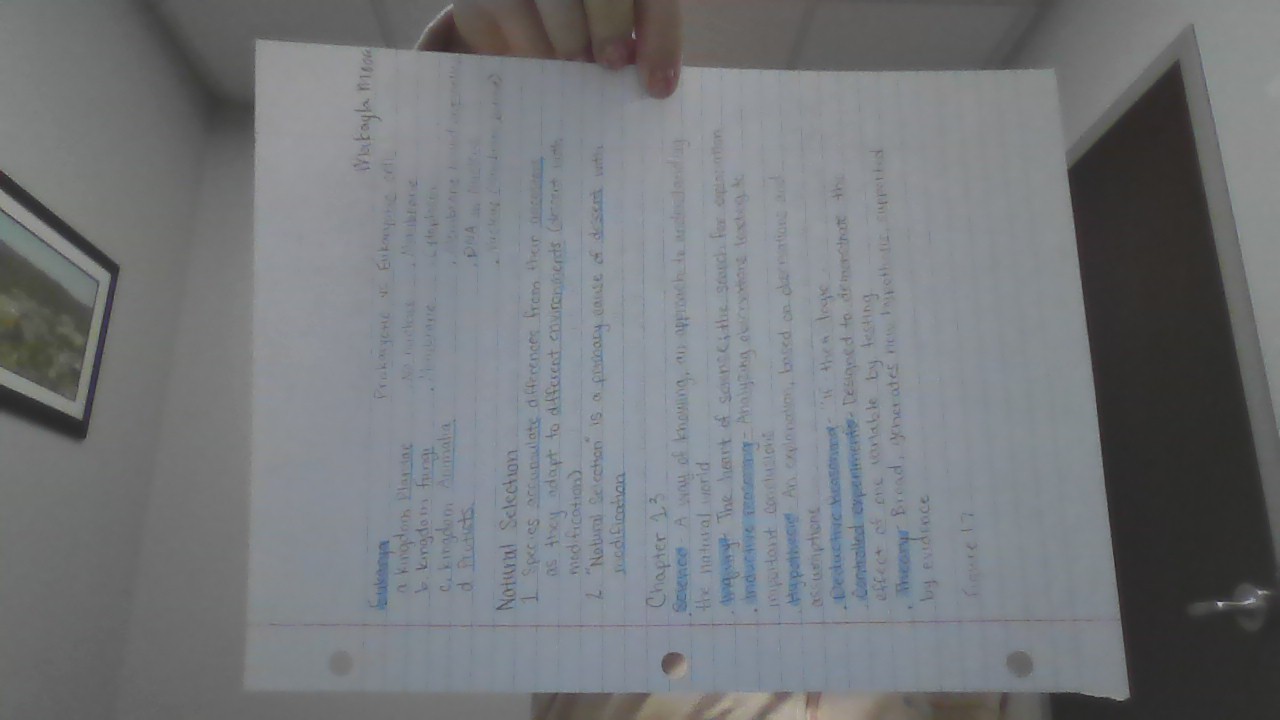
Principles of Biological Classification
Biological classification organizes living organisms into hierarchical groups based on shared characteristics and evolutionary relationships. This system helps scientists communicate about species and understand the diversity of life.
Domain: The highest taxonomic rank, grouping organisms based on fundamental differences in cell structure.
Kingdom: The second highest rank, further dividing domains into major groups such as Plantae, Fungi, and Animalia.
Other Ranks: Phylum, Class, Order, Family, Genus, and Species (noted as 'Dear King Philip Came Over For Good Soup').
Example: Humans are classified as Domain Eukarya, Kingdom Animalia.
Natural Selection
Mechanism of Evolution
Natural selection is a key mechanism of evolution, explaining how populations adapt to their environments over generations.
Variation: Species accumulate differences from their ancestors due to genetic mutations and recombination.
Adaptation: Traits that enhance survival and reproduction become more common in a population over time.
Environmental Influence: Adaptations are specific to different environments, leading to diversity among species.
Primary Cause: Natural selection is a primary cause of descent with modification.
Example: The beak shapes of Darwin's finches evolved to exploit different food sources on the Galápagos Islands.
Scientific Inquiry and Experimental Design
Nature of Science and Hypothesis Testing
Scientific inquiry is a systematic way of learning about the natural world through observation, experimentation, and evidence-based reasoning.
Science: A way of knowing, an approach to understanding the natural world.
Inquiry: The search for information and explanations of natural phenomena.
Hypothesis: A tentative answer to a well-framed question; must be testable and falsifiable.
Experiment: A scientific test, often carried out under controlled conditions.
Controlled Experiment: An experiment in which only one variable is changed at a time to isolate its effects.
Evidence: Broad generalizations are supported by evidence collected through observation and experimentation.
Example: Testing the effect of sunlight on plant growth by keeping all other variables constant except the amount of light.