 Back
Lecture 1 (CH.1)
Study Guide - Smart Notes
 Tailored notes based on your materials, expanded with key definitions, examples, and context.
Course Overview: General Biology (BIL150)
Course Structure and Units
This course provides a comprehensive introduction to the foundational concepts of biology, focusing on molecules, cells, and genes. The curriculum is divided into three main units:
Unit 1: Biochemistry (Molecules of Life)
Unit 2: Cell Biology
Unit 3: Genetics & Molecular Biology
Students will explore the chemical building blocks of life, cellular organization, metabolic pathways, genetic heritability, and the central dogma of molecular biology.

Course Goals and Learning Outcomes
Identify the chemical building blocks of life and their properties.
Describe the structure and function of macromolecules in cells.
Explain cellular organization and the relationship between structure and function.
Understand metabolic pathways and cellular energy production.
Describe genetic inheritance and the central dogma (DNA → RNA → Protein).
Synthesize how molecules, cells, and genes interact to drive life processes.
Assessment and Course Policies
Exams: Four midterms (lowest dropped), cumulative final exam.
Quizzes: Five quizzes (lowest dropped), administered during workshops.
Homework: Assigned via MasteringBiology, unlimited attempts, best 10 of 19 count.
Workshops: Mandatory attendance and participation in small groups.
LearningCatalytics: In-class participation and accuracy-based questions.
Extra Credit: Available through exams, quizzes, and participation.
Academic Integrity: Cheating and inappropriate use of AI during assessments are prohibited.
Foundations of Biology
Major Themes in Biology
Biology is the study of life, encompassing a wide range of topics from molecules to ecosystems. Key themes include evolution, the flow of genetic information, structure and function, energy transfer, and interactions within biological systems.
Evolution: The unifying concept that explains the diversity and unity of life.
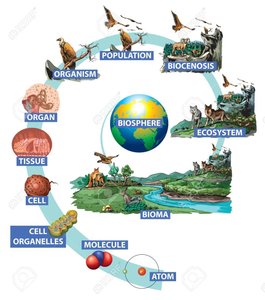
Hierarchy of Organization: Life is organized from atoms and molecules up to the biosphere.
Biological Molecules
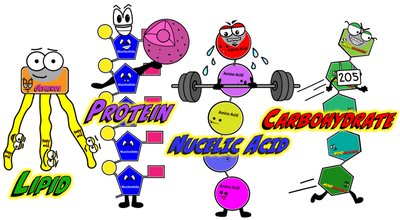
Living organisms are composed of four major classes of macromolecules:
Carbohydrates: Provide energy and structural support.
Lipids: Store energy and form cell membranes.
Proteins: Perform a vast array of cellular functions.
Nucleic Acids: Store and transmit genetic information.
Cell Structure and Function
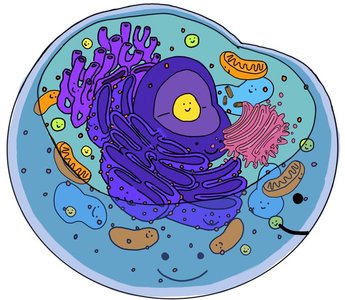
Cells are the basic units of life. They contain specialized structures called organelles that perform distinct functions necessary for survival and reproduction.
Nucleus: Contains genetic material (DNA).
Mitochondria: Site of cellular respiration and energy production.
Endoplasmic Reticulum and Golgi Apparatus: Involved in protein and lipid processing.
Plasma Membrane: Regulates the movement of substances in and out of the cell.
Scientific Inquiry and the Nature of Science
The Scientific Method
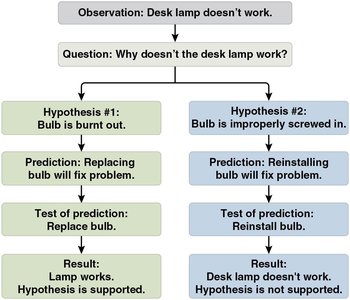
Scientific inquiry is a systematic process used to investigate natural phenomena. It involves making observations, asking questions, forming hypotheses, conducting experiments, and analyzing data.
Observation: Gathering information about the natural world.
Question: Identifying a problem or phenomenon to investigate.
Hypothesis: A testable explanation based on observations and assumptions.
Prediction: A logical outcome expected if the hypothesis is correct.
Experiment: A controlled test to evaluate the hypothesis.
Data: Recorded observations, which can be qualitative (descriptive) or quantitative (numerical).
Types of Data
Qualitative Data: Descriptions or characteristics (e.g., color, shape, behavior).
Quantitative Data: Numerical measurements (e.g., length, mass, temperature).
Example of Scientific Inquiry
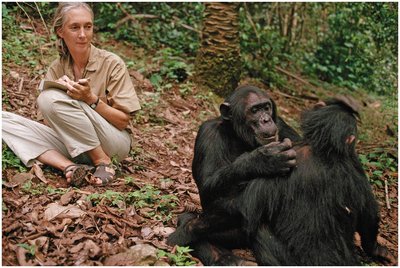
Jane Goodall's observations of chimpanzee behavior in the wild are an example of qualitative data collection in biology.
Hypothesis Formation and Testing
A hypothesis must be testable and falsifiable. Experiments are designed to test predictions derived from hypotheses. If results support the hypothesis, it gains credibility; if not, the hypothesis is revised or rejected.
Genetic Information and the Central Dogma
DNA, RNA, and Protein Synthesis
The central dogma of molecular biology describes the flow of genetic information within a cell:
DNA (Deoxyribonucleic Acid): Stores genetic information.
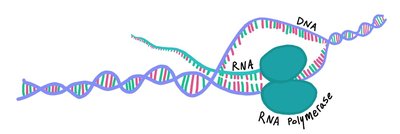
Transcription: DNA is transcribed into RNA by the enzyme RNA polymerase.
Translation: RNA is translated into proteins, which perform cellular functions.
Keys to Success in General Biology
Read the textbook before class and complete homework assignments on time.
Participate actively in workshops and lectures.
Take advantage of extra credit opportunities and seek help early if needed.
Follow academic integrity guidelines and communicate professionally with instructors.
